
Photographs hold memories that words often can’t capture. From family portraits to historical snapshots, old photos carry emotional value that grows with time. Unfortunately, many of these images fade, tear, or lose clarity as years pass. This is where AI photo restoration is making a meaningful difference.
Traditional photo restoration required skilled professionals and hours of manual editing. While effective, it wasn’t always accessible or affordable for everyone. Today, artificial intelligence is changing that by making photo repair and enhancement faster, simpler, and more accurate.
AI-powered tools can automatically detect scratches, restore faded colours, reduce noise, and even reconstruct missing details. What once took days can now be done in minutes without advanced editing skills. As a result, restoring and enhancing photos is no longer limited to experts; it’s available to anyone who wants to preserve their visual memories.
What Is AI Photo Restoration?
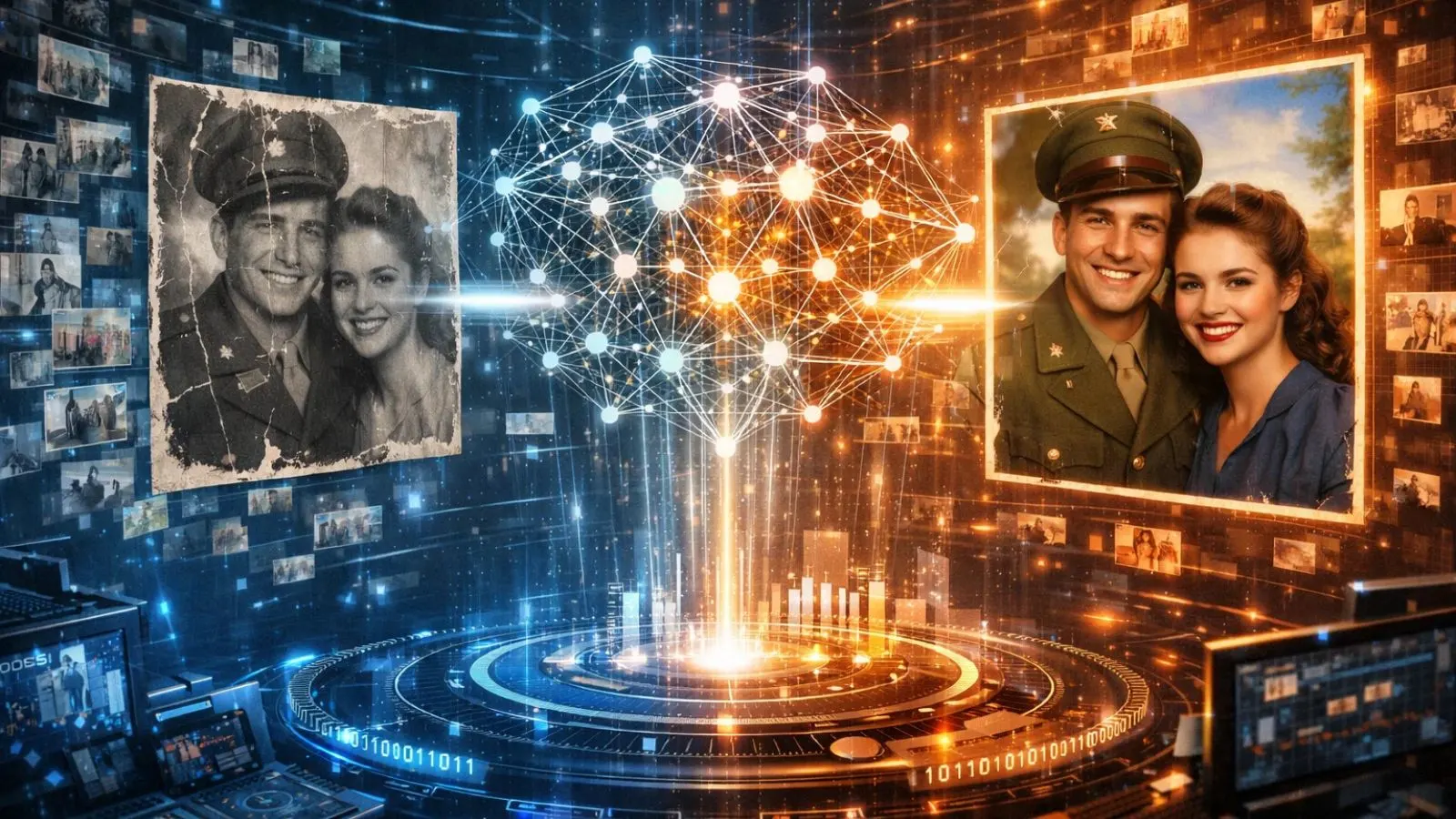
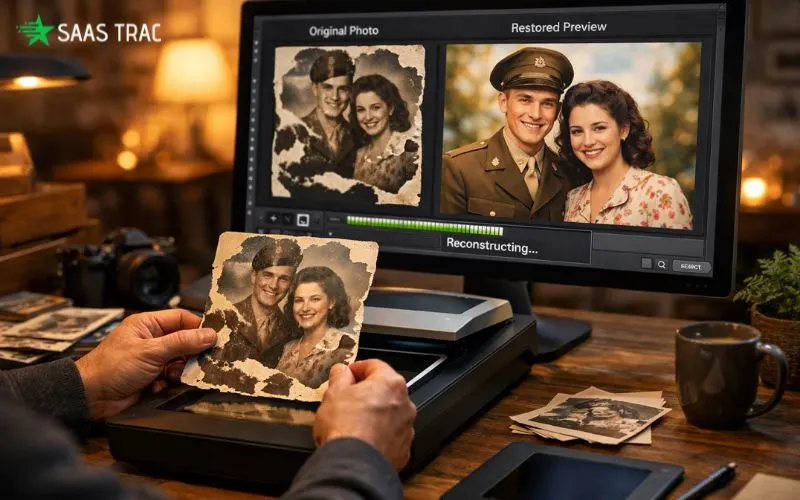
AI photo restoration is the process of using artificial intelligence to repair, enhance, and improve damaged or aging photographs. These tools are designed to automatically identify imperfections such as scratches, stains, blur, noise, and colour fading, and then correct them with minimal human input.
Unlike traditional photo restoration, which relies heavily on manual editing skills and time-consuming techniques, AI-powered solutions work by learning from millions of images. Through machine learning models, the system understands how a “clean” or restored image should look and applies those patterns to damaged photos.
This approach makes photo restoration AI accessible to everyday users. Whether you’re restoring a decades-old family photo or improving image quality for professional use, AI tools can deliver consistent results in a fraction of the time.
By combining automation with intelligent image analysis, AI photo restoration bridges the gap between professional-level editing and user-friendly technology—making photo repair faster, easier, and more affordable.
How AI Photo Restoration Works?
AI-powered photo restoration follows a structured process that allows damaged images to be repaired with impressive accuracy. Behind the scenes, advanced algorithms analyze every pixel to understand what needs fixing and how to enhance it naturally.
First, the system scans the image to detect common issues such as scratches, cracks, noise, blur, and discoloration. Using pattern recognition, the AI identifies which parts of the image are damaged and which areas remain intact.
Next, machine learning models trained on vast image datasets predict how missing or damaged details should appear. This is where AI photo restoration becomes especially powerful—it doesn’t just remove flaws; it intelligently reconstructs details like facial features, textures, and backgrounds.
Color correction and clarity enhancement are then applied to balance tones and improve overall sharpness. In many cases, AI can also enhance black-and-white photos by refining contrast and depth.
The result is a restored image that looks clean, natural, and visually consistent—often in just a few seconds—without requiring manual retouching or advanced editing knowledge.
Restoring Old and Damaged Photos with AI
Old photographs often suffer from a range of issues—faded colors, scratches, creases, stains, or loss of sharpness. These imperfections don’t just affect image quality; they can also make important details harder to recognize. This is where AI photo restoration proves especially valuable.
AI tools are trained to recognize common aging patterns found in photographs. They can intelligently remove scratches and dust, repair cracks, and smooth out damaged areas while preserving original details. For faded images, AI restores color balance and contrast, making photos look closer to their original state.
Black-and-white photos also benefit from restoration. AI enhances clarity, improves lighting, and sharpens facial features without making the image look artificial. In more advanced cases, old photo restoration AI can even rebuild missing sections by predicting what should naturally appear in those areas.
Whether you’re working with family albums or historical archives, AI-powered restoration offers a practical way to preserve and revive visual memories without compromising authenticity.
AI Image Upscaling vs Photo Restoration
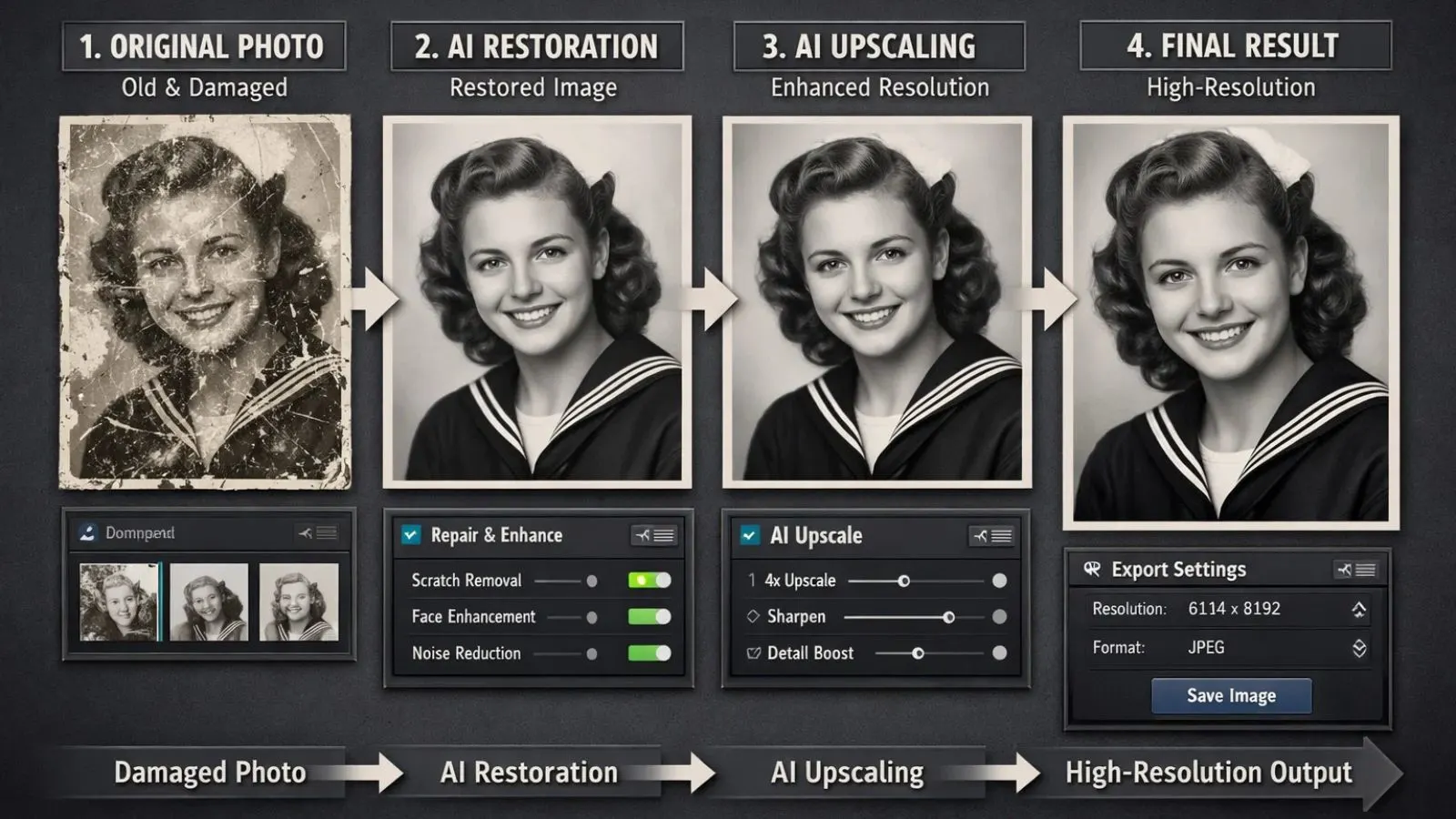
While AI image upscaling and photo restoration are often mentioned together, they serve different purposes. Understanding the difference helps you choose the right approach based on your image’s condition and goal.
Photo restoration focuses on repairing damage. This includes fixing scratches, removing noise, correcting faded colors, and reconstructing missing details. It’s ideal for old, torn, or heavily worn photographs that need visual repair before any enhancement.
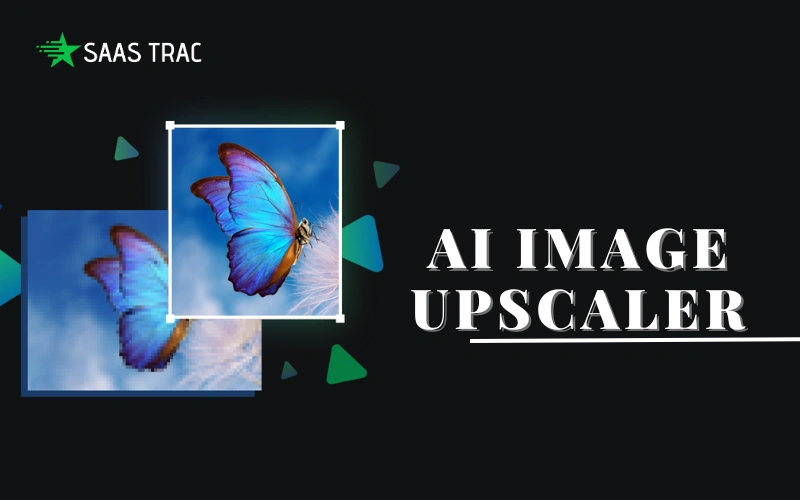
On the other hand, an AI image upscaler is designed to improve image resolution. It increases the size and sharpness of an image by adding detail intelligently, making low-resolution photos suitable for printing, sharing, or professional use. Upscaling doesn’t fix damage—it enhances clarity.
In many cases, the best results come from using both together. First, restore the image to repair imperfections, then upscale it to improve resolution. This combined workflow is common in modern photo restoration processes, especially when images need to look clean and high-quality on larger screens.
Choosing the right method—or using both—ensures your restored photos look natural, sharp, and ready for modern use.
Benefits of Using AI for Photo Restoration
Using AI photo restoration offers several practical and creative advantages, especially when compared to traditional manual editing methods. These benefits make AI-powered tools appealing to both individuals and businesses.
Saves Time and Effort
AI automates complex restoration tasks that once required hours of manual work. Scratches, noise, and faded colors can be corrected within minutes, making the restoration process faster and more efficient.
Accessible to Non-Experts
You don’t need advanced photo-editing skills to restore images with AI. Most tools are designed with simple interfaces, allowing anyone to repair and enhance photos with just a few clicks.
Cost-Effective Restoration
Professional photo restoration services can be expensive. AI tools provide a more affordable alternative while still delivering high-quality results, especially for bulk or frequent restoration needs.
Consistent and Scalable Results
AI produces consistent outcomes across multiple images, which is useful for restoring entire photo collections or archives. This scalability makes it ideal for personal use as well as commercial projects.
Overall, AI-powered restoration removes technical barriers and makes preserving visual memories easier, faster, and more reliable.
Best Use Cases of Photo Restoration AI
AI-powered restoration tools are used across a wide range of personal and professional scenarios. Their ability to repair and enhance images quickly makes them valuable in many real-world applications.
Preserving Family and Personal Memories
Many people use AI photo restoration to revive old family photographs, wedding pictures, or childhood memories. Restoring these images helps preserve emotional moments and keeps them alive for future generations.
Archiving Historical and Cultural Images
Museums, libraries, and researchers use AI tools to restore damaged or aging photographs. By enhancing clarity and repairing wear, historical images become easier to study, share, and archive digitally.
Media, Design, and Content Creation
Content creators and designers often work with older or low-quality images. AI restoration improves visual quality, making these images suitable for modern websites, social media, and publications.
E-commerce and Branding
Businesses use AI restoration to clean up product photos, logos, or archival brand visuals. Restored and enhanced images improve presentation quality and maintain brand consistency.
These use cases show how photo restoration AI fits naturally into both everyday needs and professional workflows.
Choosing the Best AI Photo Upscaler and Restorer
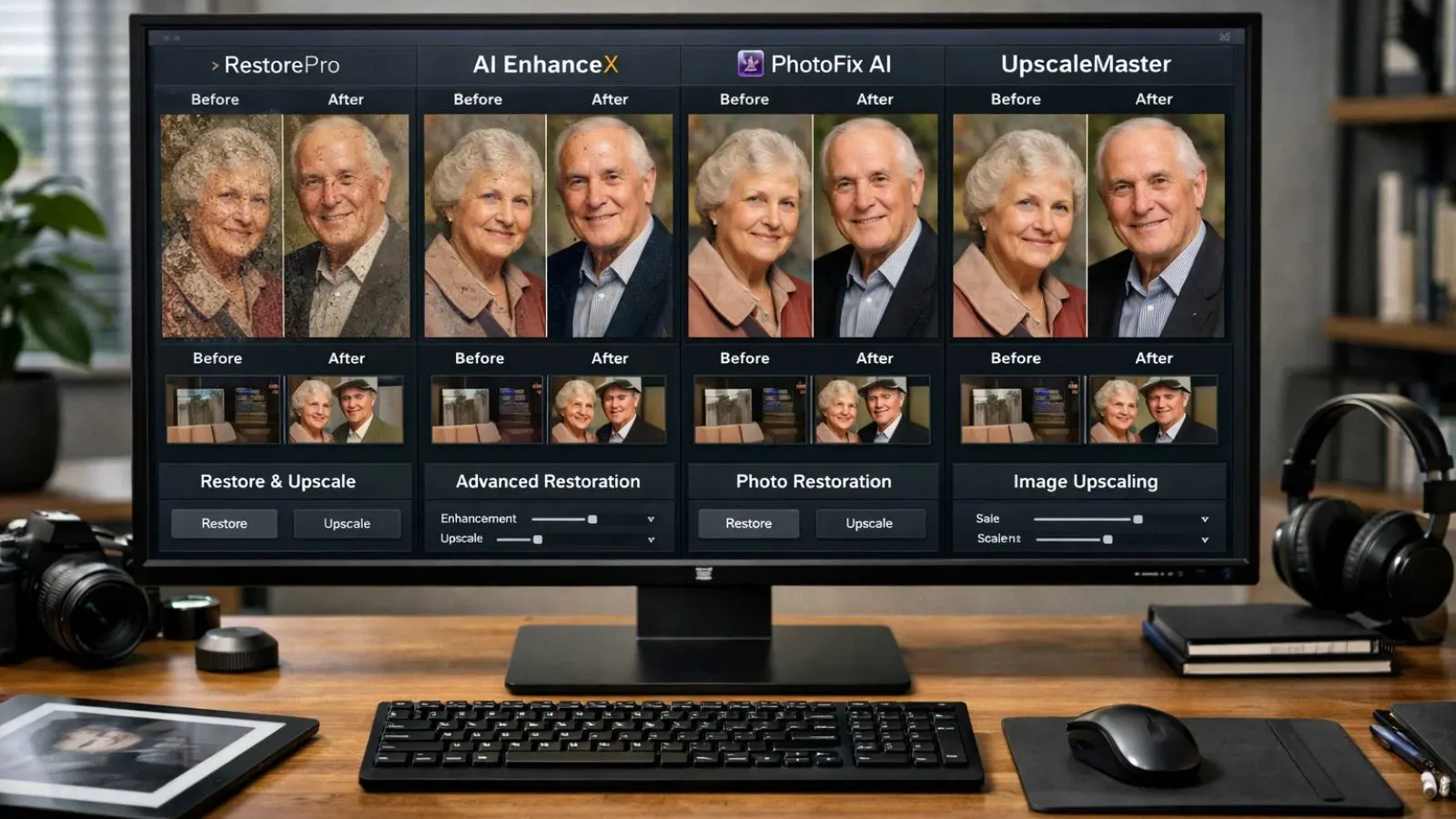
With so many tools available, selecting the right AI solution for restoring and enhancing photos can feel overwhelming. The best choice depends on your goals, image quality, and how much control you want over the final result.
Look for Restoration Accuracy
A good AI tool should repair damage without over-smoothing or altering important details. Natural-looking results are key, especially when restoring faces, textures, and historical photos.
Combined Restoration and Upscaling Features
The most effective tools offer both restoration and upscaling. Pairing restoration with the best ai photo upscaler ensures images not only look clean but are also sharp enough for modern displays or printing.
Ease of Use
User-friendly interfaces matter, especially for non-professionals. Drag-and-drop uploads, preview options, and simple controls make the restoration process smoother and more accessible.
Output Quality and Format Options
Check whether the tool supports high-resolution exports and common file formats. This is important if you plan to print photos or use them for professional projects.
Choosing the right tool ensures your restored photos look authentic, detailed, and ready for long-term preservation.
Tools That Help in Image Restoration or Generation
AI-powered design tools make it easier to create or enhance images without advanced editing skills. Hotpot AI helps generate AI images, graphics, and also offers strong photo restoration features to repair damaged or low-quality images.
Canva provides AI image generation and editing tools that allow users to create visuals, remove backgrounds, and enhance photos quickly using beginner-friendly templates.
Fotor AI is known for AI image generation, editing, and photo restoration, helping improve old photos, sharpen image quality, and create professional visuals with minimal effort.
Limitations and Ethical Considerations
While ai photo restoration offers impressive results, it’s important to understand its limitations and use it responsibly—especially when working with meaningful or historical images.
Risk of Over-Restoration
AI tools sometimes add details that weren’t present in the original photo. Over-smoothing skin, altering facial features, or exaggerating textures can reduce authenticity. For sensitive images, subtle restoration is usually better than aggressive enhancement.
Accuracy in Historical Images
When restoring archival or historical photos, AI may “guess” missing elements based on training data. This can unintentionally distort historical accuracy. In such cases, human review or minimal intervention is recommended.
Not All Damage Can Be Fixed
Severely torn, blurred, or extremely low-quality images may not be fully restorable. AI can improve them, but expectations should be realistic—results vary depending on the original photo’s condition.
Ethical Use of Restored Images
Restored photos should not be misrepresented as original or unaltered, especially in journalism, research, or documentation. Transparency about AI involvement helps maintain trust and credibility.
Understanding these boundaries ensures AI restoration is used as a helpful enhancement tool, not a replacement for authenticity.
The Future of AI Photo Restoration
The future of photo restoration looks increasingly intelligent and realistic. As AI models continue to evolve, restored images will retain more natural textures, accurate facial details, and original lighting characteristics.
Advancements are moving toward a better contextual understanding, meaning AI will not only repair damage but also comprehend the emotional and historical context of an image. Integration with creative software and archival systems will make restoration workflows even smoother.
We can also expect more real-time processing, mobile-friendly tools, and enhanced control over the amount of restoration applied. These developments will make ai photo restoration even more accessible while preserving authenticity.
FAQs
Is AI photo restoration safe for old photos?
Yes. AI restoration works on digital copies, so the original physical photo remains untouched and safe.
Can AI fully restore severely damaged photos?
AI can significantly improve damaged photos, but extremely poor-quality images may not be restored completely. Results depend on the original condition.
Are AI-restored photos suitable for printing?
Yes. When combined with upscaling, restored images can be printed at high quality for albums, frames, or exhibitions.