

Customer service is evolving rapidly, and businesses are increasingly turning to technology to improve efficiency and satisfaction. One of the most transformative innovations in this space is the AI voice agent. These intelligent systems can handle calls, answer queries, and provide real-time support, all while reducing wait times and operational costs.
AI voice agents are no longer just a futuristic concept; they are actively reshaping how companies manage customer interactions. By automating routine calls and assisting human agents with complex tasks, businesses can ensure faster responses, personalized experiences, and consistent service quality.
In this guide, we’ll explore what AI voice agents are, how AI calling software works, the benefits and challenges, common use cases, and the top tools available in 2026. Whether you run a small business or manage a large call center, understanding this technology will help you stay competitive and deliver exceptional customer experiences.
What Is an AI Voice Agent?
An AI voice agent is a software-driven system designed to interact with customers over the phone using artificial intelligence and natural language processing (NLP). Unlike traditional automated phone systems, AI voice agents can understand context, respond conversationally, and even handle complex queries with minimal human intervention.
Core Functions of AI Voice Agents
- Answering common customer questions
- Routing calls to the appropriate department or human agent
- Collecting customer information and feedback
- Performing simple tasks like booking appointments or confirming orders
AI Voice Agents vs. Human Agents
While human agents excel at empathy and handling nuanced conversations, AI voice agents bring speed, consistency, and scalability. By managing repetitive calls and standard inquiries, AI agents free up human staff to focus on higher-value interactions that require judgment and personal touch.
Benefits for Businesses and Customers
For businesses, AI voice agents reduce operational costs, increase efficiency, and handle high call volumes without errors. For customers, they provide faster responses, 24/7 availability, and a more streamlined experience.
By understanding these fundamentals, companies can make informed decisions about integrating ai phone call agents into their workflows.
How AI Calling Software Works
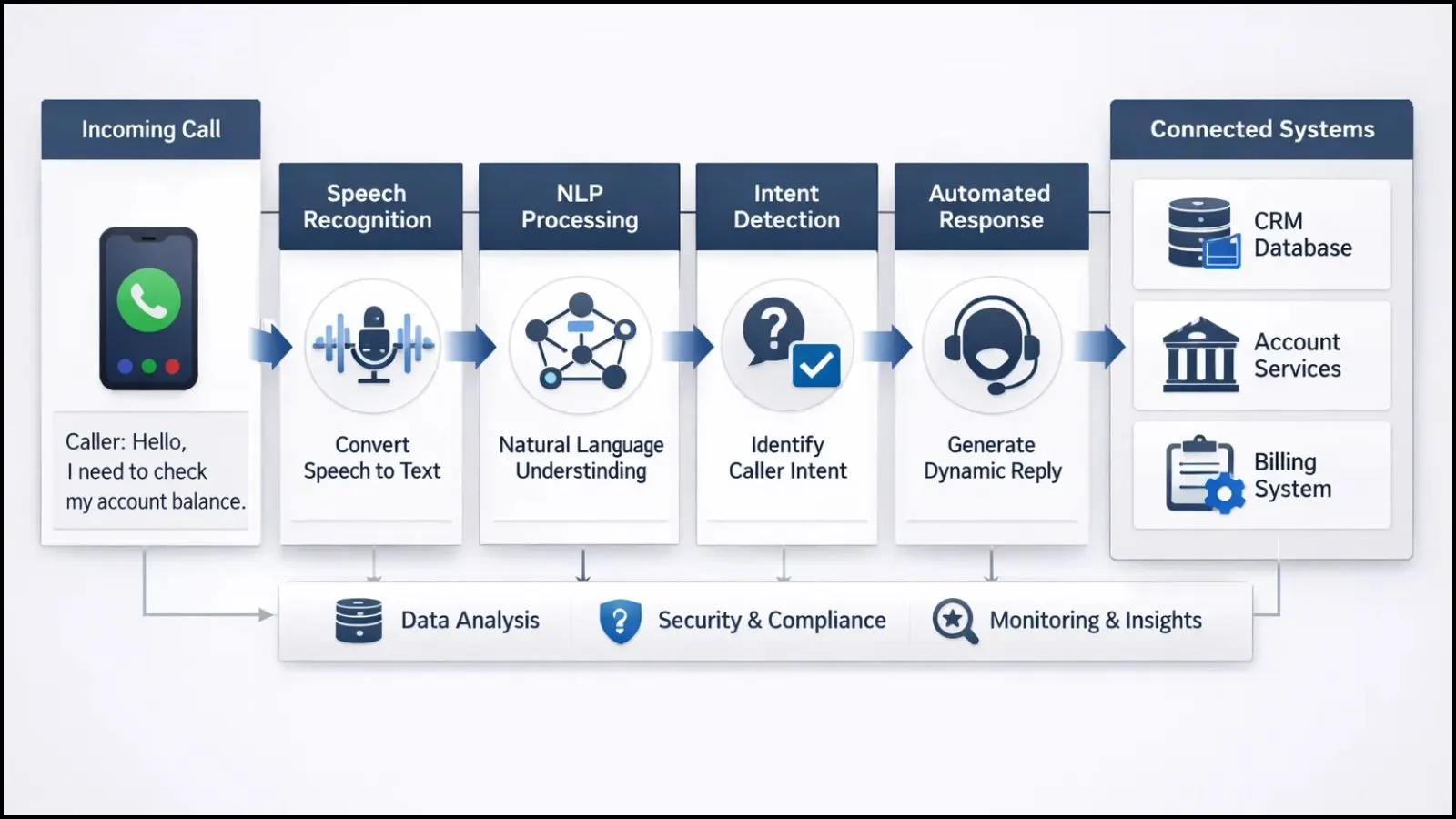
AI calling software leverages artificial intelligence, machine learning, and natural language processing to handle customer calls efficiently. These systems combine ai voice agents, ai phone call agents, and ai call support tools to provide a seamless, automated calling experience.
Key Components of AI Calling Software
- Speech Recognition and NLP – Converts spoken words into text, understands intent, and generates appropriate responses.
- Automated Response System – Handles routine inquiries such as account status, order tracking, or appointment scheduling.
- Call Routing and Integration – Directs complex issues to human agents while ensuring customer information is passed along.
- Analytics and Reporting – Tracks call performance, customer satisfaction, and agent efficiency.
How It Integrates With Call Centers
AI calling software can work alongside existing call center systems, CRM platforms, and helpdesk tools. By integrating seamlessly, AI tools for call center operations improve workflow efficiency, reduce repetitive tasks, and ensure that human agents focus on priority issues.
Practical Example
A customer calls to check their service plan. Instead of waiting for a human agent, an AI voice agent answers, verifies identity, provides the requested details, and can even schedule a follow-up if needed. This reduces wait times, increases satisfaction, and frees human agents for more complex interactions.
With AI handling routine tasks, businesses can achieve faster response times and higher customer satisfaction while keeping operational costs lower.
Key Benefits of AI Voice Agents
Integrating AI voice agents into customer support can transform how businesses interact with clients. From improving efficiency to enhancing customer satisfaction, the advantages are clear.
1. 24/7 Availability
AI voice agents never sleep. They provide round-the-clock support, ensuring customers get answers at any time, even outside business hours. This improves customer experience and reduces frustration from long wait times.
2. Handling High Call Volumes Efficiently
During peak hours, AI agents can manage multiple calls simultaneously without compromising quality. This reduces hold times and prevents human agents from being overwhelmed by repetitive queries.
3. Personalized Customer Experience
AI voice agents can access customer data from CRMs and tailor responses based on prior interactions. This personalization improves engagement and makes the experience more meaningful.
4. Cost Efficiency and Scalability
By automating routine calls, businesses can reduce staffing costs while scaling operations efficiently. AI voice agents can handle increasing call volumes without the need for additional human agents.
5. Insights and Analytics
Many AI call support tools offer analytics features that track call metrics, customer sentiment, and agent performance. These insights help optimize support processes and improve decision-making.
6. Versatility Across Industries
AI voice agents are used in e-commerce, healthcare, finance, telecommunications, and more. Any industry with high call volumes or repetitive queries can benefit from their deployment.
By leveraging these benefits, companies can enhance efficiency, reduce costs, and provide superior customer service, positioning themselves ahead of competitors.
Common Use Cases of AI Voice Agents
AI voice agents are versatile and can be deployed across multiple functions in businesses. Here are the most common ways companies leverage AI voice agents and AI calling software to improve customer interactions:
1. Customer Support and Troubleshooting
AI voice agents can handle FAQs, troubleshoot common issues, and provide instant guidance. This reduces wait times and ensures human agents focus on complex problems.
2. Lead Qualification and Appointment Scheduling
AI phone call agents can qualify leads by asking pre-defined questions, capturing information, and scheduling appointments automatically. This streamlines sales processes and improves conversion rates.
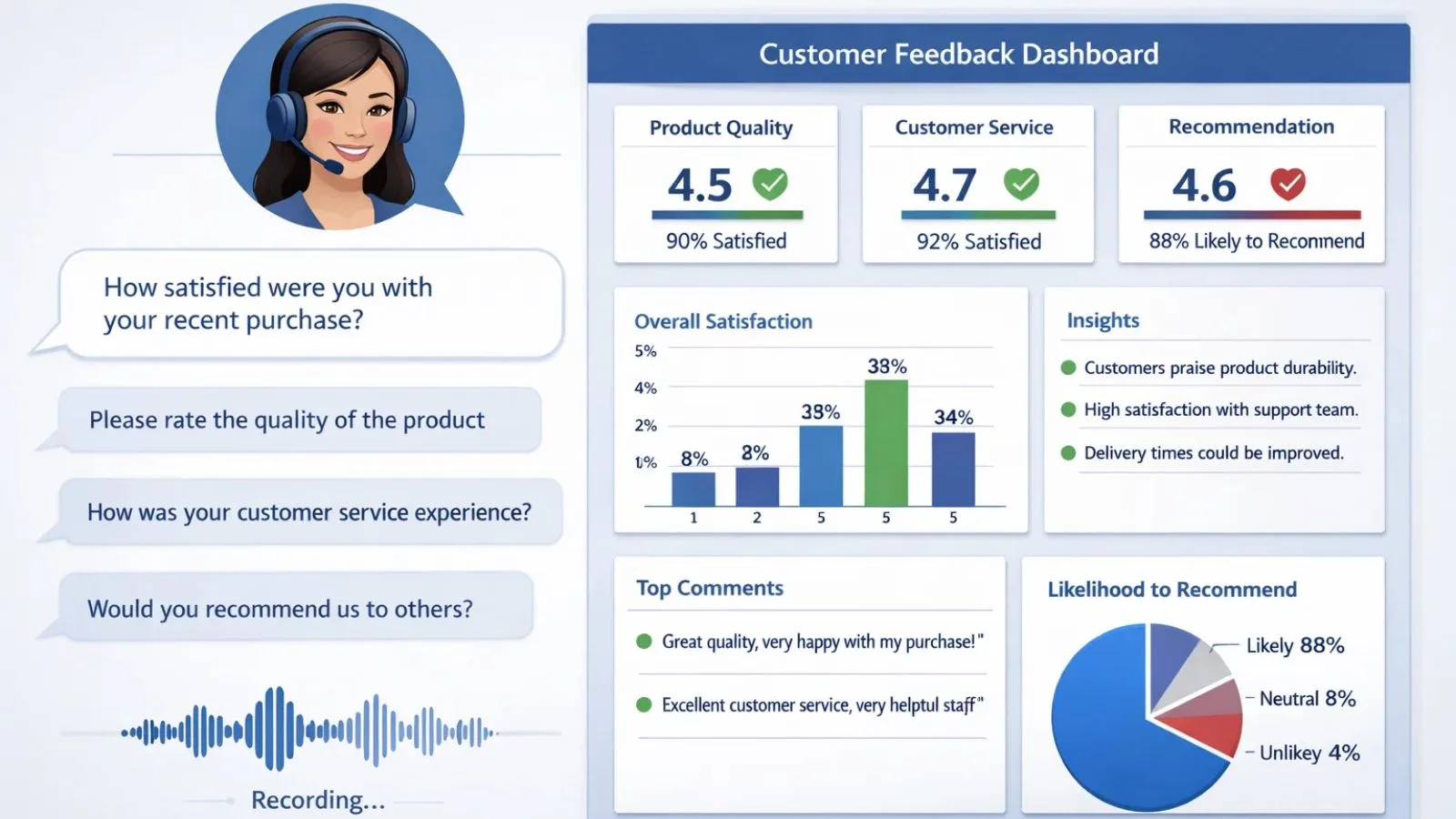
3. Feedback Collection and Surveys
AI call support tools can reach out to customers post-purchase or service to collect feedback. Automated surveys help businesses gauge satisfaction and identify areas for improvement.
4. Handling Repetitive Queries
From billing inquiries to account status updates, AI voice agents can efficiently respond to repetitive calls, freeing human agents to tackle higher-value tasks.
5. Multilingual and Global Support
Advanced AI voice agents can communicate in multiple languages, making them ideal for global businesses needing consistent support across regions.
By applying AI voice agents to these use cases, companies can enhance operational efficiency, reduce costs, and deliver better customer experiences.
Top AI Voice Agent Tools in 2026
With the rise of AI voice agents and AI calling software, several platforms stand out for their features, reliability, and ease of integration. Here’s an overview of the top tools businesses can consider in 2026:
1. CallHippo
- Cloud-based AI calling software designed for sales and support teams
- Features include smart call routing, real-time analytics, and automated follow-ups
- Ideal for small to medium businesses looking for quick implementation
2. Help Scout
- Combines email, chat, and AI call support for a seamless customer service experience
- AI voice agents help with call handling, ticketing, and customer queries
- Focuses on improving response times and team efficiency
3. CloudTalk
- AI-powered call center software with IVR, call analytics, and multi-language support
- Suitable for scaling operations and managing high call volumes
- Provides insights to optimize agent performance
4. CallRail AI
- Focuses on tracking calls, analyzing customer interactions, and improving marketing ROI
- AI voice agents assist with lead qualification and routing
- Helps businesses understand which campaigns drive calls and conversions
5. Phonely
- Offers intelligent call routing, voicemail transcription, and AI-powered conversation handling
- Can integrate with CRMs and other business tools for streamlined workflows
- Enhances customer experience through quick, automated support
6. Taalk
- AI voice agent platform for automated outbound and inbound calls
- Useful for surveys, reminders, and lead engagement
- Provides detailed reporting and performance analytics
These tools help businesses implement AI tools for call center operations efficiently, automate repetitive tasks, and maintain high-quality customer interactions. Choosing the right platform depends on your business needs, call volumes, and integration requirements.
Challenges and Limitations of AI Voice Agents
While AI voice agents and AI calling software offer significant advantages, businesses must be aware of certain challenges when implementing these technologies.
1. Handling Complex Queries
AI voice agents excel at repetitive or structured tasks but may struggle with nuanced, emotionally sensitive, or highly complex customer issues. Human intervention is still necessary for escalated cases.
2. Emotional Intelligence and Empathy
Unlike human agents, AI lacks genuine empathy. While advanced NLP allows for natural conversation, some customers may prefer interacting with a real person for sensitive matters.
3. Integration and Compatibility
Implementing AI voice agents with existing CRMs, helpdesk systems, and call center platforms can be challenging. Proper planning is required to ensure seamless workflows.
4. Data Security and Privacy
AI voice agents handle sensitive customer information, including personal and financial data. Businesses must ensure that platforms comply with data protection regulations like GDPR and HIPAA.
5. Balancing AI and Human Interaction
Over-reliance on AI can reduce customer satisfaction if human support isn’t available when needed. A hybrid approach that combines AI efficiency with human empathy often works best.
Despite these limitations, careful planning, proper tool selection, and a hybrid approach allow businesses to maximize the benefits of AI voice agents while minimizing risks.
Future Trends in AI Voice Agents

The evolution of ai voice agents is accelerating, and businesses can expect even more advanced capabilities in the coming years. Here are the key trends shaping the future:
1. Advanced Natural Language Processing (NLP)
AI voice agents will better understand context, tone, and intent, making conversations more natural and human-like. This will reduce misunderstandings and improve customer satisfaction.
2. Omnichannel Support
Future AI agents will integrate seamlessly across phone, chat, email, and social media, providing consistent customer support regardless of the platform.
3. Predictive and Proactive Assistance
AI will anticipate customer needs, suggest solutions, and even initiate calls or messages based on behavior patterns, improving engagement and reducing friction.
4. Fully Autonomous Call Centers
Some companies may deploy AI-driven call centers that handle most interactions independently, with humans intervening only for complex cases. This can reduce costs and enhance scalability.
5. AI + Analytics Integration
AI voice agents will increasingly leverage analytics to provide actionable insights, such as customer sentiment analysis, campaign effectiveness, and agent performance optimization.
By staying aware of these trends, businesses can adopt AI voice agents strategically and remain competitive in a landscape where fast, personalized, and efficient customer support is increasingly expected.
How Businesses Can Get Started With AI Voice Agents
Implementing AI voice agents effectively requires planning and strategy. Here’s a step-by-step guide to help businesses get started:
1. Assess Business Needs
Identify the areas where AI voice agents can add the most value. Consider call volumes, types of inquiries, and repetitive tasks that can be automated.
2. Choose the Right AI Voice Agent Solution
Evaluate platforms like
CallHippo
Help Scout
CloudTalk
CallRail AI
Phonely
Taalk
based on your business size, integration needs, and budget. Look for features like call routing, analytics, and AI-driven personalization.
3. Integrate With Existing Systems
Ensure your AI voice agent integrates seamlessly with CRM, helpdesk, and other business tools. This creates a unified workflow and provides a better experience for both agents and customers.
4. Train and Monitor the AI
Even AI voice agents require setup and training. Feed them common queries, responses, and customer information. Monitor their performance regularly to improve accuracy and efficiency.
5. Measure ROI
Track metrics like call resolution time, customer satisfaction, call handling efficiency, and cost savings. This helps you gauge the impact of AI voice agents and refine strategies for maximum results.
By following these steps, businesses can implement ai tools for call center operations successfully and ensure a smooth transition to AI-enhanced customer support.
Conclusion
AI voice agents are transforming the way businesses handle customer calls. By automating routine inquiries, providing 24/7 support, and delivering personalized interactions, ai voice agents help companies improve efficiency, reduce costs, and enhance customer satisfaction.
As AI technology continues to evolve, integrating AI calling software and AI phone call agents into your customer support strategy will become increasingly essential. Whether you’re a small business or a large enterprise, adopting AI voice agents strategically ensures you stay competitive and provide superior service in an ever-changing market.
By understanding the technology, leveraging the right tools, and combining AI with human support where necessary, businesses can revolutionize their call centers and deliver exceptional customer experiences consistently.