
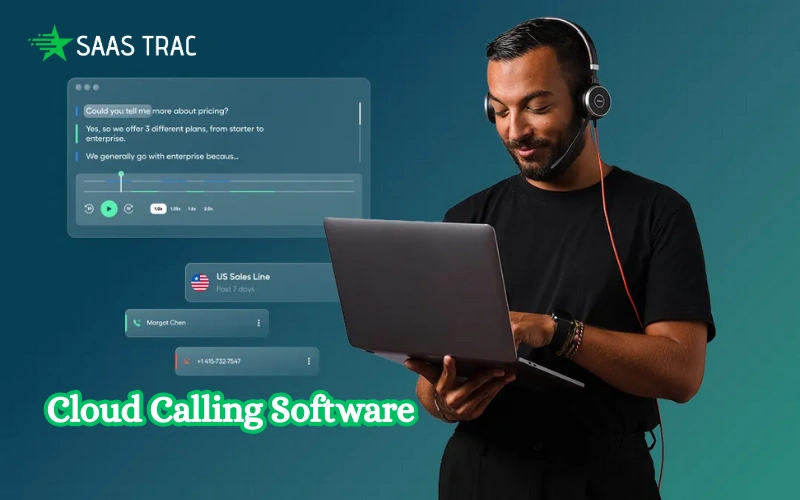
Effective communication plays a crucial role in business growth. Modern companies require solutions that offer reliability, flexibility, and scalability. Cloud calling software has emerged as a key tool, reshaping how teams connect with customers, collaborate internally, and manage day-to-day operations. It helps improve customer service, streamline sales processes, and deliver measurable performance improvements.
This article covers what cloud calling is, the advantages of cloud based business communication, the essential features of the best cloud calling software, and how it functions in contemporary business environments.
Platforms like SaaSTrac assist businesses in evaluating and selecting the right cloud solutions, simplifying the process of choosing cloud calling software that aligns with organizational needs.
What Is Cloud Calling?
Cloud calling represents a major shift from traditional phone systems. Unlike conventional PBX systems that require heavy hardware and maintenance, cloud calling software operates entirely on the cloud. It uses the internet to route calls, enabling employees to make and receive calls from anywhere.
This approach offers more than convenience. It provides businesses with flexibility, scalability, and cost-effectiveness. Companies can expand their communication systems as they grow without investing in physical infrastructure. By integrating with other business tools, cloud calling enhances workflows, customer management, and reporting.
How Cloud Calling Works?

Cloud calling software relies on Voice over Internet Protocol (VoIP) technology. Every call is converted into digital data and transmitted over the internet. Advanced systems include features like automated call routing, virtual phone numbers, and call analytics.
When a company adopts cloud calling software, it gains access to dashboards that display call metrics, coding agent performance, and customer interactions in real-time. Integration with customer relationship management (CRM) systems allows sales and support teams to provide more personalized service. Security measures such as encryption and secure cloud servers protect sensitive business communication.
Top-rated cloud calling software helps businesses find reliable, secure, and efficient cloud-based communication solutions tailored to their needs.
Benefits Of Cloud-Based Business Communication
Cloud-based business communication offers numerous advantages.
- Cost Efficiency
Cloud calling software eliminates the need for expensive phone hardware, maintenance, and long-distance charges. Businesses only use internet-based calls, reducing overall communication expenses while improving operational efficiency. - Scalability
Cloud-based systems allow companies to add new users or lines instantly. Scaling up or down is effortless, supporting business growth without investing in additional infrastructure or complex setups. - Remote Work Support
Employees can make and receive calls from anywhere using laptops or smartphones. Cloud calling ensures uninterrupted communication, empowering remote teams to stay connected and maintain productivity. - Enhanced Customer Support
Integrated features like smart call routing, CRM connections, and analytics enable faster response times, personalized interactions, and better service quality, improving overall customer satisfaction and loyalty. - Collaboration and Efficiency
Call logs, notes, and recordings are shared seamlessly across teams. Cloud-based communication fosters collaboration, reduces miscommunication, and allows staff to work together more efficiently on customer interactions.
Key Features To Look For In The Best Cloud Calling Software

When selecting the best cloud calling software, businesses should focus on features that enhance usability, productivity, and customer experience.
Auto-Attendant and IVR
Automated attendants and IVR systems route callers to the correct department quickly, reducing wait times, improving customer satisfaction, and ensuring that inquiries are handled efficiently.
Call Analytics and Reporting
Cloud calling software provides dashboards displaying call volumes, agent performance, and customer feedback, enabling managers to monitor operations and make data-driven decisions to enhance team productivity.
Integration with Business Tools
Connecting cloud calling software with CRMs, helpdesk solutions, and collaboration tools streamlines workflows, improves customer management, and ensures all departments have access to consistent communication data.
Mobility and Remote Access
Employees can make and receive calls on smartphones, tablets, or laptops, allowing teams to stay connected and maintain seamless communication, whether they are in the office or working remotely.
Security Features
End-to-end encryption, secure cloud storage, and robust user authentication protect sensitive business information, ensuring calls and recordings remain private and compliant with data protection regulations.
SaaSTrac recommends evaluating software based on these criteria to ensure businesses choose solutions that truly enhance their cloud-based business communication.
Discover Cloud Calling Software
Need a smarter way to manage business calls? CloudTalk combines AI intelligence with cloud calling to streamline customer conversations.
1. CloudTalk – AI-Powered Business Calling Platform
What it is:
CloudTalk is a complete cloud calling solution built for sales, support, and remote teams. It replaces traditional PBX systems with a browser-based calling platform that works anywhere.
Key Capabilities:
- Inbound & Outbound Calling: Manage all calls from one dashboard without physical phones.
- AI Conversation Toolkit: Automatically generate call summaries, tags, topics, and sentiment data so you understand every interaction without manual note-taking.
- AI Voice Agents: Deploy virtual voice agents to answer calls, guide callers through options, or gather information when your team isn’t online.
- Global Numbers & CRM Integration: Use local numbers in 160+ countries and sync all call data with CRMs like HubSpot, Salesforce, and Zendesk.
- Live Coaching & Monitoring: Managers can listen in on live calls and provide real-time guidance to improve performance.
Why it’s useful:
CloudTalk is ideal for businesses that need reliable, scalable calling without hardware — from small teams to growing contact centers. It turns every call into actionable data and supports teams no matter where they work.
2. CallHippo AI – Smart AI Calling Software for Teams
What it is:
CallHippo AI is an AI-enhanced cloud telephony system that blends traditional calling with intelligence to help teams better understand and manage conversations.
Key Capabilities:
- AI Call Intelligence: Evaluate incoming and outgoing calls to uncover patterns in customer intent, agent behavior, and outcomes.
- Smart Call Routing: Automatically send calls to the right person based on availability, role, region, or business hours.
- Global Virtual Numbers: Get local or international numbers so customers always see trusted caller IDs.
- Recordings & Transcripts: Every call can be recorded and converted to searchable text for training and quality analysis.
- CRM & Integration Support: Connect call activity directly with CRMs and business tools to keep contact records up to date.
Why it’s useful:
CallHippo AI helps teams not just make calls, but learn from them. Its intelligent analytics and routing make support and sales conversations smoother and more productive — especially for remote or globally distributed teams.
3. Composio – AI Integration and Workflow Connector
What it is:
Unlike CloudTalk and CallHippo, Composio isn’t a calling app itself. It’s a cloud-based AI integration platform that connects your calling system (or any AI agent) with dozens of other apps and tools you use.
Key Capabilities:
- Massive App Connectivity: Link your cloud calling software with 250+ apps and APIs (like CRMs, workflows, helpdesks, databases).
- Secure Authentication: All linked apps use centralized credential and token management, so your data stays safe.
- Workflow Automation: Build automated actions that trigger based on calls — e.g., logging a call in CRM, sending follow-up emails, updating statuses, or creating tickets.
- RPA & Custom APIs: Incorporate robotic process automation and custom tools to handle complex tasks without manual work.
Why it’s useful:
Composio is perfect if your business uses multiple systems and you want calling workflows fully automated across them. It acts as a central nervous system — connecting call data, AI agents, and business logic so actions happen seamlessly.
Why SaaSTrac’s Cloud Calling Software Matters
All the tools above are built for modern businesses that:
- Don’t want traditional phone hardware
- Need remote or distributed teams to stay connected
- Want actionable insights from every call
- Aim to automate workflows across systems
Whether you’re improving support quality, boosting sales outreach, or simply eliminating manual work, these cloud calling solutions and AI integrations help you communicate smarter and scale faster without building custom systems from scratch.
Top Use Cases Of Cloud Calling In Businesses

Effective communication drives business growth, and modern companies need tools that are reliable, scalable, and flexible. Cloud calling software is transforming how teams connect, collaborate, and serve customers efficiently.
Customer Support Teams
Cloud calling software allows support agents to handle inquiries efficiently, track call history, monitor performance metrics, and deliver faster, personalized service that enhances customer satisfaction and loyalty.
Sales Teams
Sales representatives can connect with prospects instantly, log calls and interactions in CRM systems, analyze call performance, and optimize follow-ups to increase conversion rates and drive revenue growth.
Remote Workforce Communication
Teams working from multiple locations can stay connected through cloud calling, using features like call conferencing, instant messaging, and shared dashboards to collaborate seamlessly and maintain productivity.
Enterprise Collaboration
Large organizations benefit from unified cloud calling systems that streamline internal communication, ensure real-time updates, reduce miscommunication, and keep departments coordinated for smoother operations and faster decision-making.
Investing in the best cloud calling software improves team productivity, enhances customer support, and streamlines business communication. Platforms like SaaSTrac help companies discover the right solutions to meet their needs and stay competitive.
How To Choose The Best Cloud Calling Software?
Choosing the right cloud calling software requires careful consideration of several factors:
- Pricing Models
Evaluate subscription plans carefully, considering the number of users, call volume, and included features. Choose a plan that provides value without compromising essential functionality or scalability for future business growth. - User Interface and Ease of Use
Select software with an intuitive and simple interface. Employees can adopt it quickly without extensive training, reducing onboarding time and ensuring your team communicates efficiently from day one. - Customer Support
Reliable technical support and responsive service are crucial. Choose providers who offer prompt assistance, troubleshoot issues effectively, and ensure uninterrupted business communication for both employees and customers. - Scalability and Integration
The software should grow with your business. Seamless integration with existing tools, CRMs, and collaboration platforms enhances workflows, supports remote teams, and future-proofs your cloud-based business communication system. - Making Informed Decisions
Comparing top options allows businesses to choose the best cloud calling software for their needs. Detailed reviews and comparisons ensure the selection aligns with operational goals and communication requirements.
SaaSTrac provides detailed comparisons of the best cloud calling software, helping businesses make informed decisions efficiently.
Common Mistakes To Avoid When Implementing Cloud Calling
Even with advanced software, businesses can face challenges.
- Ignoring Security and Compliance
Choose software that meets industry regulations and protects sensitive data. Failing to prioritize security can lead to breaches, legal issues, and loss of customer trust. - Choosing Without Scalability
Avoid software that cannot grow with your business. Selecting a rigid system limits expansion, makes onboarding new users difficult, and increases costs when upgrades become necessary. - Poor Integration
Ensure the software integrates seamlessly with CRM, helpdesk, and productivity tools. Lack of integration leads to inefficient workflows, data silos, and reduced team productivity. - Maximizing Cloud Calling Benefits
By avoiding these common mistakes, businesses can leverage cloud calling software to improve communication, boost customer satisfaction, and enhance overall team collaboration and efficiency.
By avoiding these pitfalls, companies can maximize the benefits of cloud calling software.
Future of Cloud-Based Business Communication
The future of cloud-based business communication looks promising with innovations like AI-powered call analytics, automated workflows, and enhanced collaboration tools. Businesses that adopt cloud calling software gain a competitive edge, improve customer experiences, and ensure efficient team communication.
Trends indicate increasing demand for mobility, real-time analytics, and seamless integration with business systems. Software providers, including those tracked by SaaSTrac, continue to innovate features that simplify operations and enhance business outcomes.
Conclusion:
Cloud calling software transforms how businesses communicate internally and externally. It reduces costs, improves collaboration, supports remote work, and enhances customer satisfaction. By understanding what cloud calling is, evaluating features, and selecting the best cloud calling software, companies position themselves for growth.
SaaSTrac helps businesses find reliable, secure, and feature-rich cloud calling solutions, making it easier to implement cloud-based communication efficiently.
Investing in cloud calling software is no longer optional; it is a critical step toward modern business communication that drives results, growth, and customer loyalty.
FAQs About Cloud Calling Software
What is cloud calling software?
Cloud calling software is a VoIP-based solution that allows businesses to make and receive calls over the internet, eliminating traditional phone hardware while enhancing flexibility and collaboration.
How does cloud calling software work?
It routes calls through the internet rather than landlines, often integrating with CRM, helpdesk, and collaboration tools, enabling teams to track performance and communicate efficiently from anywhere.
What are the benefits of cloud-based business communication?
It offers cost savings, scalability, remote work support, improved customer support, and enhanced collaboration, allowing teams to work efficiently and serve customers better.
Who can benefit from cloud calling software?
Customer support teams, sales teams, remote employees, and large enterprises benefit by improving communication, tracking performance, and streamlining workflows.
How do I choose the best cloud calling software?
Consider pricing models, user interface, scalability, integration with existing tools, and reliable customer support to ensure the software meets your business needs.