

Ecommerce brands operate in an environment where speed, accuracy, and personalization decide success. Customer expectations continue to rise, competition grows stronger, and data volumes expand every day. Relying only on manual processes or basic automation no longer delivers consistent results. Brands now need intelligent systems that help them understand customers, optimize operations, and respond quickly to market changes. AI tools for ecommerce meet these demands by turning data into clear insights and automated actions.
These tools help brands personalize shopping experiences, improve decision-making, and scale efficiently without added complexity. That advantage explains why forward-thinking brands invest in AI-driven solutions to fuel sustainable ecommerce growth.
Why AI Tools Matter In Modern Ecommerce
Ecommerce brands face constant pressure to move faster, personalize better, and scale without friction. Customers expect relevant products, quick responses, and smooth shopping journeys across every touchpoint. Manual processes no longer support this level of demand. That shift pushes brands to adopt smarter systems that convert data into decisions.
AI tools for ecommerce help brands manage complexity with clarity. These tools analyze customer behavior, predict trends, and automate repetitive tasks. AI in ecommerce allows teams to focus on strategy while technology handles precision and speed. As competition grows, brands that rely on intuition alone lose ground to those that use intelligence-driven platforms.
What Does AI Do For Ecommerce Growth?
AI in ecommerce works as a growth engine that turns raw data into clear actions. Every store generates customer data through clicks, searches, purchases, and interactions. Ecommerce AI processes this data to reveal patterns that humans cannot spot at scale.
AI tools for ecommerce support demand forecasting, customer segmentation, pricing insights, and performance tracking. AI also connects marketing, sales, and operations into one decision loop. With AI for ecommerce, brands predict demand shifts, reduce waste, and improve profit margins. Ecommerce AI replaces guesswork with clarity and consistency.
How AI Tools For Ecommerce Transform Customer Experience?
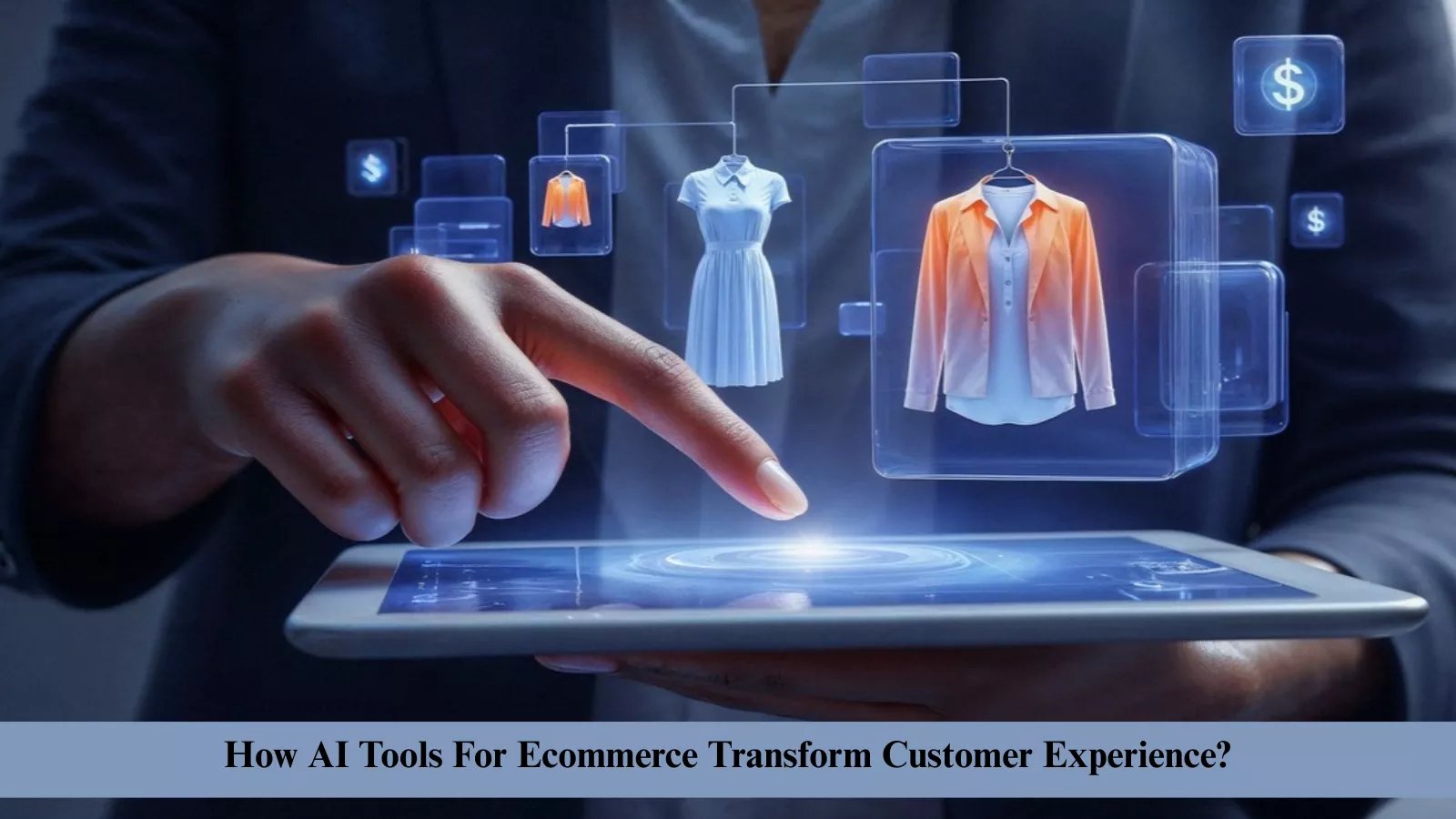
Customer experience defines ecommerce success. AI tools for ecommerce create shopping journeys that feel personal, relevant, and seamless. AI analyzes browsing history, purchase intent, and preferences to show products customers want at the right moment.
Chatbots and AI assistants respond instantly to queries and support requests. Recommendation engines suggest complementary products that increase average order value. Ecommerce AI adapts content, offers, and layouts for each visitor. AI in ecommerce improves satisfaction while reducing customer effort across every interaction.
Ecommerce AI Use Cases That Drive Revenue

Revenue growth in ecommerce depends on accurate decisions made at the right time. Manual analysis cannot keep up with fast-changing customer behavior and market demand. Ecommerce AI solves this challenge by identifying patterns, predicting outcomes, and enabling brands to act with confidence. These revenue-focused use cases show how AI tools for ecommerce directly impact sales, efficiency, and long-term growth.
AI for Product Recommendations
AI for ecommerce powers recommendation engines that boost conversions. These systems analyze user behavior, preferences, and buying patterns. AI tools for ecommerce suggest products that match intent, which increases sales and cross-sell opportunities.
AI for Predictive Inventory Planning
Ecommerce AI predicts demand using sales history, seasonality, and trends. Brands avoid overstock and stockouts while improving cash flow. AI tools for ecommerce support smarter purchasing and warehouse planning.
AI for Pricing Optimization
Dynamic pricing models adjust prices based on demand, competition, and customer behavior. It ensures margins stay competitive without manual effort.
AI for Churn Prediction
AI in ecommerce identifies customers at risk of leaving. Brands can act early with offers, content, or support. Ecommerce AI protects retention and lifetime value.
When brands apply ecommerce AI across recommendations, inventory, pricing, and retention, they unlock consistent revenue growth while reducing guesswork. AI tools for ecommerce turn data into profitable actions that scale with business goals.
AI Ecommerce Tools That Power Smarter Operations
Strong backend systems form the foundation of scalable ecommerce operations, and automation now plays a key role in removing delays and inefficiencies.
- Workflow Automation:
AI ecommerce tools automate order processing, payment checks, fraud detection, and inventory updates. AI tools for ecommerce reduce manual effort, minimize errors, and keep operations consistent during high sales volumes. - Smarter Supply Chain Management:
Ecommerce AI analyzes demand trends, supplier data, and delivery timelines. AI in ecommerce helps brands plan restocking, prevent delays, and improve fulfillment speed across warehouses. - Centralized Operational Visibility:
AI tools for ecommerce provide real-time dashboards for orders, inventory, customer activity, and performance metrics. Teams make faster decisions with accurate and unified data access. - Scalable Operations Without Headcount Growth:
AI ecommerce tools handle repetitive backend tasks automatically. Businesses scale faster while maintaining efficiency without expanding operational teams. - Tool Evaluation and Optimization:
Many brands rely on trusted platforms that organize and compare ai ecommerce tools. These resources help select solutions that match budgets, workflows, and long-term operational goals.
By adopting the right AI ecommerce tools, brands streamline operations, reduce costs, and build a reliable infrastructure that supports long-term growth.
Real-World Ecommerce AI Agent Examples
Ecommerce AI agents go beyond basic automation. These agents operate autonomously across workflows, analyzing context, making decisions, and taking action in real time. Instead of responding to single triggers, AI agents manage end-to-end ecommerce processes that directly impact revenue, customer experience, and operational efficiency.
AI Agents for Instant Checkout Decisions
AI agents play a growing role at checkout, especially for fraud detection, payment validation, and flexible payment approvals. These agents assess customer behavior, transaction risk, and historical data in real time. They approve or flag transactions instantly without slowing down the checkout flow.
This reduces cart abandonment while maintaining strong risk controls, helping ecommerce brands convert intent into completed purchases.
AI Agents for Cart Recovery and Order Resolution
Cart abandonment and order issues often require fast, coordinated responses. AI ecommerce agents monitor abandoned carts, inventory status, and delivery timelines. They trigger personalized reminders, apply targeted incentives, or update customers proactively when delays occur.
By connecting fulfillment, communication, and customer history, these agents recover lost revenue while improving post-purchase trust.
AI Agents for Customer Support and Service Automation
Customer service AI agents manage queries across chat, email, and messaging apps without manual intervention. They resolve common issues such as order tracking, refunds, returns, and account updates. When a case becomes complex, the agent escalates it with full context to human teams.
This approach lowers support costs while delivering faster, more consistent customer experiences.
AI Agents for Retention and Lifecycle Engagement
Retention-focused AI agents track customer behavior after purchase. They identify churn signals, trigger loyalty offers, and personalize follow-up communication based on lifecycle stage. These agents coordinate campaigns, discounts, and reminders automatically.
By managing engagement continuously, ecommerce brands increase repeat purchases and long-term customer value without relying on reactive marketing efforts.
How to Choose Ecommerce Intelligence Tools That Actually Scale
Choosing the right ecommerce tools starts with clarity, not complexity. Instead of chasing features, brands should focus on what will drive measurable growth and operational efficiency.
- Start with clear business goals
Identify what you want to improve first—conversion rates, retention, inventory planning, customer support, or operational efficiency. Clear goals prevent overinvestment in tools you won’t fully use. - Map tools to real ecommerce use cases
Some platforms specialize in personalization and marketing, while others focus on operations, analytics, or automation. Select tools that directly support your most critical workflows. - Check integration compatibility
Ecommerce tools perform best when they integrate smoothly with existing systems such as your ecommerce platform, CRM, ERP, and payment gateways. Poor integration creates data silos and slows execution. - Evaluate scalability and flexibility
Choose solutions that can handle growth in traffic, orders, and data volume without performance drops. Tools should adapt as your business expands across channels and regions. - Assess data security and compliance
Customer and transaction data must be protected. Ensure the platform follows strong security standards and compliance requirements relevant to ecommerce operations. - Measure ROI, not just features
Look beyond feature lists and focus on outcomes like revenue uplift, cost reduction, and productivity gains. Tools should clearly support measurable business impact. - Use trusted comparison platforms
Many brands rely on curated platforms to compare ecommerce tools based on features, real-world use cases, and user feedback. SaasTrac helps businesses evaluate and shortlist ecommerce solutions that align with their growth objectives without trial-and-error.
Metrics And KPIs That AI Improves In Ecommerce
AI-driven insights help ecommerce brands measure what truly matters and improve performance at every stage of the customer journey.
- Conversion Rate Optimization:
AI for ecommerce analyzes browsing behavior, intent signals, and past purchases to deliver relevant content and offers. This relevance encourages shoppers to complete purchases, which directly lifts conversion rates. - Average Order Value (AOV):
Smart product recommendations, bundles, and upsell suggestions powered by ecommerce AI increase cart value. Customers see items that complement their choices, which leads to higher spend per order. - Customer Retention Rate:
AI in ecommerce predicts repeat purchase behavior and flags customers who may disengage. Brands can launch timely campaigns, loyalty offers, or personalized communication to keep customers active. - Bounce Rate Reduction:
AI tools for ecommerce optimize landing pages, product discovery, and site navigation. Shoppers find what they need faster, which lowers bounce rates and improves on-site engagement. - Customer Lifetime Value (CLV):
By combining personalization, retention strategies, and predictive analytics, ecommerce AI increases long-term customer value. Brands build stronger relationships instead of relying only on one-time sales. - Real-Time Performance Tracking:
AI tools for ecommerce monitor KPIs continuously and surface actionable insights instantly. Teams adjust pricing, campaigns, and inventory decisions faster than manual reporting allows.
Together, these improvements give brands clearer visibility into growth drivers and the ability to refine strategies with speed and precision.
Common Mistakes Brands Make With Ecommerce AI Implementation
Many brands rush adoption without preparation. Poor data quality limits AI accuracy. Misaligned tools fail to match workflows. Teams sometimes expect instant results without optimization.
AI tools for ecommerce require proper onboarding and clear objectives. Brands must choose ai ecommerce tools that align with existing processes. Platforms like SaasTrac help reduce risk by offering curated insights, comparisons, and expert evaluations of ecommerce AI solutions.
Future Trends: What’s Next for AI in Ecommerce
AI in ecommerce continues to evolve rapidly. Generative AI supports product content, visuals, and descriptions. Voice commerce AI enables hands-free shopping experiences. Multimodal AI combines text, image, and behavioral data for deeper insights.
Supply chain AI improves forecasting and logistics coordination. Ecommerce AI agents grow more autonomous and adaptive. Brands that track these trends and explore emerging tools stay ahead of competitors.
Conclusion:
Smart brands succeed by making informed decisions at scale. AI tools for ecommerce provide speed, accuracy, and adaptability that manual systems cannot match. From personalization to operations, AI for ecommerce strengthens every growth lever.
Platforms like SaasTrac simplify discovery by organizing trusted ecommerce AI tools and AI agent solutions in one place. Brands that adopt ecommerce AI today build resilience and relevance for tomorrow.
FAQs
- What are AI tools for ecommerce?
AI tools for ecommerce use machine learning and data analysis to automate tasks like personalization, recommendations, pricing, and customer support. These tools help brands improve efficiency, sales, and customer experience. - How do AI tools for ecommerce increase sales?
AI tools for ecommerce analyze customer behavior and purchase history to deliver relevant product suggestions, dynamic pricing, and personalized offers, which improves conversion rates and average order value. - What is the role of AI in ecommerce operations?
AI in ecommerce automates backend processes such as inventory planning, order management, fraud detection, and demand forecasting. This automation reduces errors and supports faster, more accurate operations. - Are AI ecommerce tools suitable for small businesses?
Yes, many ai ecommerce tools scale based on business size and budget. Small businesses use AI for ecommerce to personalize marketing, manage inventory efficiently, and compete with larger brands. - How does ecommerce AI improve customer experience?
Ecommerce AI personalizes product discovery, optimizes search results, and supports instant customer assistance through AI chatbots. These features create faster, smoother, and more relevant shopping experiences.