
Artificial intelligence has reached nearly every industry, but its impact on healthcare has been unlike anything else. What began as experimental algorithms in lab settings has now become an everyday part of how hospitals, clinics, and even home-care devices work. Today, the conversation around AI in healthcare is no longer futuristic—it’s practical, measurable, and deeply woven into how patients receive care.
From early disease detection to hospital workflow optimization and investment trends that are fueling new innovations, the growth of this field shows no signs of slowing down. This blog takes an in-depth, fully informational look at the state of AI for healthcare, the reasons behind rapid AI adoption, the challenges, and what the next decade may look like.
Why AI In Healthcare Matters Right Now
Healthcare is an industry built on data—patient histories, lab reports, imaging scans, research studies, genetic sequences, treatment outcomes. Traditionally, analyzing all this information took massive teams of specialists and long timeframes. AI changes that entirely.
AI systems can:
- Process millions of data points in seconds
- Identify patterns beyond human perception
- Provide predictive insights
- Support decision-making with real-time information
This is why the AI healthcare market has grown at record speed. Hospitals want faster diagnoses. Governments want more efficient systems. Patients want more accessible care. AI has become the bridge linking these needs.
The momentum isn’t hype—it’s necessity.
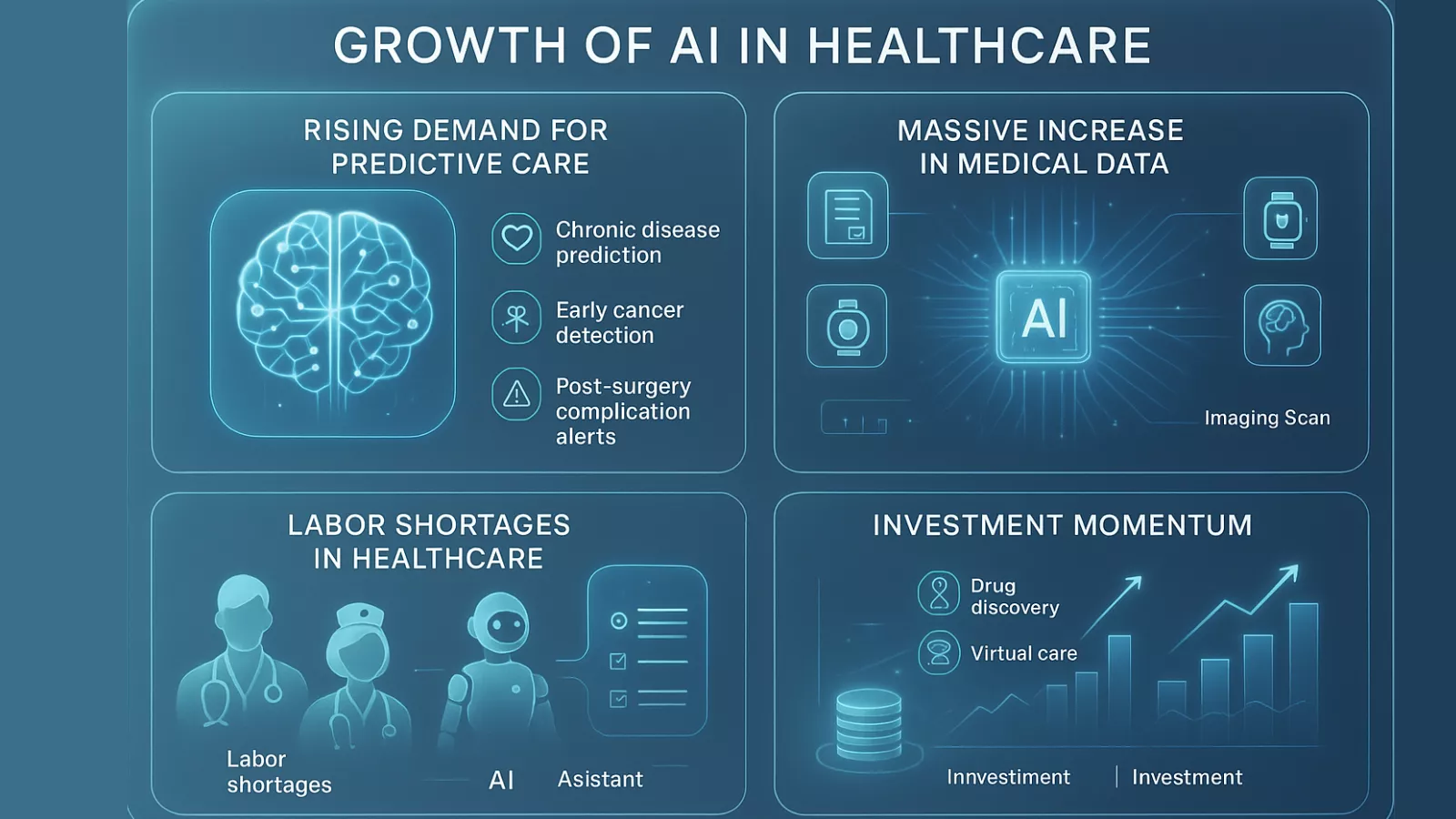
Growth of AI in Healthcare: Why the Market Is Accelerating
The growth of AI in healthcare is tied to multiple forces happening simultaneously:
a. Rising Demand for Predictive Care
Health systems are transitioning from a treatment-first approach to a prevention-first approach.
AI models can analyze risk factors and predict:
- Likelihood of chronic disease
- Risk of cardiovascular issues
- Early-stage cancer indicators
- Potential complications after surgery
This shift from reactive to proactive care is one of the biggest reasons AI adoption is increasing.
b. Massive Increase in Medical Data
Electronic health records, imaging systems, wearables, and telemedicine platforms generate more data than ever.
AI thrives on large datasets.
c. Labor Shortages in Healthcare
Many countries face shortages of physicians, nurses, and technicians.
AI doesn’t replace humans—but it reduces administrative load and helps clinicians focus on patient-facing care.
d. Investment Momentum
Billions of dollars have flowed into AI investment in healthcare, pushing innovation in medical imaging, biotech research, virtual care, drug discovery, and more.
Investors see AI as the backbone of the future health ecosystem.
Key Areas Where AI Is Already Transforming Healthcare
AI is not a single tool—it’s a collection of technologies. Each one plays a different role inside the healthcare system.
1. AI in Medical Imaging & Diagnostics
Medical imaging was one of the earliest and most successful applications of AI.
Today, algorithms can analyze:
- CT scans
- MRIs
- X-rays
- Ultrasounds
- Pathology slides
Better yet, they do it with remarkable accuracy—sometimes detecting abnormalities before radiologists can.
Examples of real-world impact:
- Faster cancer detection
- Earlier identification of fractures
- Automated recognition of tumors, lesions, and infections
- Real-time alerts in emergency diagnoses
AI doesn’t replace radiologists. Instead, it supports them by highlighting areas of concern and eliminating human oversight errors.
2. AI in Drug Discovery & Clinical Research
Developing a new medicine traditionally takes 10–15 years.
AI can shrink that window dramatically.
Machine learning models help:
- Identify molecular targets
- Simulate drug behavior
- Predict side effects
- Determine patient populations
- Optimize clinical trial design
Pharma companies are adopting AI because it saves millions of dollars and accelerates breakthroughs that once took decades.
3. AI for Personalized Medicine
One-size-fits-all healthcare is fading away.
AI allows treatments to be customized based on:
- Genetic makeup
- Lifestyle factors
- Biomarkers
- Patient response patterns
- Risk profiles
For example:
- Two people with the same disease may require two different treatment paths.
- AI identifies which therapy is most likely to work for each individual.
This is the foundation of precision medicine.
4. Wearable Devices & Remote Monitoring
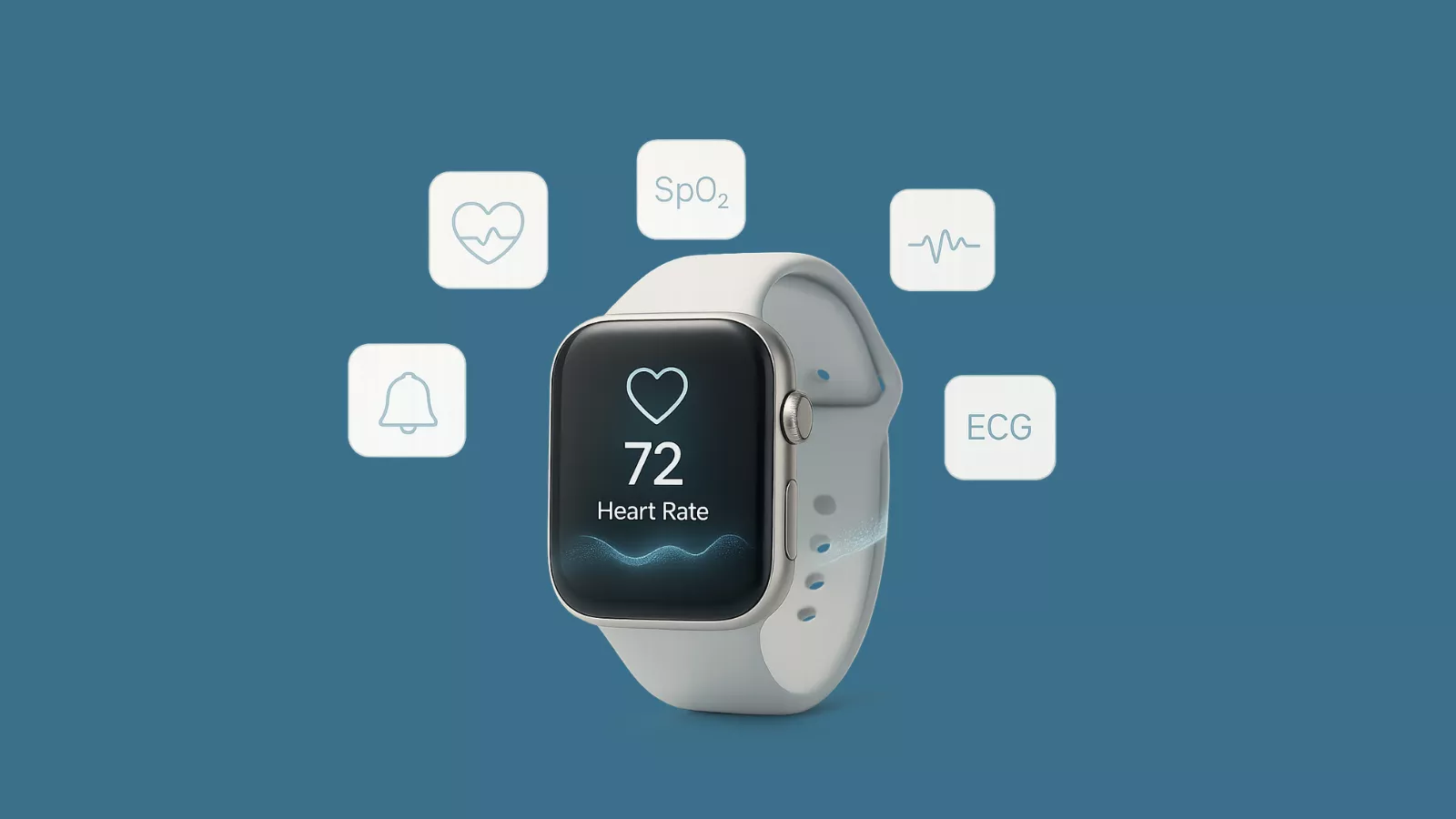
From smartwatches tracking heart rate to medical-grade devices that measure oxygen levels, wearables have made real-time health monitoring accessible.
AI enhances them by:
- Detecting irregularities
- Notifying physicians
- Predicting health events (e.g., arrhythmia)
- Personalizing feedback for each user
These tools help manage chronic conditions like diabetes, hypertension, and sleep disorders—without frequent hospital visits.
5. AI in Hospital Operations
Hospitals are busier than ever, and operational inefficiencies cost time, money, and patient satisfaction.
AI helps with:
- Predicting emergency room peak hours
- Optimizing staffing schedules
- Managing bed availability
- Automating administrative tasks
- Prioritizing high-risk patients
- Reducing wait times
This behind-the-scenes AI usage has one of the biggest impacts on patient experience.
6. Virtual Care, Chatbots & Symptom Checkers
Telemedicine has grown rapidly, and AI stepped in to support it.
AI-powered systems can:
- Guide patients through symptoms
- Book appointments
- Manage follow-ups
- Provide reminders for medication
- Offer basic triage
While these tools don’t replace doctors, they simplify early-stage care and help route patients to the right specialists faster.
Adoption of AI in Healthcare: What’s Driving It?
The adoption of AI in healthcare varies from country to country, but global patterns are clear.
Healthcare systems adopt AI because it helps them:
✔ Reduce errors
✔ Increase efficiency
✔ Improve patient outcomes
✔ Cut administrative workload
✔ Modernize outdated systems
✔ Reduce costs
✔ Support underserved rural communities
AI is being integrated into:
- Hospitals
- Insurance companies
- Clinics
- Diagnostic labs
- Medical device manufacturers
- Research centers
- Home-care ecosystems
The adoption curve keeps rising as more organizations see measurable benefits.
AI Investment in Healthcare: The Business Side of Innovation
Money is one of the strongest drivers of technological progress.
And investors have noticed the potential of AI in medicine.
Why investors love the AI healthcare market:
1. High Return Potential
Healthcare spending increases each year.
AI offers solutions that scale globally.
2. Demand for Faster Innovation
Drug discovery, biotech, robotics, and gene therapy all depend on computational power.
3. Government Support
Many countries are funding AI modernization to reduce long-term health costs.
4. The Rise of Digital Health Startups
Startups are now focusing on:
- AI diagnostics
- AI biology platforms
- Health data analysis
- Virtual patient engagement
- Wearable ecosystems
- Medical robotics
Investment activity continues to surge because AI has become a core pillar of the future medical landscape.
Challenges Slowing Down AI Adoption in Healthcare
Despite rapid progress, several challenges remain.
1. Data Privacy Concerns
Medical data is extremely sensitive.
AI tools must be held to strict privacy standards.
2. Bias in Algorithms
When AI learns from narrow or incomplete datasets, the outputs can become biased. This can affect diagnosis accuracy across diverse populations.
3. Integration With Legacy Systems
Hospitals often operate on outdated technology.
Implementing AI can be complicated and expensive.
4. Need for Human Oversight
AI can support—but not replace—medical judgment.
5. Regulatory Uncertainty
Governments are still establishing rules around AI-driven clinical support systems.
Even with these challenges, the momentum continues because the benefits are too significant to ignore.
The Future of AI in Healthcare
Looking ahead, AI won’t just support healthcare—it will redefine it.
Here’s what the next decade is expected to bring.
1. Earlier and More Accurate Diagnoses
From Alzheimer’s detection years before symptoms to faster pathology results, early diagnosis will become the norm.
2. Fully Personalized Care Plans
AI will analyze genetics, behavior, habits, and environment to create tailored medical plans.
3. Autonomous Surgical Assistance
Robotic surgery is growing rapidly.
Future AI systems will enhance precision, adjust in real-time, and help surgeons operate with superior accuracy.
4. Virtual Hospitals & Continuous Care
Patients will be monitored in real time from home, reducing hospital admissions.
5. AI-Assisted Mental Health Support
Emotion-detection models and conversational agents will support mental health therapy—ethically and responsibly.
6. Global Health Predictions
AI will help track outbreaks, predict disease patterns, and guide public health decisions.
7. Integration Across the Entire Healthcare Chain
From appointment scheduling to billing to remote treatment—AI will eventually tie every part of the medical system together.
The direction is clear: AI is becoming a fundamental layer of modern medicine.
Final Thoughts: AI in Healthcare Is Not Replacing Doctors—It’s Empowering Them
There’s a misconception that AI will take over healthcare.
In reality, the opposite is happening.
AI handles the repetitive, analytical, data-heavy tasks so clinicians can focus on what truly matters:
- Human connection
- Empathy
- Interpretation
- Clinical judgment
- Patient-centered care
The future of AI healthcare isn’t about replacing humans—it’s about giving them better tools.
As investments rise, adoption increases, and technology evolves, AI will continue to strengthen the foundation of global healthcare systems. The next decade of medicine will be faster, safer, more personalized, and more accessible—powered by intelligent systems working behind the scenes.