
Research today moves at an incredible pace, and keeping up with data, trends, and insights can feel overwhelming. Traditional methods are often slow, repetitive, and leave room for error. That’s where an AI research tool can make a real difference. By harnessing artificial intelligence, researchers can streamline data collection, uncover trends, and gain meaningful insights much faster and more efficiently.
Academic studies, market research, and scientific analysis all demand time, precision, and deep insight. Integrating advanced AI-driven technology into your workflow helps reduce manual effort, improve accuracy, and add greater depth to your findings. From identifying relevant publications to summarizing large datasets, these intelligent tools support productivity at every stage of the process.
Understanding The Role Of AI In Research

AI is transforming the way research is conducted. An AI research tool can process massive volumes of data, identify patterns, and provide insights that may take humans weeks or months to uncover. This technology doesn’t replace researchers; while it empowers them to focus on critical thinking, analysis, and interpretation.
Key advantages of using an AI research tool include:
- Automated Data Collection: Pulls relevant information from multiple sources without manual searching.
- Data Summarization: Condenses large datasets or publications into key points for quicker understanding.
- Trend Analysis: Detects emerging trends and insights in real time.
- Collaboration Support: Shares findings across teams and integrates with other research platforms.
In essence, AI accelerates research by handling repetitive, labor-intensive tasks, freeing researchers to concentrate on strategy and creativity.
How AI Research Tools Improve Academic Studies?
For academics, staying on top of the latest publications, citations, and research trends is a constant challenge. Modern platforms streamline this process by scanning journals, conferences, and online databases to surface the most relevant studies.
Benefits in academia include:
- Faster Literature Reviews: An AI research tool quickly identifies key publications based on relevance and credibility.
- Citation Management: Organizes references automatically for papers, theses, and reports.
- Content Generation: Summarizes research papers or generates abstracts to save time.
Researchers no longer need to manually sift through hundreds of articles. With advanced digital solutions, academic teams can improve efficiency, accuracy, and depth of understanding.
AI Agents: The Smart Assistants For Research
While AI research tools streamline tasks, marketing AI agents take automation a step further. These intelligent assistants act autonomously, continuously collecting, analyzing, and summarizing data based on your research goals. Unlike traditional software, AI agents adapt to changing requirements and learn from user interactions, enhancing their accuracy over time.
For example, AI agents can:
- Track newly published papers in a specific field.
- Generate summary reports with key insights.
- Alert researchers about emerging trends or important updates.
Integrating AI agents into the research workflow allows teams to maintain continuous, intelligent oversight of projects while minimizing manual effort.
What Are The Key Benefits Of Using An AI Research Tool?
Adopting an AI research tool brings measurable improvements across all types of research projects. Here’s how it can transform your workflow:
1. Increased Productivity:
Modern research technology automates repetitive and time-consuming tasks such as data extraction, literature review, and citation management. This allows researchers to spend more time analyzing results, interpreting findings, and generating actionable conclusions.
2. Enhanced Accuracy:
Machine learning algorithms help minimize human errors in data collection and analysis. AI tools ensure that insights are consistent, reliable, and backed by comprehensive datasets, reducing the risk of oversight or misinterpretation.
3. Comprehensive Insights:
These tools can process and analyze massive datasets across multiple sources, revealing patterns, correlations, and trends that might be missed manually. This deeper understanding supports more informed decision-making.
4. Scalability:
Whether working on a small study or a complex, multi-year research project, AI research tools scale effortlessly. They can handle large volumes of data and multiple queries simultaneously without slowing down analysis.
5. Collaborative Efficiency:
Many AI research platforms integrate seamlessly with team collaboration tools, allowing researchers to share findings, annotate documents, and coordinate tasks in real time. This improves communication and speeds up group research efforts.
AI Tools For Research In The Business Context

Businesses are increasingly relying on AI business tools for research to gain a competitive edge. Market research, consumer behavior analysis, and product trend identification are all enhanced by AI-driven insights.
Competitive Analysis:
AI research tools can automatically gather and analyze competitor data from multiple sources, including websites, social media, and public reports. This allows businesses to track competitor strategies, pricing, product launches, and market positioning in real time, enabling more strategic planning.
Customer Insights:
By analyzing customer interactions, purchase patterns, and feedback, AI identifies behavioral trends and preferences that may not be immediately obvious. These insights help businesses personalize marketing campaigns, improve customer experiences, and predict future buying behavior.
Product Development:
AI tools forecast emerging trends and identify gaps in the market, providing data-driven guidance for refining or developing products. Teams can prioritize features, anticipate demand shifts, and accelerate the innovation process based on actionable insights generated by AI.
In this context, AI transforms research from a reactive function into a proactive strategy for business growth.
Also Read:
How Free AI Research Tool Videos Can Help Beginners

For researchers who are just starting with AI, free AI research tool videos are invaluable. These tutorials demonstrate how to set up, navigate, and maximize the potential of AI research platforms. They offer guidance on:
- Setting up your first AI research queries.
- Automating data collection and summarization.
- Integrating AI agents with your workflow.
- Extracting actionable insights efficiently.
Watching these videos provides hands-on experience without the initial investment, making it easier to adopt AI tools effectively.
The Future of Research with AI
The adoption of advanced AI technology is transforming the research landscape across academia, industry, and science. These solutions not only automate tasks but also enhance the quality and scope of research outcomes.
Future trends include:
- Predictive Analytics: AI tools anticipate trends before they fully emerge.
- Collaborative AI Agents: Teams can work simultaneously with AI agents across multiple projects.
- Multilingual Research: AI tools can process research in multiple languages, broadening access to global knowledge.
- Intelligent Summarization: AI will provide actionable insights rather than raw data, enabling faster decision-making.
By integrating advanced AI solutions, organizations can stay ahead of the curve—turning data into strategy and insights into action.
How Can SaaSTrac AI Agents Enhance Your Research Workflow?
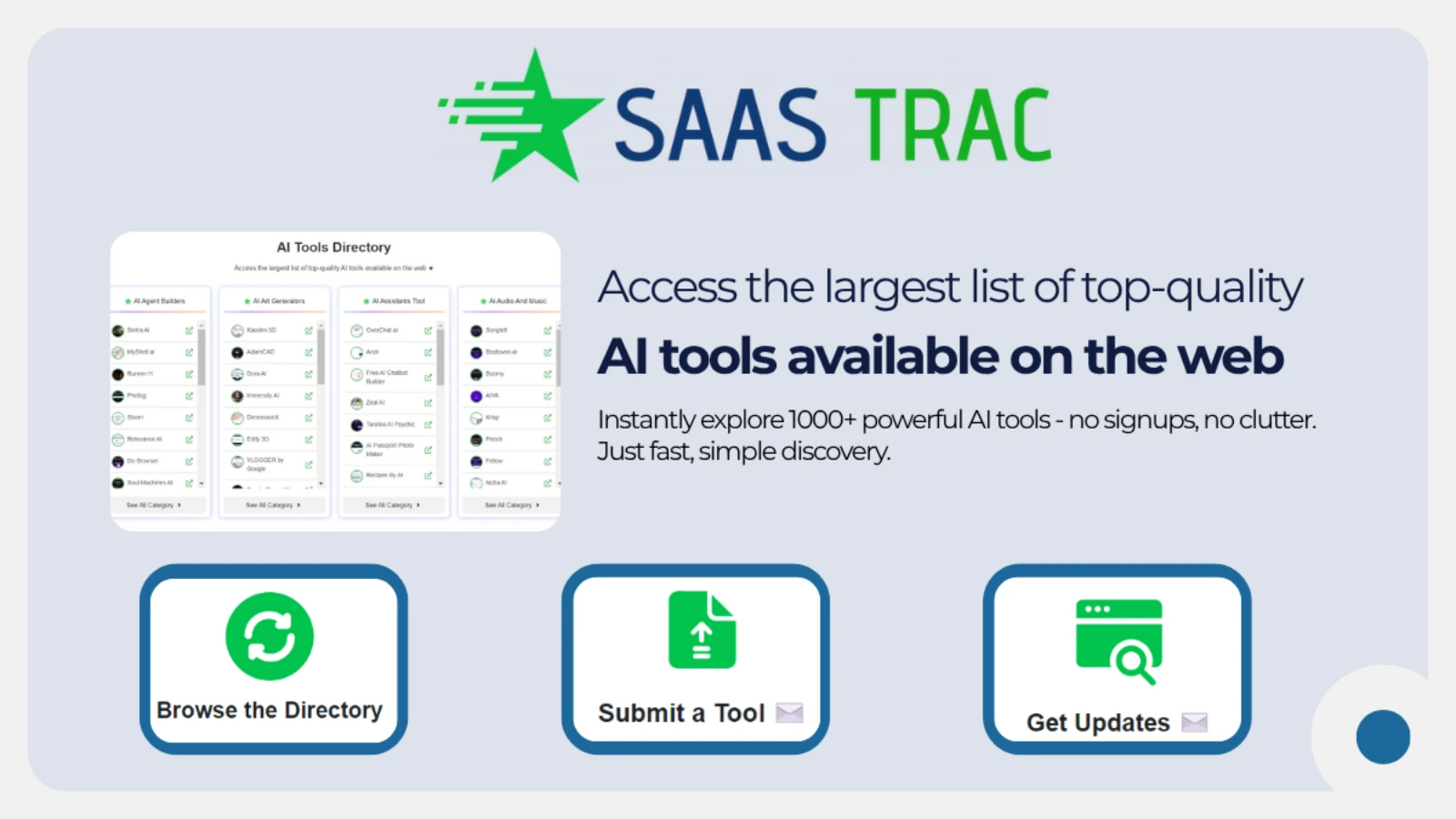
SaaSTrac provides a curated platform of intelligent AI agents designed to make research faster, smarter, and more efficient. Each agent focuses on specific tasks to support researchers in handling complex projects.
Automated Literature Tracking:
These agents continuously monitor academic journals, industry publications, and online databases to identify relevant studies, new findings, and emerging research trends. Researchers receive timely updates without manually scouring multiple sources.
Data Summarization Agents:
SaaSTrac agents condense lengthy reports, datasets, or research papers into clear, actionable summaries. This allows researchers to quickly grasp key points, identify critical insights, and make informed decisions faster.
Trend Detection Agents:
By analyzing data across multiple domains, these agents identify emerging patterns, shifts in industry practices, or scientific breakthroughs. Researchers can leverage this information to anticipate opportunities and adjust strategies proactively.
SaaSTrac’s AI agents operate autonomously while remaining adaptable. They learn from user interactions and evolving project needs, improving their effectiveness over time. When combined with an AI research tool, these agents help researchers:
- Reduce Repetitive Work: Automate routine tasks to focus on high-value analysis.
- Stay Updated in Real Time: Receive notifications and insights on the latest relevant studies.
- Enhance Team Collaboration: Share summaries, annotate findings, and coordinate seamlessly across teams and locations.
This synergy between advanced AI systems and intelligent agents creates a robust ecosystem, enabling modern research teams to achieve both speed and depth in their work.
What Key Features Should You Look For In An AI Research Tool?
Selecting the right AI-powered research solution can make a significant difference in productivity, accuracy, and collaboration. Here are the essential features to prioritize:
Data Integration:
A strong tool should connect seamlessly with multiple databases, academic journals, industry reports, and online repositories. This ensures that all relevant information is accessible in one platform, eliminating the need to search across disparate sources manually.
Natural Language Processing (NLP):
Advanced NLP capabilities allow the tool to understand complex queries, interpret context, and extract meaningful insights from dense texts. This means researchers can ask nuanced questions and receive precise, actionable answers quickly.
Customizable Workflows:
Every research project is unique. Look for tools that let you tailor automation to your specific needs, whether it’s data collection, trend analysis, or summarization. Custom workflows save time while ensuring that the tool aligns with your methodology.
Collaboration Tools:
Research is often a team effort. AI research tools with built-in collaboration features allow multiple users to share insights, annotate documents, and track progress collectively. This fosters better communication and reduces duplication of work.
Security and Compliance:
Protecting sensitive research data is critical. The best AI-driven platforms implement robust security measures, including encryption, access control, and compliance with relevant regulations, ensuring confidentiality and integrity.
Choosing a platform with these features not only accelerates research but also enhances the quality, reliability, and usability of your findings, helping you make informed decisions faster and more confidently.
How AI Research Tools Enhance Decision-Making?

One of the most powerful advantages of an AI research tool is its ability to transform large volumes of data into actionable insights. By analyzing trends, detecting gaps, and highlighting correlations, these tools empower researchers and decision-makers to act with confidence and speed.
Evidence-Based Recommendations:
AI research tools sift through countless studies, reports, and datasets to identify the most relevant and credible sources. By presenting evidence-backed findings, they help researchers draw conclusions that are accurate, comprehensive, and grounded in solid data.
Scenario Analysis:
These tools can simulate multiple scenarios using historical and current data. Researchers can evaluate the potential outcomes of different strategies or interventions, assess risks, and make well-informed choices before implementing decisions in real-world settings.
Trend Forecasting:
AI systems analyze patterns across industries, scientific disciplines, or markets to anticipate emerging trends. This predictive capability allows researchers and businesses to stay ahead of competitors, plan proactively, and allocate resources effectively before shifts become mainstream.
Risk Reduction and Strategic Planning:
By providing real-time insights and predictive analytics, modern AI systems reduce the likelihood of costly errors and help organizations prioritize initiatives. Teams can focus on high-impact areas, allocate resources efficiently, and develop long-term strategies with greater confidence.
These capabilities are particularly valuable in fast-moving fields such as technology, healthcare, and market research where timely, accurate, and actionable insights can directly influence success.
By turning raw data into meaningful intelligence, AI research tools become indispensable for smarter, faster, and more strategic decision-making.
Conclusion
In a world overflowing with data, an AI research tool is no longer a luxury, it is essential. From accelerating literature reviews to generating insights and predicting trends, AI research tools empower researchers to work smarter, faster, and with greater accuracy.
Platforms like SaaSTrac further enhance this ecosystem by providing AI agents that operate autonomously, continuously improving the efficiency and quality of research workflows. Whether you are in academia, business, or scientific research, combining AI research tools with intelligent agents transforms the way research is conducted.
By embracing these technologies today, researchers and organizations position themselves for faster innovation, deeper insights, and measurable impact in the future.
FAQs
1. Can AI help summarize large research papers quickly?
Yes, AI systems can process long documents and provide concise summaries, saving researchers hours of reading while highlighting key insights.
2. Are AI-powered tools reliable for identifying trends?
AI tools analyze massive datasets to detect patterns that may not be immediately obvious, offering valuable guidance for research planning.
3. Can AI assist in organizing references and citations?
Absolutely. AI platforms can automatically manage bibliographies, organize sources, and format citations according to different styles.
4. Is technical knowledge required to use these tools effectively?
Most platforms are designed with user-friendly interfaces, making them accessible even for researchers without extensive technical experience.
5. How secure is the data processed by these systems?
Leading AI platforms implement encryption, access controls, and compliance with data privacy regulations to protect sensitive information.