Did you know most AI mistakes happen because of a bad AI prompt? And the truth it is does not happen not because the tool is weak. For business owners, marketers, and SaaS teams, this means one unclear line can turn into copy that feels off, ideas that miss the mark, or messages that don’t align with your brand at all. And when you’re growing fast, these mistakes add extra edits, extra time, and extra frustration.
The surprising part is how quickly things improve when the prompt is written with the right context and direction. Even a small tweak, such as adding an audience detail or stating the goal, can completely change the output.
In this blog, we will walk you through how to spot common prompt problems and improve them using simple, practical examples you can apply right away.
What Is The Difference Between A Good Prompt & Bad Prompt?
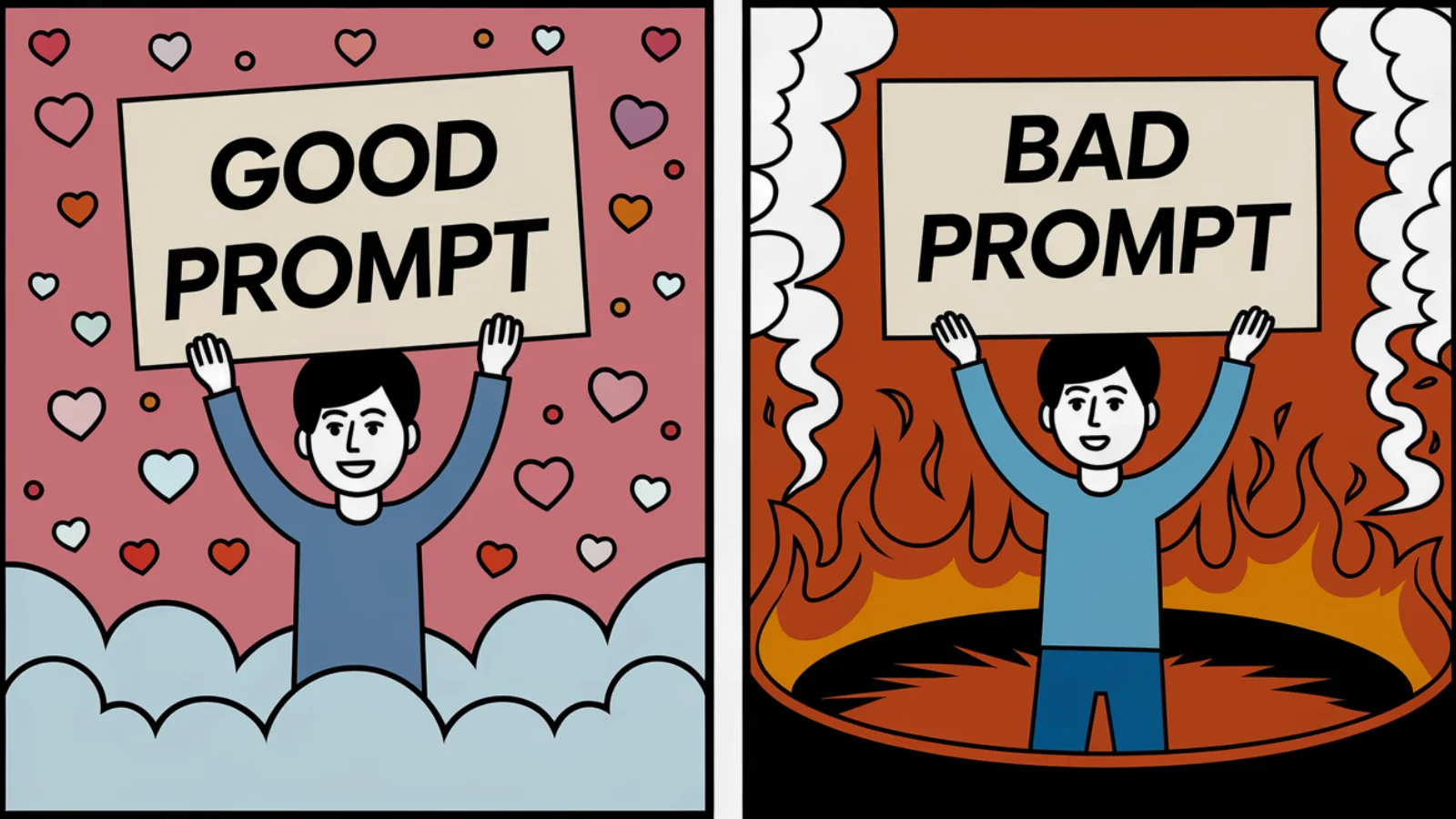
When you work with AI every day, the difference between a good prompt and a bad AI prompt becomes easy to notice. The result feels clear, useful, and aligned with your goals. For business owners, marketers, and SaaS companies, understanding a good prompt vs bad prompt helps you get better results with less effort.
1. Vague Requests
Bad AI Prompt: “Write a summary of this report.”
This fails because the instruction is unclear. AI does not know the length, the focus, or the format. The output often feels random.
Good Prompt: “Summarize this report in three bullet points, focusing on key findings and action items.”
This works because the format and the priorities are clear. AI knows exactly what to deliver.
2. Missing Context
Bad AI Prompt: “Create a marketing plan.”
This is a bad AI prompt because it lacks audience, industry, goals, and budget. AI cannot tailor the response.
Good Prompt: “Create a five-step digital marketing plan for a UK fintech startup launching an AI budgeting app with a £5,000 budget.”
This works because AI gets the full context. The output becomes specific and practical.
3. Too Broad
Bad AI Prompt: “Tell me everything about Microsoft Copilot.”
This becomes overwhelming and unfocused.
Good Prompt: “Explain how Microsoft Copilot improves productivity in Teams and Outlook. Give three real examples.”
This works because the topic is narrowed, and the request is manageable.
What Is A Good AI Prompt Checklist?
A good meta prompt gives AI the clarity it needs to deliver accurate and usable output. When the prompt is unclear, you end up with a bad AI prompt that produces vague, generic, or irrelevant responses. This checklist helps business owners, marketers, and SaaS teams structure prompts that save time and support real work.
1. Define The Exact Task
Say exactly what you want the AI to produce.
Clear tasks remove guesswork. For example, asking “List three ideas” or “Write a 120-word summary” helps the AI understand the goal. Precise instructions reduce wasted time and lead to stronger results.
2. Specify The Audience
AI writes better when it knows who will read the content.
Mention the audience type, such as “SaaS founders,” “mid-market buyers,” or “non-technical teams.” This shapes tone, complexity, and relevance, which is crucial for business content.
3. Set Format & Tone
Tell the AI how the output should look.
Ask for bullet points, a slide outline, or a formal tone. Format and style direction prevent long paragraphs or mismatched writing styles that disrupt workflows.
4. Add Context & Constraints
Context prevents bad AI prompting errors.
Include industry, product details, budget, timeframe, or persona. These details help the AI tailor the response, making it specific instead of generic.
5. Focus on One Task at a Time
Avoid combining multiple large tasks into one prompt.
Breaking tasks into smaller steps produces clearer, more accurate answers. It also makes the revision process faster.
6. Review & Adjust
Prompting is iterative.
You may need one or two refinements before the output fits your needs. Small edits usually lead to major improvements.
If you want AI tools that respond well to structured prompts, SaasTrac’s AI agent directory helps you discover business-ready AI agents that work smoothly with this checklist.
How To Fix A Bad Prompt With Real Examples?

If your AI outputs feel generic, inaccurate, or unusable, the root cause is almost always a bad AI prompt. Many business owners, marketers, and SaaS teams expect high-quality results but give AI instructions that lack clarity or direction.
The good news is that fixing weak prompts is straightforward. You simply add context, define the goal, and set clear boundaries. This small shift transforms random outputs into focused, business-ready results. Effective meta prompt engineering helps you guide the AI the same way you guide a new team member; specific instructions lead to specific outcomes.
To help you improve your prompts, here are real examples and practical ways to fix them.
1. Blog Post Ideas
Bad Prompt: “Give me blog post ideas about marketing.”
This is a typical bad AI prompt because it lacks the audience, business type, and format. The AI defaults to generic ideas like “marketing trends” or “how to improve ROI,” which are too broad to be useful.
Improved Prompt:
“You’re a content strategist for a mid-sized B2B software company. Suggest five blog post ideas for our ‘Marketing for SMBs’ series. Include a working title, a short subhead, a brief summary, and bullet points explaining what the post will cover. The audience is tech-savvy professionals.”
Why it works:
You assign a role, define the business context, specify the audience, set the number of ideas, and outline the format. This structure gives the AI enough direction to create relevant and high-quality ideas.
2. Customer Service Email
Bad Prompt:
“Write an apology email for late shipping.”
Again, this is a bad AI prompt because it gives no context—no product, no dates, no reason for delay, and no tone. The output becomes generic and unusable.
Improved Prompt:
“You’re a customer care specialist at a mid-sized ecommerce business. A customer ordered a premium laptop on March 1st. Due to a supplier delay, the delivery will now arrive on March 10th. Write a friendly, professional apology email. Explain the reason, share the new delivery date, offer a 10% discount, and keep it under 200 words.”
Why it works:
The AI now knows the cause of the delay, the timeline, the tone, the compensation, and the word limit. This clarity produces an email that sounds human, accurate, and ready to send.
How To Fix Any Bad Prompt: Practical Techniques?
These simple steps help you prevent bad AI prompting and consistently get clear results:
- Be Specific
Tell the AI exactly what you want: list, script, outline, summary, explanation, or comparison. Specific outcomes guide the response. - Assign a Role
Roles such as “project manager,” “content strategist,” or “customer care specialist” give structure and direction to the output. - Add Context
Mention industry, target market, business size, timeframe, or product details. Context makes AI respond like it understands your situation. - Set Constraints:
Word limits, tone, format, or number of points keep the output clean, consistent, and aligned with your requirements. - Provide Examples:
Examples act as a benchmark. The AI adapts its style and structure more accurately. - Split Big Requests
If one prompt asks for multiple large tasks, break it into smaller prompts. AI performs better with one clear instruction at a time.
For teams who want to explore specialized AI tools, SaaSTrac’s AI Agent Directory offers curated agents designed for structured tasks like content creation, email writing, and data summaries. These tools help your refined prompts perform even better.
The Bottom Line
Fixing a bad AI prompt is all about giving the AI the clarity it needs to work for you. When you add context, define the audience, and set simple constraints, you turn vague requests into sharp, actionable outputs. The examples above show how small improvements—like assigning a role or outlining the format—instantly upgrade the quality of results for business owners, marketers, and SaaS teams.
Better prompts help you save time, reduce back-and-forth, and get content you can actually use. And if you want more support, SaasTrac’s AI Agent Directory can help you find tools built for structured, high-quality tasks.
Frequently Asked Questions
Q: What are negative AI prompts?
Negative AI prompts tell the model what to avoid. Instead of just describing what you want, you also specify what should not appear, helping you refine the output and remove unwanted elements.
Q: Can we trust AI 100%?
No. People generally trust AI, but both beginners and experts remain cautious. AI is powerful, but it still makes mistakes and shouldn’t be fully relied on without oversight.
Q: What is the IQ level of AI?
AI does not have a real IQ level. Human IQ tests don’t apply to machines. While AI excels at specific tasks like coding or analysis, it lacks human-style reasoning and understanding, so assigning it an IQ score is scientifically inaccurate.