
Customer service is no longer just about answering calls or replying to emails. Today, speed and personalization decide whether a customer stays loyal or walks away. The problem? Support volumes are rising, but budgets are not.
That’s where AI for customer service steps in. Instead of long wait times and overwhelmed teams, AI brings quick, consistent, and scalable support. It helps businesses save money without cutting corners on customer experience. Think about chatbots that resolve simple queries instantly, AI phone call systems that answer and resolve customer requests automatically, or virtual assistants that can handle thousands of conversations at once—this is the new reality.
But here’s where it gets even better. The rise of AI agents for customer service is changing the game completely. These agents don’t just follow scripts; they learn, adapt, and improve with every interaction. The result? Faster resolutions, lower costs, and happier customers.
In this blog, we’ll reveal the 5 mind-blowing steps to implement AI for customer service. From strategy to execution, you’ll discover how enterprises are using AI to deliver smarter support. We’ll also dive into some mind-blowing AI agents for customer service that are setting new standards in customer experience.
What is AI in Customer Service?
AI in customer service is no longer limited to basic chatbots. It’s a powerful mix of automation, machine learning, generative AI, and natural language processing (NLP) that helps businesses deliver faster, smarter, and more personal support.
With AI powered customer service, companies can handle huge volumes of queries without slowing down. Generative AI can draft human-like responses in real time. Machine learning studies past data to predict customer needs. NLP allows systems to understand intent and even translate messages instantly. And automation takes care of repetitive tasks like ticket routing or CRM updates.
The impact is huge. Enterprises like airlines and banks are already using AI to manage flight changes, track orders, or solve account issues with minimal human effort. This not only saves time but also cuts costs while keeping customers happy.
The real magic of AI for customer service is that it keeps getting better. These systems learn from every interaction. They anticipate issues, improve accuracy, and even support human agents with insights and coaching.
Simply put, AI has transformed customer service into a proactive, efficient, and scalable engine for customer experience.
The Economic Advantage of AI in Customer Service for Global Enterprises
Customer service has always been one of the biggest cost centers for global enterprises. Managing millions of interactions across markets and channels means high staffing costs, long training cycles, and constant pressure to maintain quality. Labor remains the single largest driver of these expenses. But as customer expectations continue to rise, scaling human support alone is no longer sustainable.
This is why AI for customer service has become a boardroom topic. It’s no longer just a technology decision—it’s a financial strategy. Leaders in finance, operations, and customer experience now see AI as a tool to control costs while improving service quality.
The numbers tell the story. A live customer support interaction can cost between $8–$15, depending on complexity and geography. In contrast, AI-powered systems such as virtual agents or automated workflows can resolve the same issues for as little as $1 per interaction. That’s a 5x–15x reduction in cost at scale.
Beyond savings, AI brings unmatched efficiency. It doesn’t need breaks, onboarding, or training refreshers. It reduces agent workload by deflecting repetitive queries and speeds up resolutions. With conversational AI for customer service, enterprises can also deliver human-like interactions that maintain empathy and brand consistency, while freeing human agents to focus on more complex cases.
The financial impact goes deeper. By applying a Total Cost of Ownership (TCO) lens, enterprises can measure long-term value:
- Shorter handle times boost agent capacity.
- Lower error rates reduce costly rework.
- Smarter forecasting prevents overstaffing.
The takeaway is clear: AI isn’t just about automation. For global enterprises, it’s a growth enabler. With executive sponsorship and a solid TCO framework, AI transforms customer service into a scalable, cost-efficient, and customer-first operation.
How to Use AI in Customer Service to Reduce Costs While Maintaining Quality
Enterprises today face a big challenge: customer expectations keep growing, but budgets don’t. Scaling human teams alone is not sustainable. That’s why AI for customer service has become a must-have. It helps companies reduce costs, deliver faster support, and maintain high-quality interactions at scale.
Here are five powerful ways to use AI-powered customer service without compromising quality:
1. Automate routine queries
Most customer inquiries are simple: password resets, order status, refund policies, or account changes. Virtual agents and chatbots can now handle these instantly. They deflect thousands of repetitive requests across chat, email, voice, and social channels. When issues get complex, they escalate to human agents smoothly. This cuts costs and saves time while ensuring customers never wait too long.
2. Personalize self-service
Traditional self-service often feels rigid. With generative AI, support becomes adaptive. Customers get real-time, personalized responses based on their behavior, history, and intent. By guiding users to the right solution early, AI reduces call volumes and increases satisfaction. Enterprises using this approach have seen first-contact resolution rates soar while inbound phone calls drop.
3. Optimize staffing with AI insights
Staffing inefficiency is expensive. Predictive analytics uses AI to study past demand, seasonality, and real-time data. It forecasts ticket spikes and recommends the right staffing levels ahead of time. This prevents overstaffing during quiet hours and understaffing during peak demand. For large enterprises, these savings quickly add up without hurting service quality.
4. Support agents with AI co-pilots
Agents lose time switching between tools and searching for answers. AI co-pilots embed intelligence directly in their workflow. They suggest responses, summarize conversations, and surface relevant knowledge instantly. This reduces handling time, improves accuracy, and lowers the cognitive load on agents. With AI for customer service, agents focus on solving—not searching.
5. Reduce human error through continuous learning
Every mistake in service has a cost. AI-driven quality assurance tools review interactions in real time, flagging tone issues or compliance risks. Smart coaching prompts guide agents during live conversations, not after. Adaptive knowledge bases also learn from past cases, reducing retraining costs and improving performance over time.
The bottom line: AI isn’t just about automation. With AI powered customer service, enterprises cut costs, scale support, and still deliver the personalized, high-quality experiences customers expect. It’s not a future bet—it’s the smartest way to serve customers today.
5 Steps to Implement AI in Customer Service
AI is changing how enterprises deliver customer support. But jumping in without a plan can lead to wasted money, failed adoption, and frustrated teams. To succeed, businesses must align AI with clear goals and measurable outcomes. Here are 5 steps to implement AI for customer service effectively.
Step 1: Start small with a pilot project
Don’t roll out AI everywhere at once. Begin with a focused pilot. Identify high-volume, low-risk workflows such as password resets, order tracking, or FAQs. These are perfect for automation because they are repetitive, but critical for customer experience.
Track metrics like average handle time (AHT), first-contact resolution, and customer satisfaction (CSAT) from day one. A pilot helps you prove value, minimize risks, and create a case for scaling.
Step 2: Choose scalable and integrated tools
Your AI solution should work with your existing tech stack, not against it. Select AI powered customer service platforms that integrate seamlessly with CRMs, ERPs, and contact center systems. Look for enterprise-grade security, APIs, and omnichannel support.
Avoid standalone tools that don’t sync with your systems. They increase inefficiency and total cost of ownership. Always think long-term scalability.
Step 3: Prepare teams to work with AI, not against it
The success of AI for customer service depends on people. Agents, supervisors, and IT teams need to see AI as support, not a replacement. Launch training and change management programs early. Show teams how AI reduces workload, provides faster answers, and improves their daily workflows.
Communicate openly about AI’s role. When employees understand the logic behind AI decisions, they are more likely to trust and adopt it.
Step 4: Put governance and privacy at the center
AI isn’t like a normal SaaS tool. It learns, adapts, and makes decisions. That’s why governance is critical. Involve compliance, security, and legal teams from the start. Ensure that your AI solution supports audit trails, data residency, and access controls.
Strong governance builds trust with customers and regulators while protecting your enterprise from risks.
Step 5: Monitor, measure, and improve
AI adoption is not a one-time project. Once deployed, monitor its performance continuously. Use dashboards to track CSAT, deflection rates, and agent-bot collaboration.
Set up a learning loop where data feeds back into your AI models, making them smarter over time. This ensures that AI for customer service keeps improving instead of stagnating.
Best AI Agents for Customer Service on Saastrac AI Agent Directory
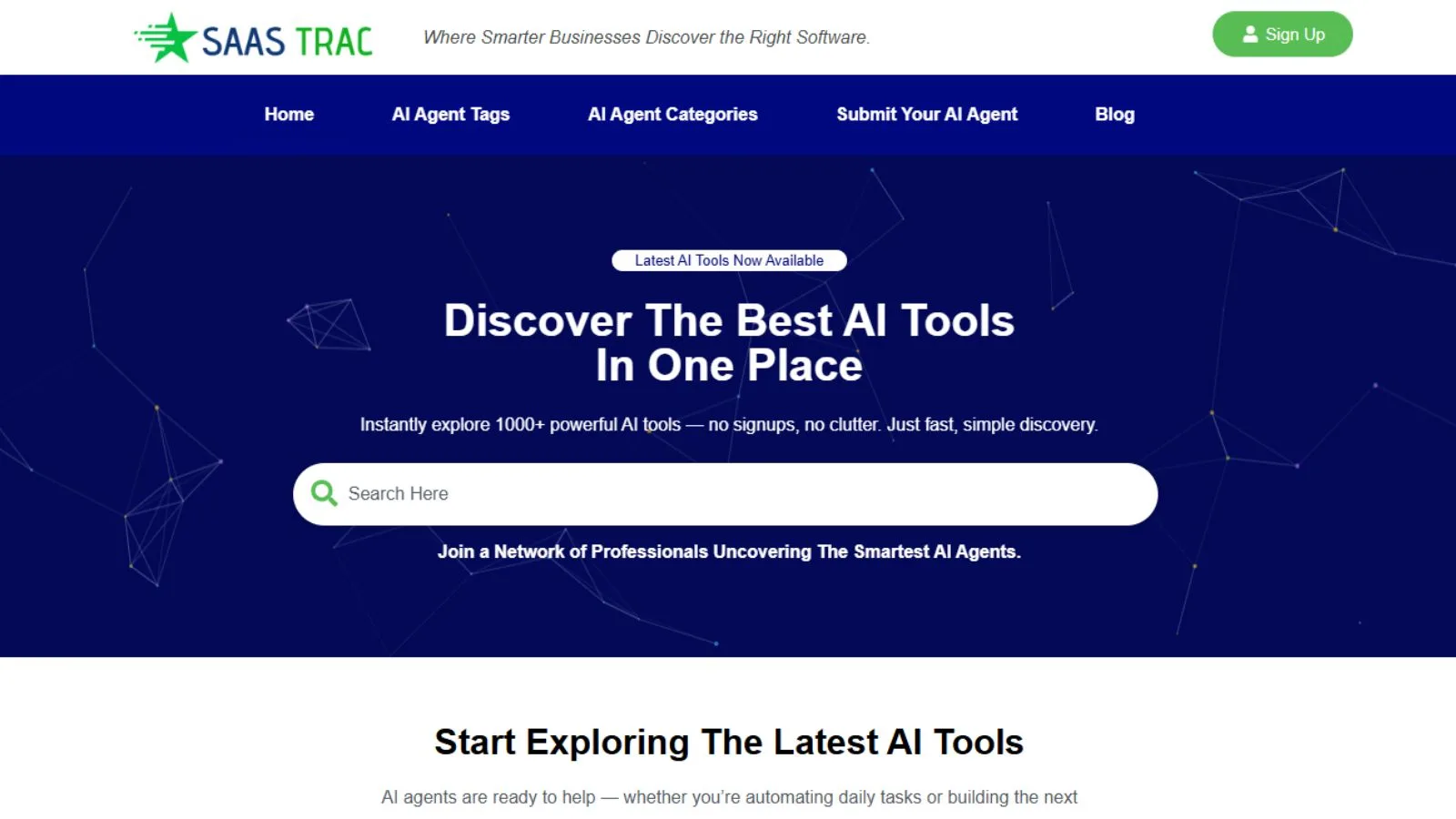
Looking for the best AI chatbot for customer service? The Saastrac AI Agent Directory highlights some of the top platforms that help businesses cut costs and scale smarter. Here are the best picks:
- Cognigy – Enterprise-grade automation with strong integrations for complex workflows.
👉 [Explore Cognigy] - Voiceflow – Build conversational flows easily without heavy coding.
👉 [Try Voiceflow] - Decipher AI – Smart intent recognition for accurate and quick responses.
👉 [Check Decipher AI] - Orin – High-speed, reliable AI agent for large query volumes.
👉 [Discover Orin] - Didymos – Great for multilingual support and global customer bases.
👉 [View Didymos] - Siena – Focused on personalized, context-aware conversations.
👉 [Get Siena] - Auralis – Delivers adaptive, real-time responses for better CX.
👉 [Explore Auralis] - Parloa – Best for voice-driven customer interactions.
👉 [Check Parloa] - Duckie – Lightweight, flexible automation for startups and mid-sized firms.
👉 [Try Duckie] - Synthflow – Powers complete, end-to-end customer workflows.
👉 [Discover Synthflow] - AI Phone Agent – Transforms call centers with natural, human-like conversations.
👉 [View AI Phone Agent]
These tools show how AI for customer service is evolving. They improve resolution times, cut costs, and deliver seamless customer experiences across chat, voice, and phone support. With the right pick, enterprises can future-proof their customer service.
Conclusion
AI is no longer optional—it is the future of customer experience. With AI for customer service, enterprises can cut costs, scale faster, and still deliver personalized care at every touchpoint. From automating routine queries to empowering agents with insights,
AI-powered customer service is a true game-changer. It improves accuracy, reduces errors, and keeps customers happy. The best part? It continues to learn and improve over time.
Want to explore the top tools? The Saastrac AI Agent Directory is the easiest way to find and compare the best AI agents for your business.