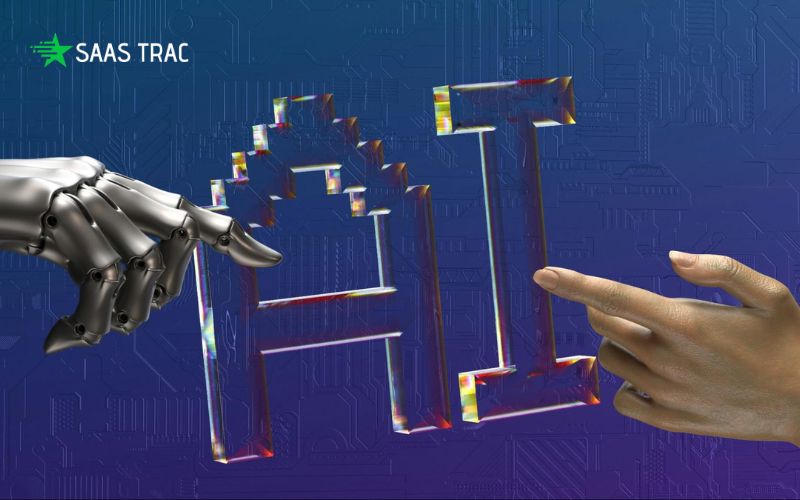

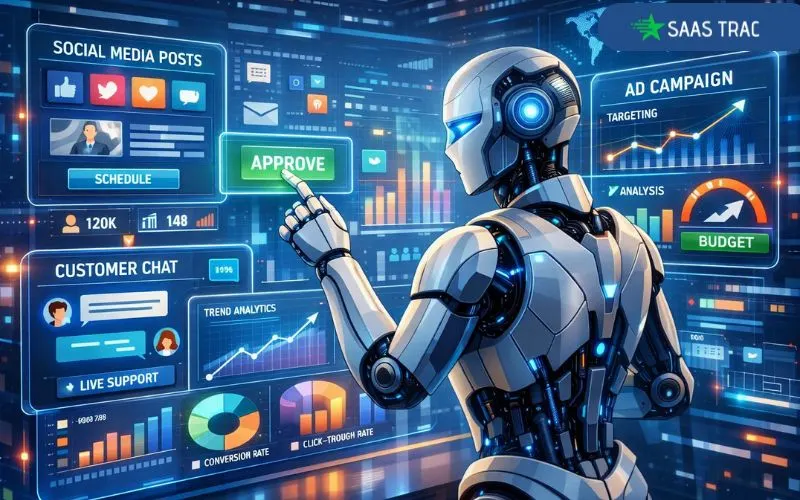
Marketing has evolved into a fast-moving, data-heavy function where speed and precision directly impact results. Teams are expected to launch campaigns quickly, personalize experiences, and continuously optimize performance without increasing costs. This is exactly where AI agents for marketing are proving valuable.
Unlike traditional automation, which relies on predefined rules, AI Agents operate with a level of intelligence that allows them to analyze data, adapt strategies, and execute tasks with minimal human input. They are capable of managing workflows, improving targeting, and making real-time decisions that directly influence campaign outcomes.
For growing businesses, this shift is particularly important. Instead of expanding teams or stretching resources, companies can rely on AI tools for business to handle operational complexity. From ad optimization to customer engagement, AI agents create a system where marketing becomes both scalable and efficient.
What Are AI Agents for Marketing?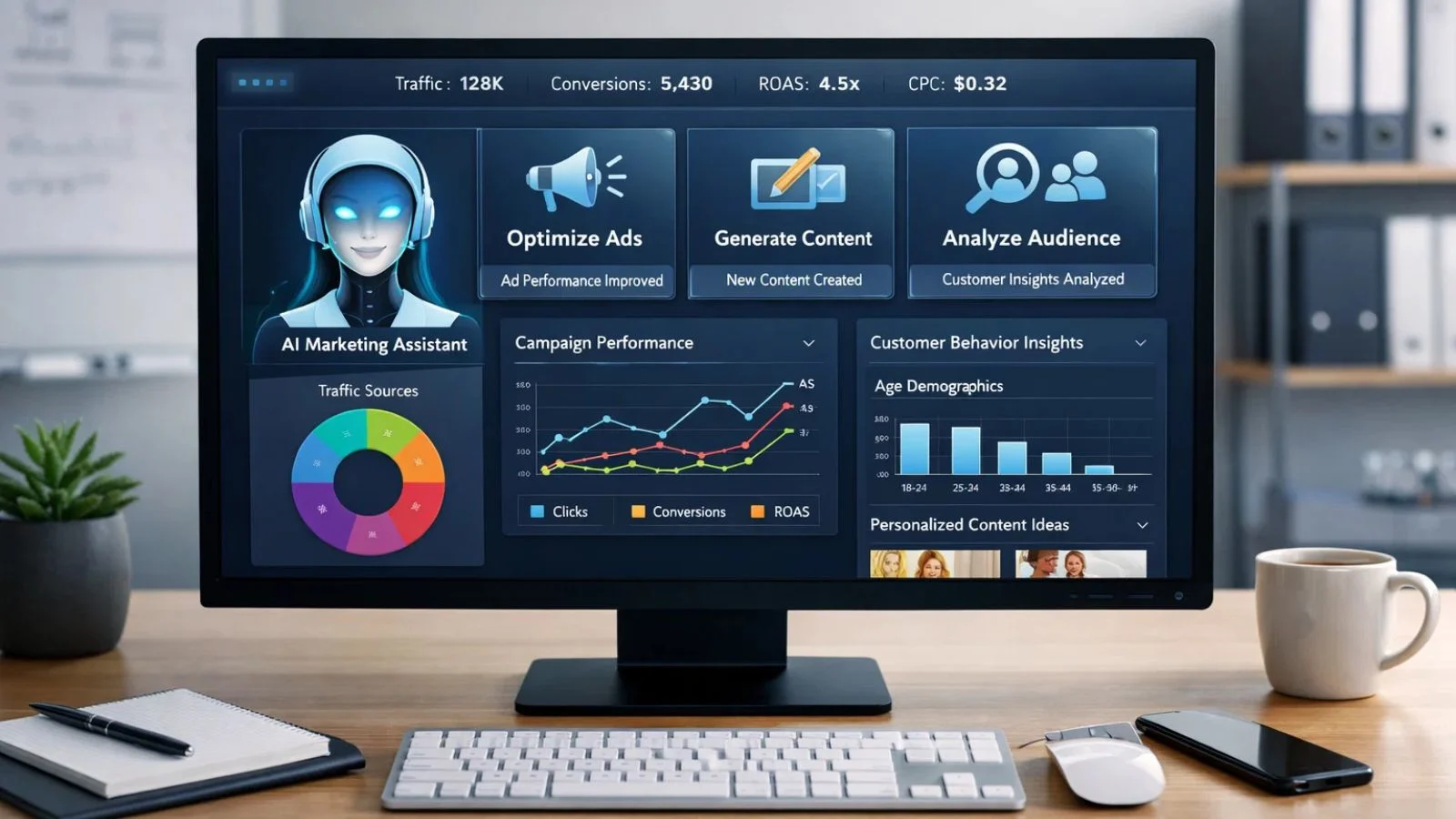
To understand their impact, it is important to define what AI agents for marketing actually do in a real-world scenario.
AI agents are intelligent systems that perform tasks independently using machine learning and natural language processing. They do not simply follow instructions. They evaluate performance, learn from data, and improve their actions over time.
In marketing, this means they can adapt campaigns, refine messaging, and optimize targeting without constant manual input.
Some common capabilities include:
1. Campaign optimization in real time:
AI agents monitor performance metrics such as clicks, conversions, and engagement. Based on this data, they automatically adjust budgets, bids, or targeting. This ensures campaigns are always aligned with current performance trends rather than outdated assumptions.
2. Content generation and improvement:
Tools like Jasper and Copy.ai generate blog posts, ads, and social content. Beyond creation, they also refine tone, structure, and messaging based on engagement data.
3. Customer interaction and engagement:
Platforms such as ManyChat automate conversations with customers. They respond instantly, qualify leads, and guide users through the funnel without requiring human intervention.
4. Data analysis and segmentation:
AI agents process large volumes of customer data to identify patterns. This allows businesses to segment audiences more effectively and target the right users with the right message.
These capabilities are why many businesses consider them among the best AI agents for marketing available today.
Key Benefits of AI Agents for Marketing:
The growing adoption of AI agents for marketing is driven by clear and measurable benefits. These advantages go beyond convenience and directly impact performance.
1. Significant time savings:
Marketing involves repetitive tasks such as scheduling posts, tracking performance, and managing workflows. AI agents handle these tasks instantly and consistently. This allows teams to focus on strategy, creative work, and growth initiatives instead of manual execution.
2. Better decision-making through data:
AI agents continuously analyze performance data and identify patterns that are not easily visible to humans. This leads to faster and more accurate decisions. Instead of relying on guesswork, businesses can act on real insights.
3. Improved personalization at scale:
Customers expect relevant and tailored experiences. AI agents use behavioral data to personalize emails, ads, and recommendations. This increases engagement and improves conversion rates because users receive content that matches their interests.
4. Lower operational costs :
Hiring and managing large marketing teams can be expensive. AI agents reduce the need for manual effort while maintaining high performance. This makes them a core part of the best AI tools for small businesses, especially for companies with limited resources.
5. Higher return on investment:
By optimizing campaigns, reducing wasted spend, and improving targeting, AI agents ensure that every marketing activity delivers better results. Over time, this leads to more efficient use of the budget and stronger ROI.’
Also Read:
How to Use AI Agents for Marketing? (Step-by-Step Guide)
Implementing AI agents for marketing works best when approached in a structured and intentional way.
- Identify where AI can create the most impact
Start by analyzing your current marketing workflow. Look for tasks that are repetitive, time-consuming, or heavily dependent on data. Examples include content creation, ad management, and customer communication. Focusing on these areas ensures immediate value from AI adoption. - Select tools based on specific use cases
Different platforms serve different purposes. For example, Phrasee specializes in optimizing email and ad copy, while Adzooma focuses on ad performance. For visual campaign planning, teams can use invideo agent to generate storyboards with AI, turning creative concepts into structured visual plans before video production. Choosing tools based on clear needs prevents unnecessary complexity. - Define measurable goals before implementation
Set clear expectations such as improving conversion rates, reducing campaign setup time, or increasing engagement. These benchmarks help evaluate whether the AI agents are delivering real value. - Integrate AI with your existing systems
AI agents perform better when connected to platforms like CRM tools, e-commerce systems, and advertising channels. Integration ensures consistent data flow, which improves accuracy and decision-making. - Monitor performance and refine continuously
Even though AI agents operate independently, reviewing their output is important. Regular analysis helps identify gaps, refine strategies, and ensure alignment with business goals. - Scale gradually across marketing functions
Begin with one area, such as content or ads. Once results are proven, expand AI usage to other areas. This controlled approach reduces risk and improves long-term success.
Tips to Maximize the ROI of AI Agents for Marketing: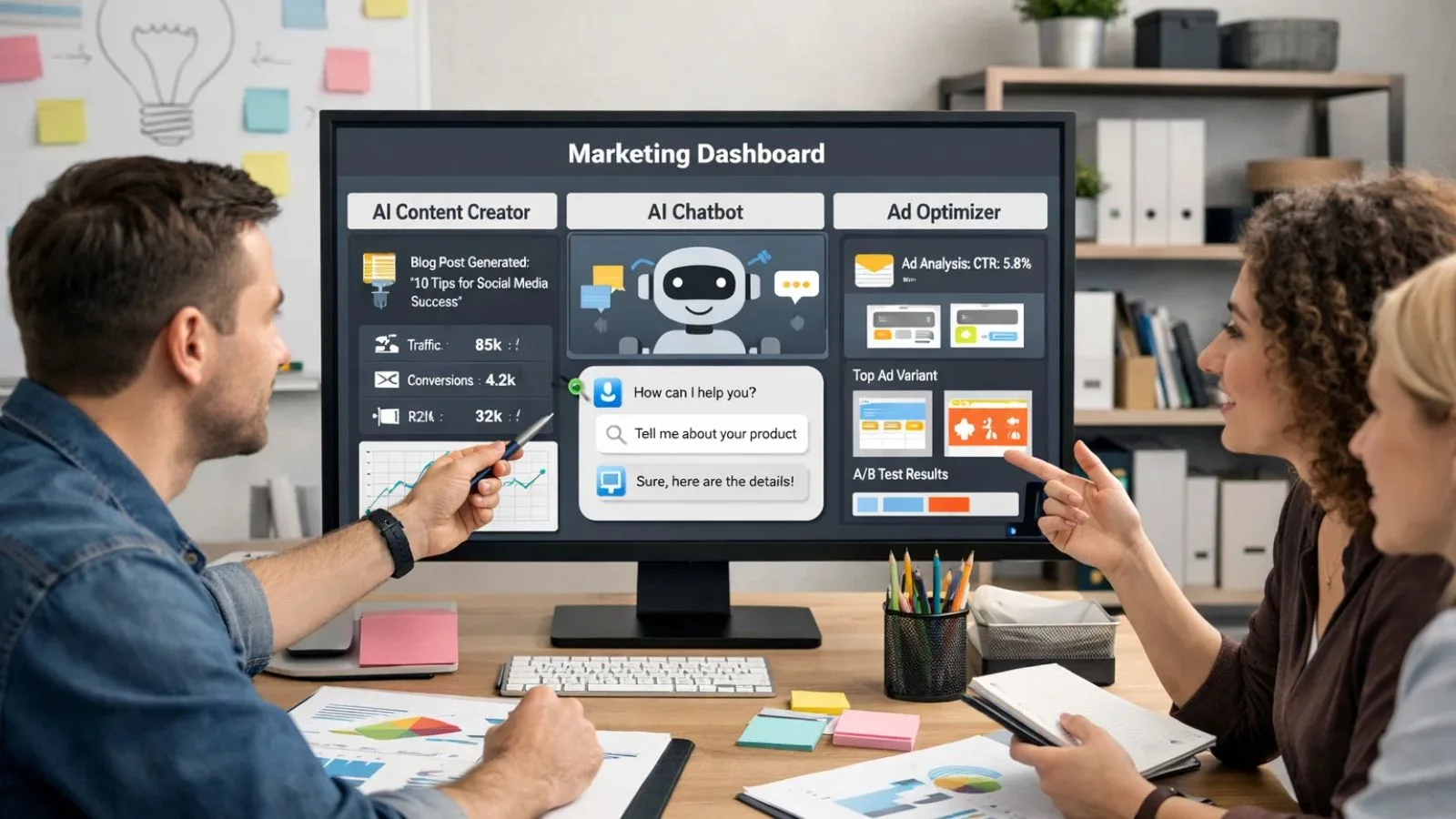
To truly benefit from AI agents for marketing, it’s not enough to just implement them; you need a strategy to maximize their impact and ROI. Here are key tips to get the most out of these tools:
1. Start with Clear Objectives:
Define what success looks like. Whether it’s higher conversions, more website traffic, or improved social engagement, having clear goals allows your AI agents to focus on outcomes that matter.
2. Integrate AI Across Multiple Channels:
AI agents are most effective when they work together. For instance, use an AI content generator like Jarvis.ai for blog posts, pair it with ManyChat for customer engagement, and combine it with Adzooma to optimize ads. This creates a cohesive, automated marketing ecosystem.
3. Monitor Performance Regularly:
AI systems learn over time, but you still need to track metrics. Use dashboards and analytics to identify underperforming campaigns or unexpected trends, and adjust your strategy accordingly.
4. Personalize Customer Interactions:
AI agents can deliver highly personalized experiences. Leverage data on customer behavior, preferences, and engagement to tailor messages, recommendations, and campaigns, which improves conversions and satisfaction.
5. Experiment and Iterate:
AI agents provide data-driven insights, but marketing success also comes from experimentation. Test different content styles, ad formats, and messaging strategies. AI tools can help automate testing and optimize for the best results.
6. Invest in Staff Training:
Even the best AI agents are most effective when your team understands how to use them. Train your staff to interpret AI insights and manage campaigns efficiently to fully leverage automation.
7. Combine AI with Human Creativity:
While AI excels at analyzing data and automating tasks, humans bring creativity and strategic thinking. Use AI agents to handle repetitive tasks and data-driven decisions, freeing your team to focus on high-impact creative work.
By following these tips, businesses can unlock the full potential of AI agents for marketing, saving time, improving efficiency, and boosting ROI across all campaigns.
Final Takeaways:
The role of AI agents for marketing has evolved into a practical solution for businesses that want to improve efficiency and performance. These systems reduce manual work, enhance decision-making, and continuously optimize campaigns.
From content creation to customer engagement and advertising, AI agents enable businesses to scale without increasing complexity. This is especially important for smaller teams that need to achieve more with limited resources.
The key to success lies in thoughtful implementation. Businesses that choose the right tools, set clear goals, and maintain a balance between automation and human input will see the strongest results.
Adopting AI is not just about saving time. It is about building a smarter marketing system that delivers consistent growth and measurable outcomes.
FAQs:
Q1: How do AI agents improve marketing efficiency?
Ans: They automate repetitive tasks, analyze large datasets quickly, and make real-time adjustments. This reduces manual effort and allows teams to focus on strategic work.
Q2: Are AI agents suitable for smaller businesses?
Ans: Yes, they provide advanced capabilities without requiring large teams, making them highly effective for startups and growing companies.
Q3: What tasks can AI agents handle in marketing?
Ans: They can manage content creation, ad optimization, customer segmentation, email campaigns, and chatbot interactions.
Q4: Do AI agents replace human marketers?
Ans: No, they support human teams by handling data-driven tasks, while creativity and strategy remain human-led.