
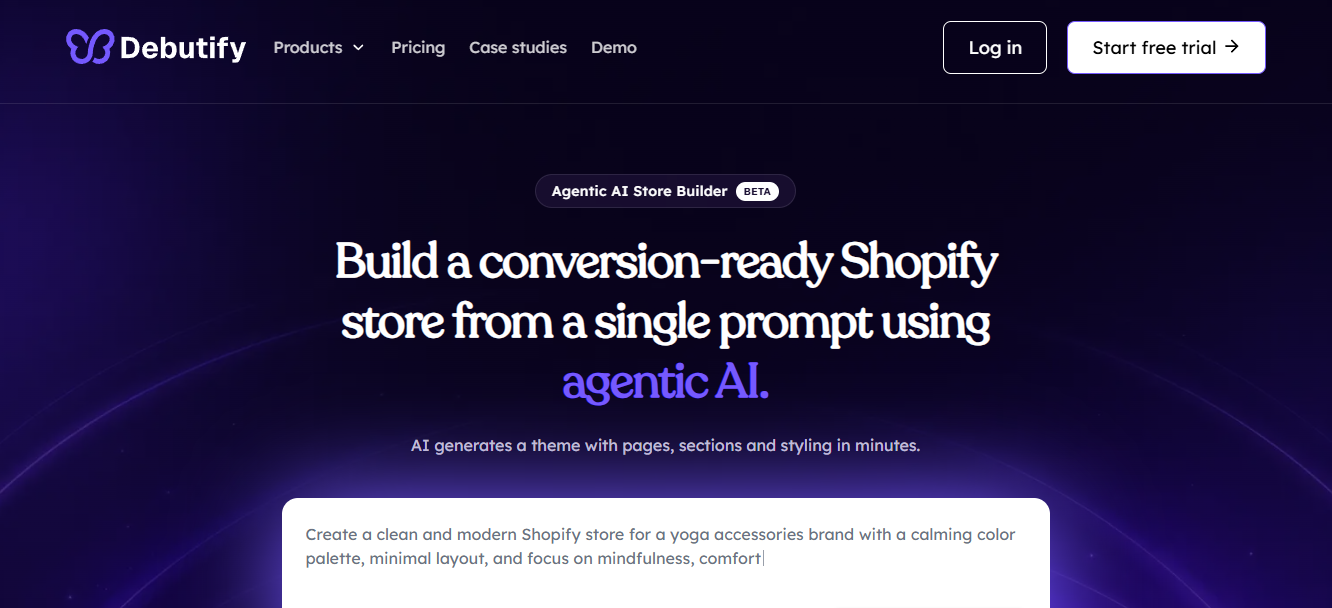
You’ve probably landed here because you’re trying to figure out if Debutify is worth paying for on top of Shopify itself, or if a free theme plus a handful of separate conversion apps would get you the same result for less. That’s the right question, because Debutify’s whole pitch is consolidation, replacing app-stack sprawl with one bundled subscription, and whether that trade pays off depends on how many separate apps you’d otherwise be running.
🔗 Try Debutify
Why Trust SaaSTrac?
This review is built from Debutify’s own pricing and product pages, plus independent write-ups and verified user reviews on Capterra, GetApp, G2, and Software Advice. We haven’t personally run a paid subscription on this account, so anything about day-to-day setup experience, support responsiveness, or add-on performance reflects what verified users report, not a private hands-on test. Pricing figures for Debutify vary noticeably across sources and dates, older reviews cite plans as high as $88/month, while current listings show meaningfully lower numbers, so we’ve gone with the most recently verified figures and flagged the discrepancy rather than presenting one number as fixed.
What Debutify Is
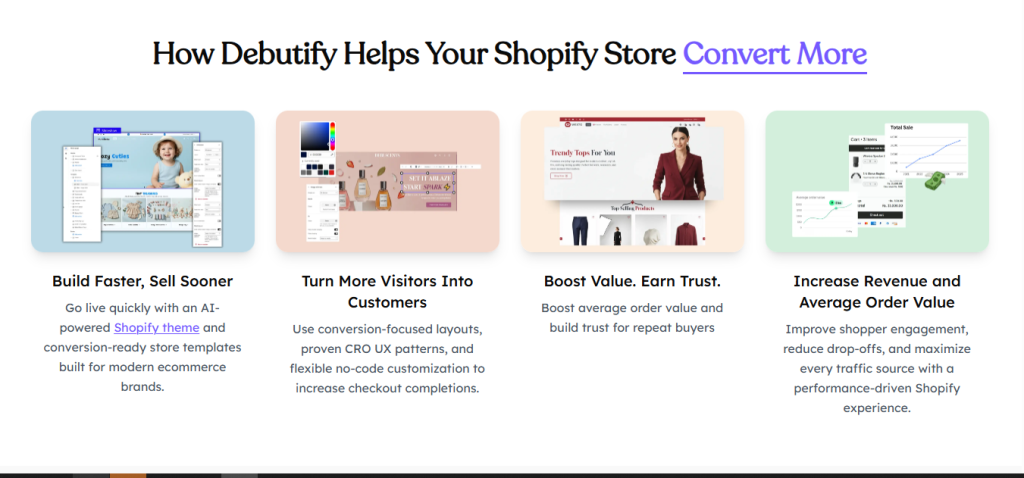
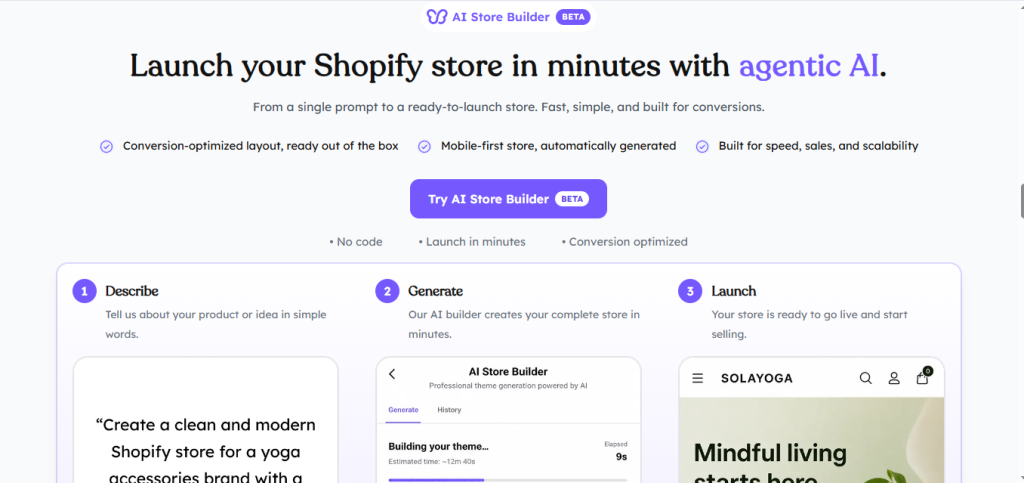
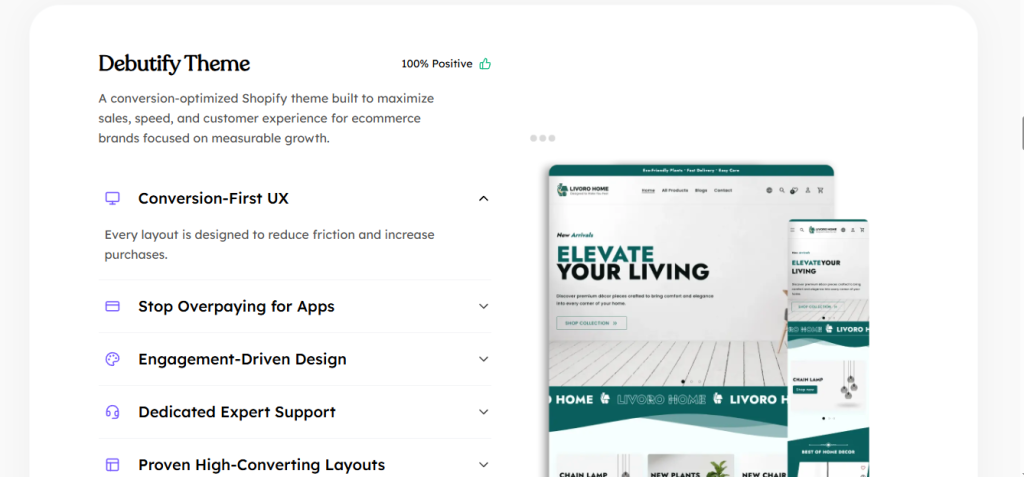
Debutify is a premium Shopify theme built specifically around conversion optimization rather than pure aesthetics. Instead of installing a base theme and then bolting on separate apps for upsells, countdown timers, sticky add-to-cart bars, and product reviews, Debutify bundles more than 70 proprietary add-ons directly into the theme itself. It’s built for fast, mobile-first store launches, with free lifetime updates and dropshipping-friendly features like product import integrations. It’s aimed at Shopify beginners, dropshippers, small business owners, and e-commerce agencies who want a professional, conversion-ready storefront without heavy development work or a sprawling app bill, rather than large brands needing fully custom, developer-built storefronts.
What You Get (and What You Don’t)
Feature | What’s Included | Limitations |
Conversion Add-Ons | 70+ built-in widgets: upsells, urgency/countdown banners, sticky cart, social proof | Free plan has no add-ons at all; you need a paid tier to unlock any of them |
Theme Customization | Full visual customization, mobile-first responsive design, multi-currency support | Design flexibility is strong within the theme, but it’s not a fully custom build like a developer theme |
Reviews Management | Built-in Debutify Review plan across free, starter, and pro tiers | A dedicated reviews app may still offer deeper functionality for review-heavy stores |
SEO & Order Management | Core website management features including SEO tools and order handling | Standard for Shopify themes, not a distinguishing strength |
Integrations | Connects with CartHook, Cartloop SMS Marketing, Firepush, Growave, Klaviyo | Only 6 listed third-party integrations, a narrower list than some competing theme/app combinations |
Support | Live chat available on higher-tier plans | Multiple reviewers report slow email-only support and long response times, especially on lower tiers |
The takeaway: Debutify goes deep on bundling conversion tools directly into the storefront, and for stores that would otherwise be paying for five or six separate apps, that consolidation is the appeal. If you only need one or two conversion features, or you want fully custom design work, the bundle may include more than you’ll actually use.
Pricing: What You Actually Pay
Debutify uses a four-tier freemium model, though the exact numbers you’ll see vary depending on when and where you look.
Plan | Price | What’s Included |
Free | $0/mo | Core theme, basics support, one store license, no conversion add-ons |
Growth | ~$15.6/mo | All free-plan features plus a selection of conversion add-ons |
Professional | ~$35.6/mo | Expanded add-on access, additional customization and marketing features |
Enterprise | ~$63.6/mo | Full add-on library, live chat support, highest-tier customization options |
Real-world cost context: annual billing is reported to save around 25% compared to paying monthly, worth factoring in once you’ve confirmed the theme fits your store. It’s worth flagging that pricing has clearly shifted over time, some independent reviews from earlier in the year cite Growth-equivalent plans starting near $29/month and the top tier as high as $88/month, while more recent listings show the lower figures in the table above. Given that spread, confirm current pricing directly on Debutify’s site before budgeting, rather than relying on any single review’s numbers, including this one.
Worth checking before you subscribe: the free plan and 14-day trial are described by reviewers as generous enough to test core functionality, but you get zero conversion add-ons on the free tier, so you won’t see Debutify’s actual differentiator (the upsells, urgency, and sticky-cart tools) without upgrading at least once.
Bundling vs. Building Your Own Stack: The Core Trade-Off
Debutify’s core argument is that one subscription covering 70+ conversion add-ons beats paying for separate upsell, countdown-timer, sticky-cart, and reviews apps individually, both in cost and in avoiding the page-speed drag that comes from stacking multiple third-party scripts. Reviewers consistently cite the ease of use and the value of not installing several extra apps as real strengths. The trade-off shows up in two places reviewers flag repeatedly: pricing that a meaningful share of users (aggregated review data puts it at roughly 4 in 10) feel isn’t fully justified by the features they actually use, and support that’s described as slow and email-only outside the top tiers, a sharper contrast than most competing Shopify apps that offer live chat by default.
Integrations for Store Owners
Debutify’s practical value depends on how well its built-in add-ons cover what you’d otherwise need separate apps for, plus a small list of direct third-party connections:
- Marketing and SMS — Cartloop SMS Marketing and Firepush for cart-recovery and promotional messaging.
- Checkout enhancement — CartHook integration for post-purchase upsell flows.
- Loyalty and reviews — Growave for loyalty programs and user-generated content.
- Email marketing — Klaviyo integration for campaign and flow syncing.
At 6 listed integrations, this is a notably shorter list than general design or theme platforms, Debutify’s strategy is to build conversion features into the theme itself rather than lean on a wide app-integration ecosystem.
What Are the Downsides of Using Debutify?
- Free plan has no add-ons. The core conversion features that differentiate Debutify are locked behind every paid tier, none are available for free.
- Support quality is inconsistent. Multiple reviewers describe email-only support with 12–24 hour response times outside the higher tiers, and live chat gated to the two most expensive plans.
- Pricing perception is mixed. A meaningful share of reviewers feel paid tiers cost more than the features they personally use justify.
- Historical pricing volatility. Reported prices have varied significantly across review dates, making it harder to budget with confidence without checking current figures directly.
- Narrow integration list. Only 6 third-party integrations listed, fewer than some competing theme-and-app combinations offer.
Debutify vs. A Free Theme Plus Separate Apps: Where Each One Wins
Category | Debutify | Free Shopify Theme + Separate Conversion Apps |
Best for | Stores wanting upsells, urgency, sticky cart, and reviews bundled in one place | Stores wanting to hand-pick best-in-class apps for each specific feature |
Starting cost | Free (no add-ons), paid tiers from ~$15.6/mo | $0 for the theme, but each app (upsell, urgency, reviews, etc.) adds its own monthly fee |
Page speed | Built-in add-ons designed to avoid third-party script bloat | Each additional app can add its own script weight and slow load times |
Setup effort | One subscription, one dashboard for conversion tools | Multiple app installs, settings, and potential compatibility issues |
Customization depth | Strong within the theme’s design system | Fully open, but requires assembling and maintaining more moving pieces |
Support | Live chat on top tiers only; email-only lower down | Varies per app, many standalone conversion apps offer live chat by default |
Neither approach “wins” outright, they suit different store stages. If you’d otherwise be installing five or six separate conversion apps, Debutify’s bundle is the more efficient and often cheaper path, with less risk of page-speed drag. If you only need one or two specific features, or you want to swap in best-in-class point solutions for each job, assembling your own stack on a free theme may serve you better.
Is Debutify Worth It?
Likely worth it if:
- You’re launching a new Shopify store and want conversion features (upsells, urgency, sticky cart) built in from day one
- You’re a dropshipper who wants product import integrations and a track record of dropshipping-optimized design
- You want to avoid the page-speed cost of stacking multiple separate conversion apps
- You’re comfortable evaluating the free plan or trial first, since add-ons aren’t included until you upgrade
Probably not the right fit if:
- You want fast, live-chat support regardless of plan tier
- You only need one or two specific conversion features rather than the full bundle
- You want a fully custom, developer-built storefront rather than a template-based theme
- You’re highly price-sensitive and would rather compare per-feature app costs individually
The verdict: Debutify is a genuinely well-regarded conversion-focused Shopify theme, holding a solid 4.5-star aggregate across review platforms, that does its core job of bundling upsell, urgency, and sticky-cart tools into one launch-ready package. The trade-offs reviewers raise most often are support responsiveness and a sense among some users that pricing outpaces the features they personally use. For dropshippers and small store owners who’d otherwise be paying for several separate conversion apps, the bundle is a reasonable and often cheaper alternative. For anyone needing fast support or highly specific point features, it’s worth weighing against a leaner, hand-picked app stack first.
Debutify Pros:
- 70+ built-in conversion add-ons (upsells, urgency, sticky cart, reviews) in one theme subscription
- Free lifetime updates keep the theme current with Shopify’s platform changes
- Mobile-first, fast-loading design built specifically for conversion optimization
- Generous free plan and 14-day trial to test core functionality before paying
- Strong aggregate rating (4.5 stars) across Capterra and G2 from verified users
Debutify Cons:
- No conversion add-ons at all on the free tier, the theme’s key differentiator is paid-only
- Support is reported as slow and email-only outside the top-tier plans
- A notable share of reviewers feel pricing isn’t fully justified by the features they use
- Reported pricing has varied significantly over time across different reviews
- Only 6 listed third-party integrations, narrower than some competing solutions
 One theme, 70+ conversion tools built in.
FAQs
For dropshippers and small store owners who’d otherwise pay for several separate conversion apps, verified reviews suggest yes, the bundle is generally seen as good value, though a meaningful minority feel the paid tiers cost more than the features they personally use.
Current listings show a free plan, with paid tiers around $15.6/month (Growth), $35.6/month (Professional), and $63.6/month (Enterprise).
Yes, but the free plan includes no conversion add-ons, which are the theme’s main differentiator. You’ll need at least the Growth tier to access any of them.
Yes, reviewers note it’s optimized for dropshipping specifically, with product import integrations and features aimed at that use case.
Shopify’s free themes (like Dawn) paired with standalone conversion apps, along with other premium theme builders, are the most commonly cited alternatives, depending on whether you want a bundled solution or hand-picked point apps.