
Artificial intelligence is evolving quickly. From chatbots to automation tools, technology is becoming more capable of making decisions and performing tasks on its own. One of the most exciting developments in this space is the rise of AI agents.
These intelligent software systems are designed to observe their environment, make decisions, and take actions to accomplish specific goals. Unlike traditional software that simply follows predefined instructions, they can analyze information, adapt to situations, and sometimes even learn over time.
In this guide, we will explore what are AI agents, how they work, where they are used, and how they differ from other forms of artificial intelligence.
What Are AI Agents?
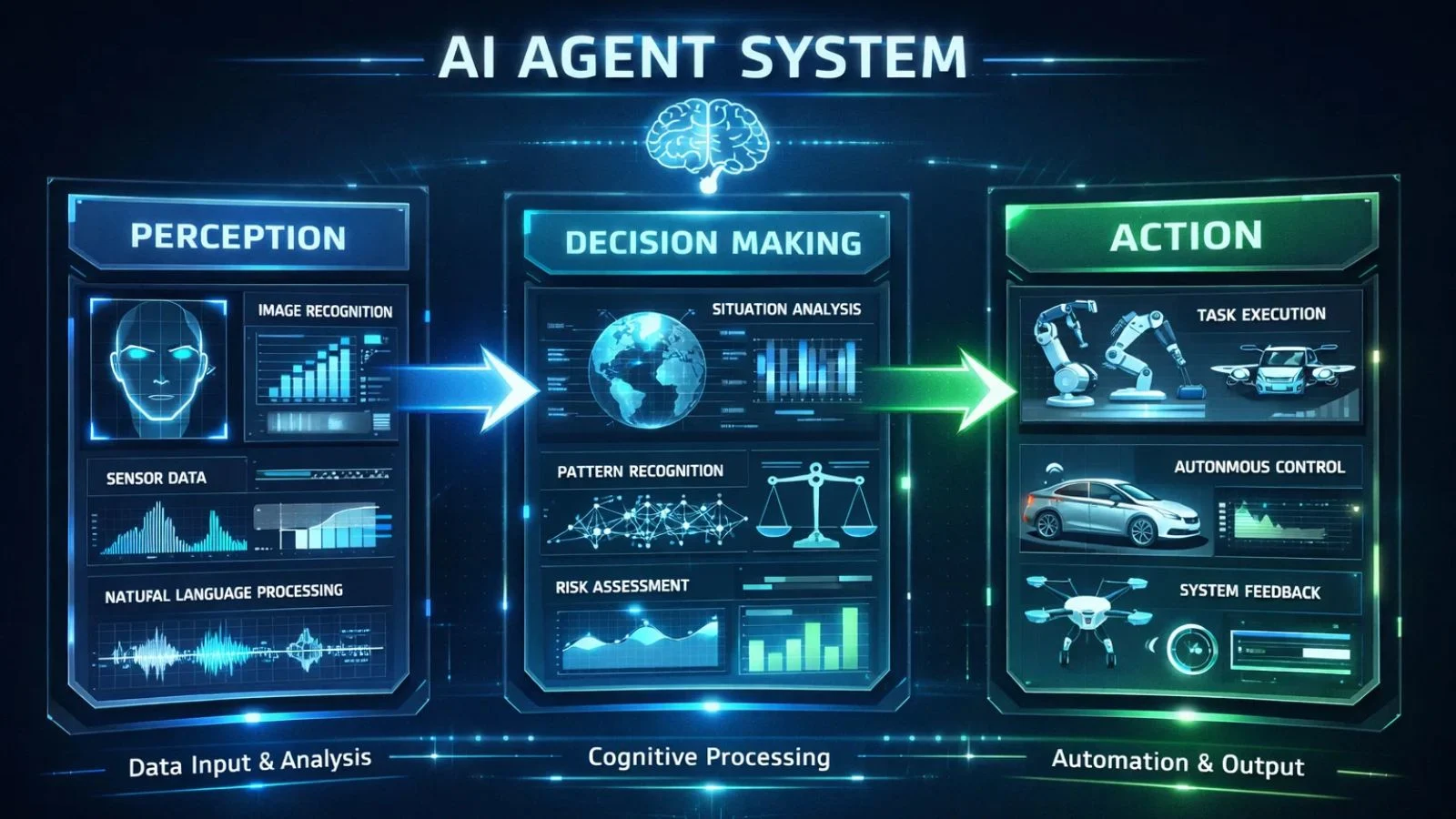
To understand modern intelligent systems, it helps to start with the basics of what are AI agents.
An AI agent is a software program that can perceive information from its environment, process that information, and take actions to achieve a defined objective. The goal might be answering questions, scheduling meetings, analyzing data, or even controlling smart devices.
Think of an intelligent assistant that can observe a situation and decide what to do next without constant human instructions.
A typical agent operates through three main components:
- Perception
The system gathers information from its environment. This could include user input, sensors, APIs, or databases. - Decision making
It analyzes the collected information and determines the best possible action. - Action
The system performs the chosen action, such as sending a response, triggering automation, or updating a system.
Because of this cycle of perception, reasoning, and action, these systems behave more like assistants than traditional software tools.
How AI Agents Work
To better understand how AI agents function, imagine them as goal-driven problem solvers.
Instead of simply following a fixed script, they analyze a situation and decide what step should come next. Most systems rely on a combination of data processing, machine learning models, and decision logic.
Here is a simplified workflow.
Step 1: Input or Observation
The system receives information. This could be:
- A user question
- A system event
- New data entering a platform
- A command from another application
This information acts as the starting point for decision-making.
Step 2: Processing and Reasoning
The software analyzes the input and determines possible solutions. It may be used:
- Natural language processing
- Machine learning models
- Predefined rules
- Knowledge bases
This stage helps the system figure out what action will best achieve the goal.
Step 3: Action Execution
Finally, the system acts. For example:
- Responding to a user
- Updating records
- Sending notifications
- Running automated workflows
After completing the action, the cycle can start again if new information appears.
Types of AI Agents
Not all systems are built the same. There are several categories based on how complex the decision-making process is.
Simple Reflex Agents
These systems follow straightforward rules.
They observe a condition and immediately trigger an action. For example, a spam filter that blocks emails containing certain keywords.
They are fast but limited because they cannot adapt to new situations.
Model-Based Agents
These systems maintain an internal understanding of their environment.
Instead of reacting blindly, they track previous states and use that information to make better decisions.
This allows them to operate in more dynamic environments.
Goal-Based Agents
Goal-oriented systems evaluate different actions based on whether they help achieve a specific objective.
For example, a navigation assistant analyzes multiple routes to find the fastest path.
Learning Agents
These systems improve over time by learning from data and experiences.
They can refine their decision-making process as they receive feedback or encounter new scenarios.
Many modern best AI agents fall into this category because they combine learning with advanced reasoning.
Agentic AI vs Generative AI
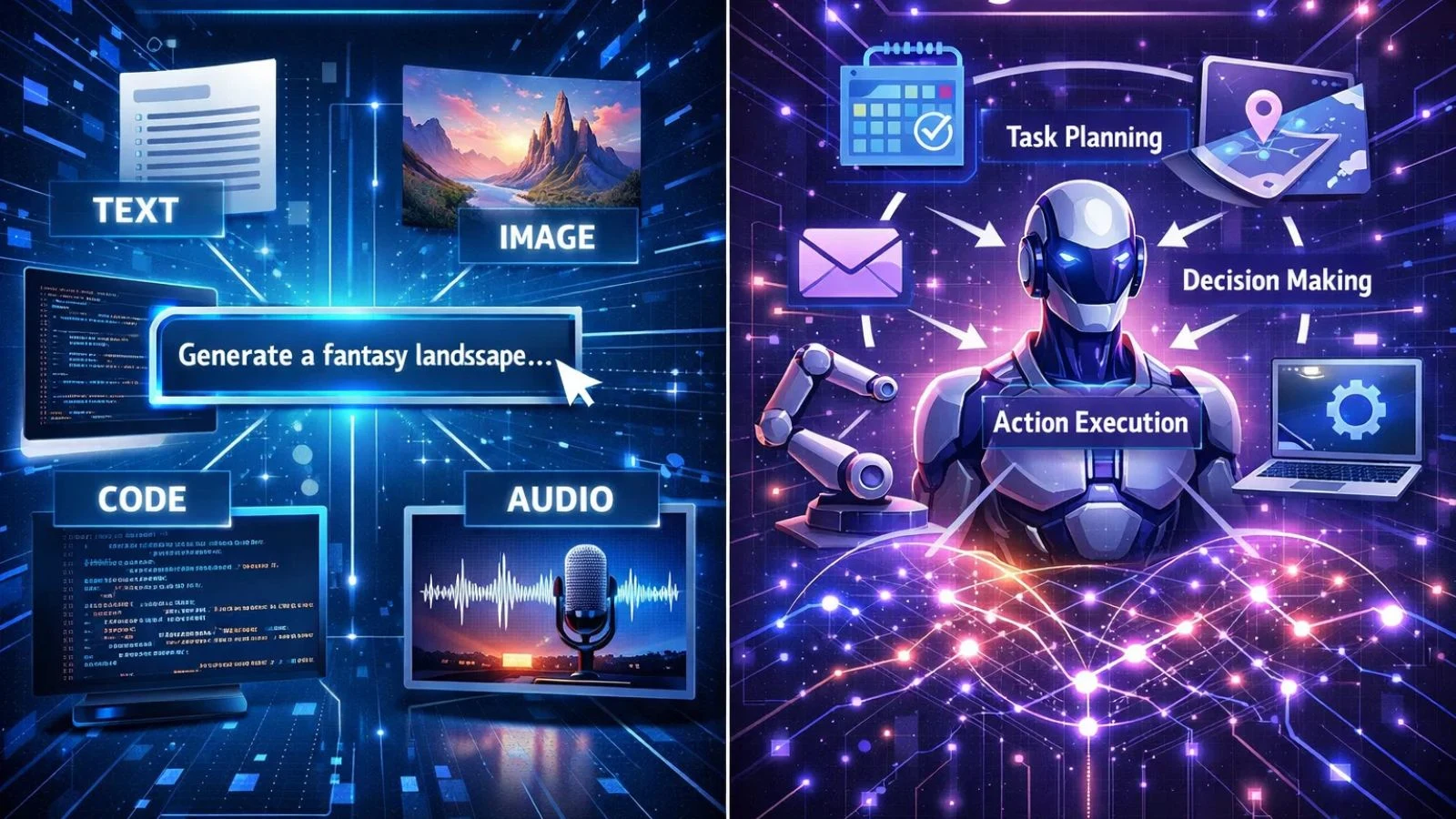
Another concept often discussed today is agentic AI vs generative AI.
While both belong to the broader field of artificial intelligence, they serve different purposes.
Generative AI
Generative systems focus on creating content. They can generate:
- Text
- Images
- Code
- Audio
- Videos
These models respond to prompts and produce outputs based on patterns learned from training data.
Agentic AI
Agentic systems go beyond content creation. They are designed to:
- Plan tasks
- Make decisions
- Execute actions
- Interact with multiple tools
In other words, generative systems produce information, while agent-based systems act on that information.
This difference is central when comparing agentic AI vs generative AI, especially in real-world applications like automation or digital assistants.
Real World Applications of AI Agents
These intelligent assistants are already transforming many industries. Businesses are using them to automate tasks, improve efficiency, and enhance customer experiences.
Here are some common use cases.
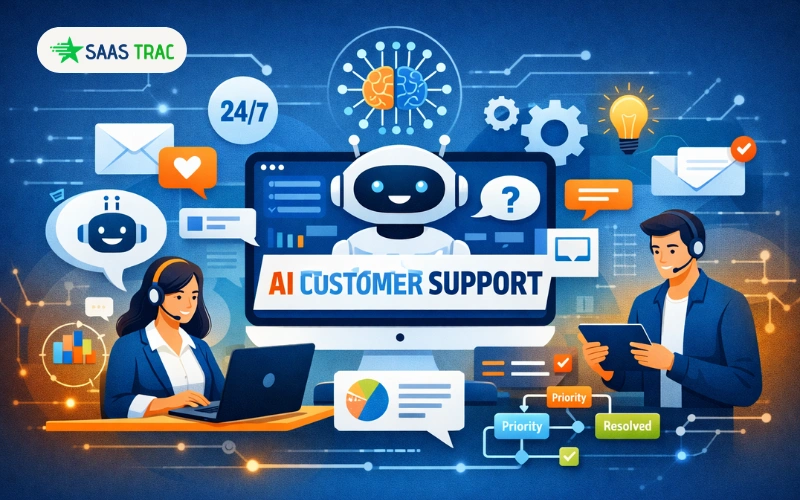
Customer Support Automation
Many companies use automated assistants to answer customer questions instantly.
They can:
- Handle common inquiries
- Guide users through troubleshooting
- Escalate complex issues to human agents
This reduces wait times and improves service availability.
Personal Productivity Assistants
Digital assistants can help individuals manage their daily tasks.
For example, they can:
- Schedule meetings
- Organize emails
- Set reminders
- Summarize documents
These systems act like a personal assistant working behind the scenes.
Data Analysis and Decision Support
Organizations often deal with large amounts of information.
Intelligent systems can analyze datasets, identify trends, and suggest actions based on insights.
This makes them valuable tools for business intelligence.
Workflow Automation
Many modern platforms use AI agents to automate repetitive processes.
They can monitor workflows and trigger actions automatically when specific conditions are met. This reduces manual effort and improves operational efficiency.
Examples of Some of the Best AI Agents
The market for AI agents is expanding rapidly, with powerful tools designed to automate workflows, improve productivity, and assist users across industries.
Here are a few examples often mentioned among the best AI agents available today.
Mistral AI
Mistral AI enables developers and businesses to build powerful autonomous agents that can perform tasks such as web searches, code execution, image generation, and document analysis. These agents can connect multiple tools into a single intelligent workflow, allowing organizations to automate complex processes efficiently.
Siena
Siena is an AI-powered customer experience agent designed to automate customer support. It can respond to queries, manage support tickets, and handle repetitive requests while maintaining a natural and human-like tone. Businesses often use Siena to reduce support workloads and deliver faster responses to customers.
Apollo AI
Apollo AI acts as a sales intelligence agent that helps businesses identify prospects, generate personalized outreach messages, and automate sales workflows. By analyzing large datasets of contacts and companies, it allows sales teams to focus on closing deals instead of spending time on manual research.
Benefits of Using AI Agents

There are several reasons businesses and individuals are adopting these technologies.
Increased Efficiency
Automation reduces the need for repetitive manual work. Tasks that once took hours can now be completed in minutes.
24/7 Availability
Unlike human teams, software assistants can operate continuously without breaks.
This makes them ideal for global businesses and online platforms.
Scalability
Organizations can deploy multiple intelligent systems to handle growing workloads without dramatically increasing costs.
Improved Decision Making
By analyzing large datasets quickly, these systems can provide insights that help leaders make better choices.
Challenges and Limitations
Despite their advantages, intelligent systems still face several challenges.
Reliability Issues
Because they rely on data and algorithms, they can sometimes make incorrect decisions or produce inaccurate results.
Ethical Concerns
Automation raises questions about privacy, accountability, and responsible AI use.
Organizations must ensure that systems operate transparently and fairly.
Security Risks
If poorly designed, automated systems may expose sensitive data or become vulnerable to cyber threats.
Proper safeguards and monitoring are essential.
The Future of AI Agents
The next generation of intelligent systems will likely be more autonomous, collaborative, and context-aware.
Future advancements may include:
- Multi-agent systems working together
- Improved reasoning abilities
- Deeper integration with business tools
- More human-like interactions
As technology improves, these systems will likely become a standard part of digital infrastructure.
Understanding what are AI agents today helps individuals and businesses prepare for a future where intelligent assistants play a central role in everyday operations.
Conclusion
Artificial intelligence is moving beyond simple automation. Modern AI agents represent a new generation of intelligent software capable of observing environments, making decisions, and executing actions to achieve goals.
From productivity tools to enterprise automation platforms, these systems are reshaping how work gets done.
By understanding what AI agents are, how they function, and the differences between agentic AI vs generative AI, beginners can better appreciate the growing impact of this technology.
As innovation continues, these intelligent assistants will likely become more capable, more reliable, and more deeply integrated into both business systems and everyday digital experiences.
FAQs
1. What are AI agents in simple terms?
They are intelligent software programs that can observe information, make decisions, and take actions to achieve a goal.
2. How are AI agents different from chatbots?
Traditional chatbots mostly follow scripted responses, while intelligent systems can reason, plan tasks, and interact with other tools.
3. What is the difference between agentic AI and generative AI?
Generative systems create content like text or images, while agent-based systems focus on decision-making and task execution.
4. Are AI agents used in businesses today?
Yes. Many companies use them for customer support, automation, data analysis, and productivity tools.