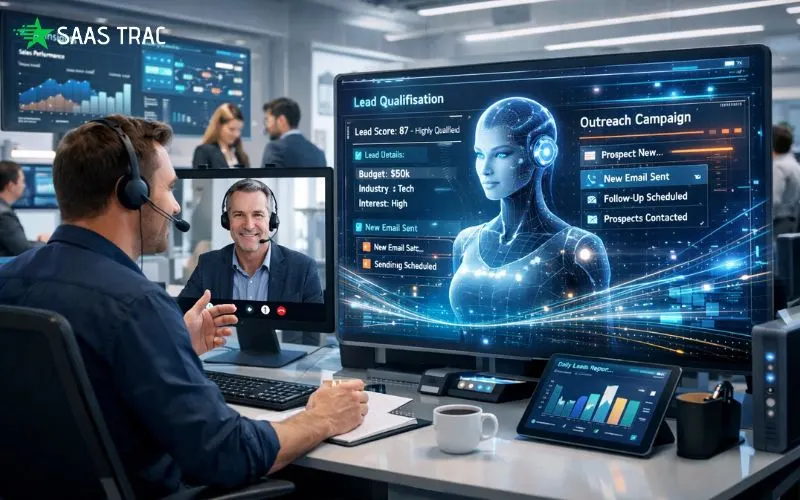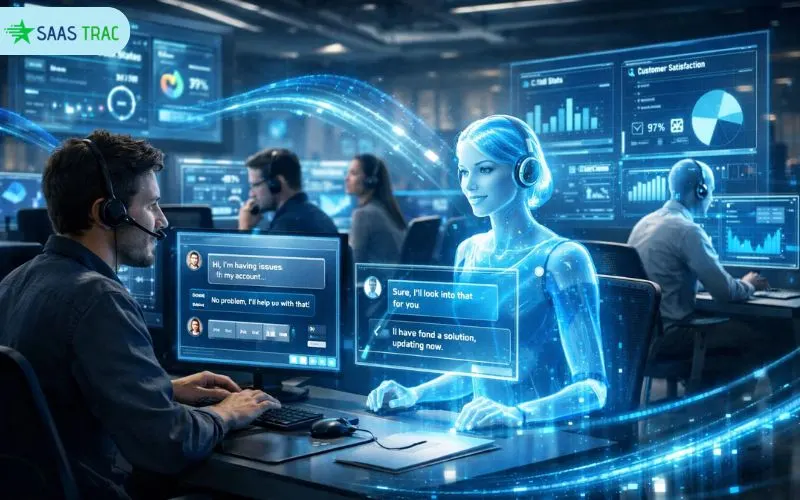
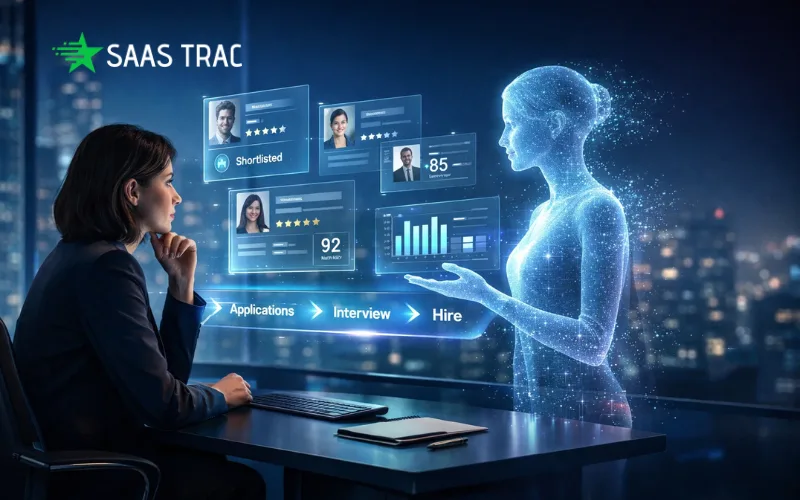
Human resources are changing rapidly, and AI HR technologies are a major reason for this. AI HR refers to the use of intelligent technologies to support and automate HR processes such as recruitment, onboarding, performance management, and employee engagement.
As organizations grow, HR teams face increasing pressure to hire faster, manage large amounts of employee data, and respond quickly to workplace needs. AI tools help by handling repetitive tasks, analyzing workforce data, and providing insights that would be difficult to identify manually.
Instead of replacing HR professionals, AI helps them focus on more meaningful work like improving employee experience, shaping company culture, and supporting leadership decisions.
As businesses adopt AI HR solutions, HR teams can automate repetitive work while focusing on strategic people management.
This guide explains what AI HR means, how companies are using it, and which tools are helping modern HR teams work more efficiently.
What Is AI HR?
AI in HR refers to the integration of artificial intelligence technologies into human resource processes to improve efficiency, accuracy, and decision-making.
While traditional HR systems primarily focus on storing employee data, managing administrative tasks, and generating reports, AI-powered tools go a step further. They analyze large volumes of workforce data, uncover patterns, and deliver actionable insights that help HR teams make more informed and strategic decisions.
These capabilities are driven by several key technologies. Machine learning enables systems to learn from historical data and identify trends, such as predicting employee turnover or recognizing the traits of high-performing candidates. Natural language processing allows AI to understand and interpret human language, powering applications like resume screening, HR chatbots, and employee sentiment analysis. Predictive analytics uses data to forecast future outcomes, including hiring demands and retention risks.
In practice, this means HR teams can move faster and work smarter. For instance, when a recruiter posts a job opening, an AI-driven platform can quickly scan and evaluate hundreds of resumes, ranking candidates based on their relevance to the role. This not only saves time but also improves the quality of hiring decisions.
Why AI Is Becoming Important for HR Teams
HRs are managing more responsibilities than ever before. Hiring volumes have increased, employee expectations have changed, and organizations rely heavily on workforce data to guide decisions.
AI helps HR teams handle these demands more efficiently.
Recruitment processes often involve reviewing large numbers of applications. AI tools can quickly analyze resumes and identify candidates whose skills match the job requirements.
Many HR tasks are also repetitive. Scheduling interviews, answering policy questions, and processing requests consume a large portion of HR time. Automation reduces this workload and allows teams to focus on higher-value work.
AI also improves decision-making by turning workforce data into insights. Instead of relying only on intuition, HR leaders can evaluate trends in hiring, engagement, and retention.
Key Use Cases of AI HR
Modern AI HR platforms support multiple stages of the employee lifecycle.
AI in Recruitment
Recruitment is one of the most common uses of AI in HR.
AI tools can significantly improve the recruitment process by handling repetitive tasks and enhancing decision-making.
Screen resumes at scale
AI can quickly analyze thousands of resumes in a fraction of the time it would take a human recruiter. It scans for relevant skills, experience, keywords, and qualifications, ensuring that no strong candidate is overlooked due to manual limitations.
Match candidates with job requirements
Using machine learning, AI compares candidate profiles with job descriptions to identify the best-fit applicants. It goes beyond keyword matching by considering context, past hiring data, and success patterns, leading to more accurate and quality hires.
Schedule interviews automatically
AI-powered systems can coordinate interview schedules by checking the availability of candidates and interviewers. This eliminates back-and-forth emails and reduces delays, making the hiring process faster and more efficient.
Assist with candidate communication
AI chatbots and virtual assistants can engage with candidates throughout the hiring journey. They can answer common questions, provide updates on application status, and guide candidates through next steps, ensuring a smoother and more responsive experience.
This reduces the time required to identify qualified applicants.
AI for Employee Engagement
AI tools help HR teams understand how employees feel about their workplace.
Sentiment analysis systems review employee feedback, surveys, and communication channels to detect patterns in engagement. These insights help organizations identify issues early and respond before they affect retention.
AI in Performance Management
AI platforms analyze performance data from different systems to provide a clearer picture of employee contributions.
They can also identify trends such as productivity patterns or early signs of disengagement, helping managers address issues sooner.
AI for HR Automation
Many everyday HR tasks can be automated with AI.
Examples include:
- onboarding workflows
- leave request processing
- HR helpdesk support
Chatbots are often used to answer employee questions about policies, benefits, or procedures, reducing routine support requests.
Top AI Tools for HR Teams
The AI HR technology market now offers a wide range of tools built to address specific challenges across the employee lifecycle. Whether you are focused on streamlining recruitment, automating HR support, or improving candidate outreach, the platforms below represent some of the strongest options available for modern HR teams. Here is what each tool does and where it fits in the HR workflow.
Below are some of the most practical AI HR tools currently used by modern HR teams.
1. Interviewer.AI
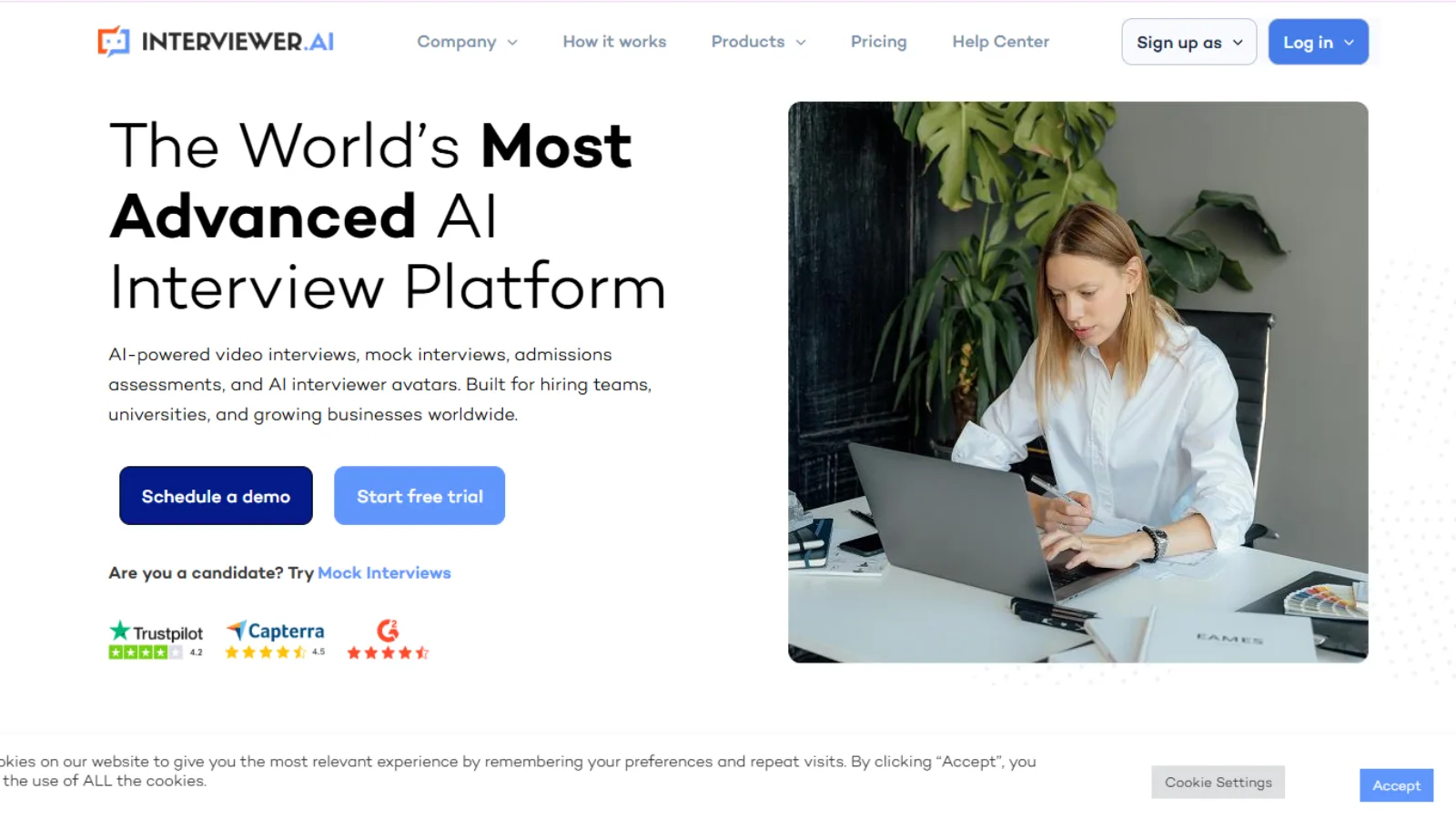
Interviewer. AI is an AI-powered video interviewing and candidate evaluation platform designed to automate first-round recruitment screening. It helps hiring teams assess candidates through asynchronous video interviews, role-specific question generation, and data-backed evaluation reports.
The platform is primarily used by recruitment teams to automate early-stage candidate screening, reduce manual interview coordination, and standardize evaluations across roles and departments.
Key AI Features
- Auto-Generated Interview Questions: AI creates relevant, role-specific questions instantly based on the job post.
- Asynchronous Video Interviews: Candidates record responses on their own schedule; AI evaluates communication, content, and soft skills.
- Resume Fit Score: Intelligently maps CV qualifications against job requirements to surface best-fit applicants.
- Transparent Evaluation Engine: Provides explainable AI logic behind every candidate score, supporting fair and bias-aware hiring decisions.
Interviewer. AI works best for HR teams handling high-volume hiring campaigns, remote or hybrid role recruitment, or organizations looking to standardize screening across multiple departments.
Its Transparent Evaluation Engine sets it apart by providing explainable reasoning behind every AI decision, making it easier for HR teams to justify hiring choices and maintain fairness in the screening process.
2. Autonomous HR Chatbot
An autonomous HR chatbot is an AI-powered HR helpdesk tool built to handle employee queries around the clock. Powered by GPT-3.5 Turbo, LangChain, and Pinecone vector search, it retrieves real-time policy information, answers HR questions in natural language, and performs built-in calculations such as leave balances and working hours.
The tool is primarily used to automate HR support operations, handling repetitive employee queries related to policies, leave, payroll basics, and company information without requiring HR staff involvement.
Key AI Features
- Smart Policy Assistant: Retrieves contextually accurate answers from embedded company policy documents using vector search.
- Natural Language Queries: Understands employee intent behind questions, not just keywords, for more accurate and conversational responses.
- Built-in HR Calculator: Handles leave balance calculations and working hour queries through conversational interaction.
- Employee Info Finder: Uses preloaded employee datasets to deliver personalized answers about roles, leave, and individual HR data.
This tool works best for mid-to-large organizations looking to reduce HR helpdesk volume, support remote or hybrid teams with 24/7 access to HR information, and maintain policy consistency at scale.
Its integration of LangChain and Pinecone vector search allows the chatbot to retrieve highly relevant answers from real company documents, rather than relying on generic AI responses, making it far more accurate and practical for enterprise HR environments.
3. Qode
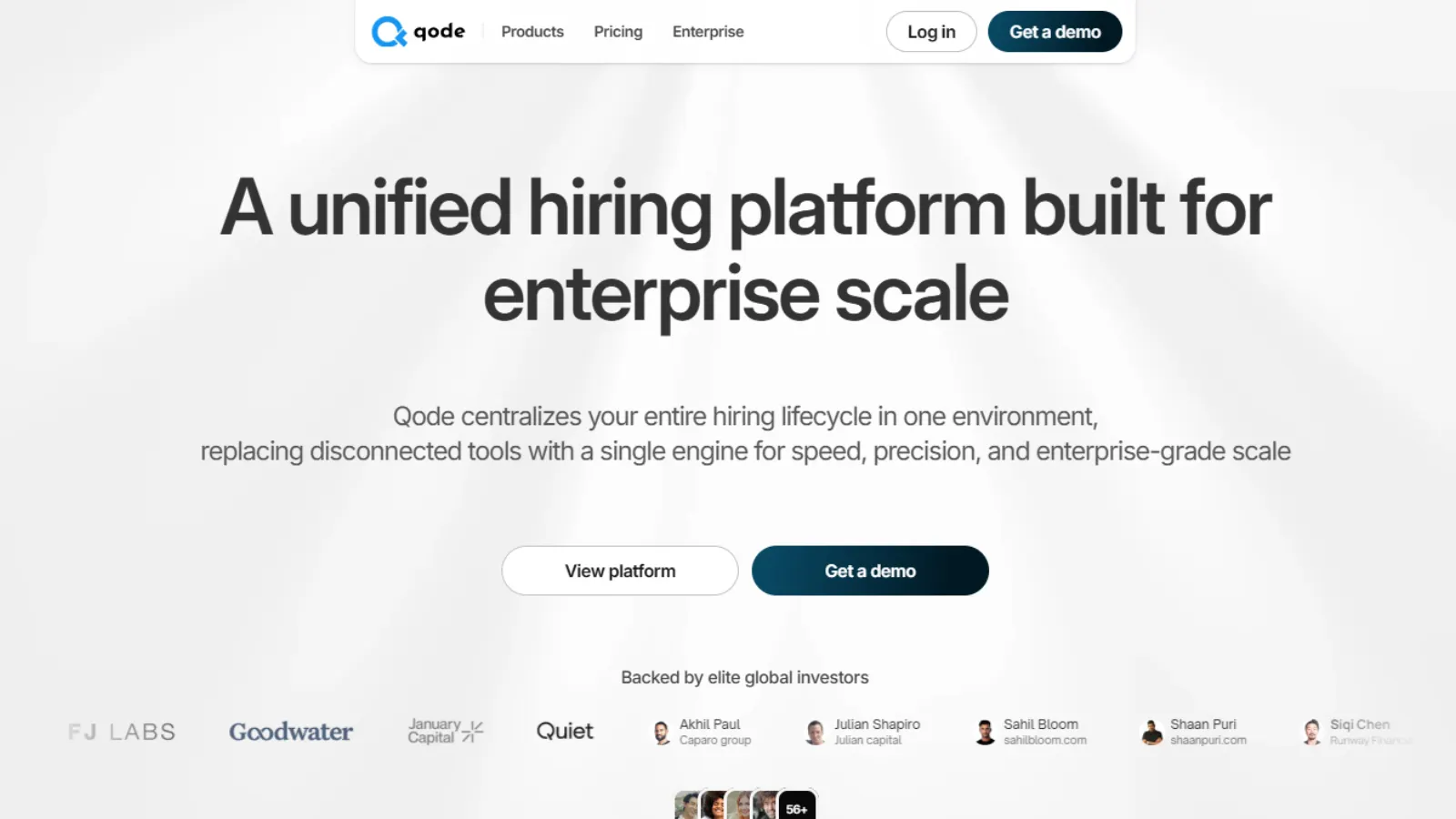
Qode is an end-to-end AI recruiting platform that automates up to 80% of the hiring process, from candidate sourcing and screening to interviewing and follow-ups. Its built-in AI recruiter, Tracy, manages candidate engagement and shortlisting 24/7, giving HR teams access to a pool of over 500 million verified candidate profiles.
Qode is used primarily by recruitment and talent acquisition teams to source, screen, and engage candidates automatically, significantly reducing time-to-hire without expanding recruiter headcount.
Key AI Features
- AI Recruiter Tracy: A virtual recruiter that screens candidates, evaluates responses, and shortlists talent using structured, bias-free methods around the clock.
- Smart Multilingual Interviewing: Conducts adaptive, conversational interviews in 30+ languages with real-time scoring and AI-generated follow-up questions.
- 360 Engage Outreach Automation: Automates candidate communication and nurturing workflows to keep applicants informed and progressing through the hiring funnel.
- Performance-Driven Hiring Insights: Delivers real-time analytics on match rates, time-to-hire, and funnel performance to help teams optimize recruitment outcomes.
Qode is best suited for fast-scaling startups and enterprise HR teams that need to fill roles quickly, manage high-volume pipelines, or improve diversity hiring through structured, unbiased AI-led assessments.
Access to 500 million verified candidate profiles, combined with multilingual interview capability, makes Qode particularly powerful for organizations hiring across multiple regions or niche technical roles.
4. SonicJobs
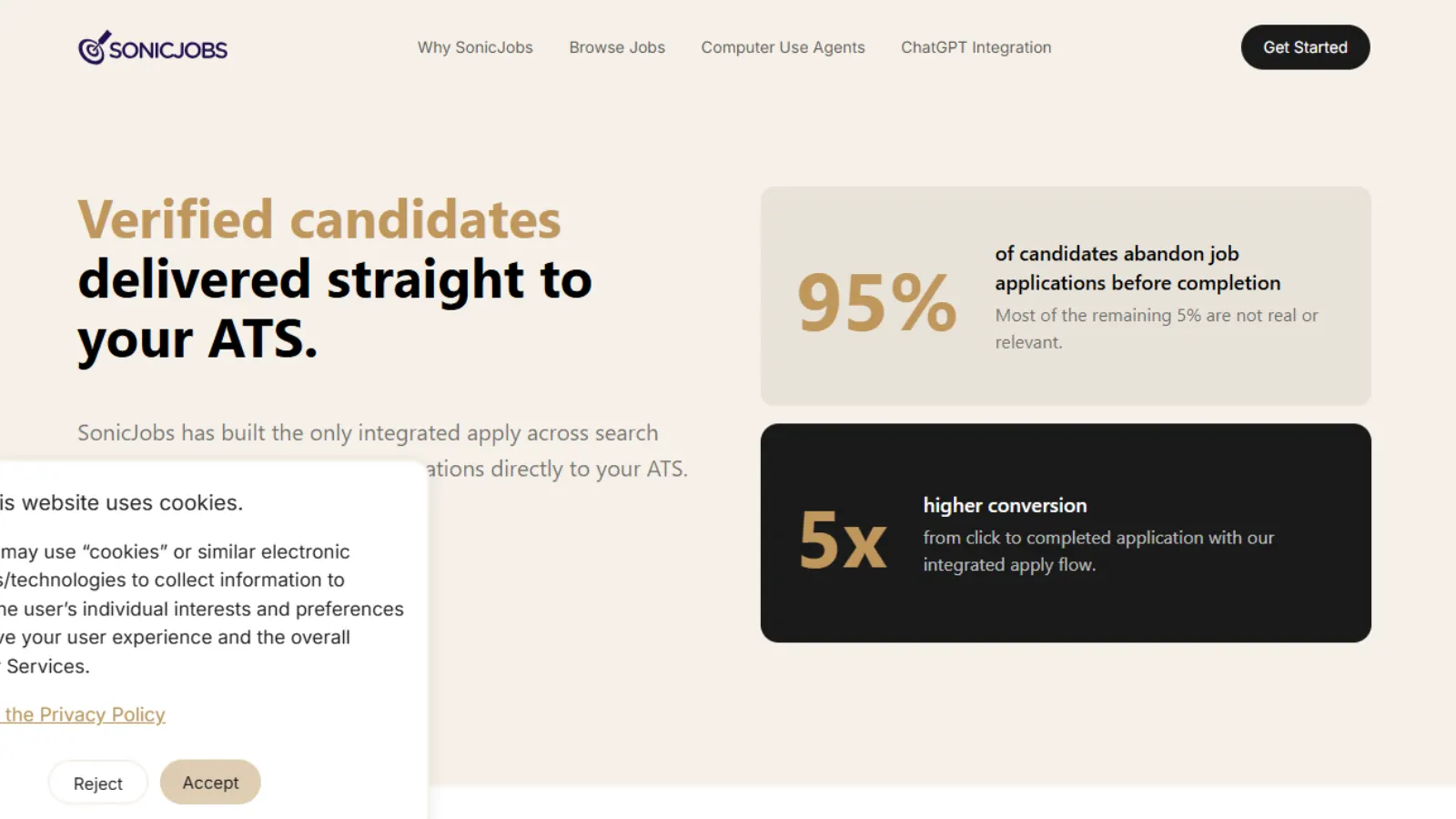
SonicJobs is an AI-powered job application platform that uses intelligent web agents to automate the candidate application process across more than one million job sites. By handling form-filling, resume uploads, and screening questions automatically, it lifts application completion rates from approximately 5% to 26%.
SonicJobs sits at the intersection of candidate experience and recruiter efficiency. For HR teams and recruiters, it increases applicant volume and improves conversion rates. For job seekers, it eliminates the friction of repetitive manual application processes.
Key AI Features
- Intelligent Form Filling: AI agents detect form fields across varied website layouts and auto-complete applications, including screening questions.
- Strategic Reasoning Agents: Navigate conditional application flows, recover from errors, and ensure submissions are completed successfully.
- Cross-Site Application: Applies to roles across 22+ major job boards, including Monster and ZipRecruiter, without leaving the platform.
- Adaptive Learning: Agents improve performance over time, learning from each completed application to handle new layouts more effectively.
SonicJobs is best suited for active job seekers applying at scale, recruiters looking to increase candidate volume for clients, and HR teams tracking application conversion metrics across platforms.
Its multi-agent orchestration engine, which uses computer vision and natural language understanding to navigate any web-based application form, is what separates SonicJobs from standard auto-fill tools.
5. Recruit CRM
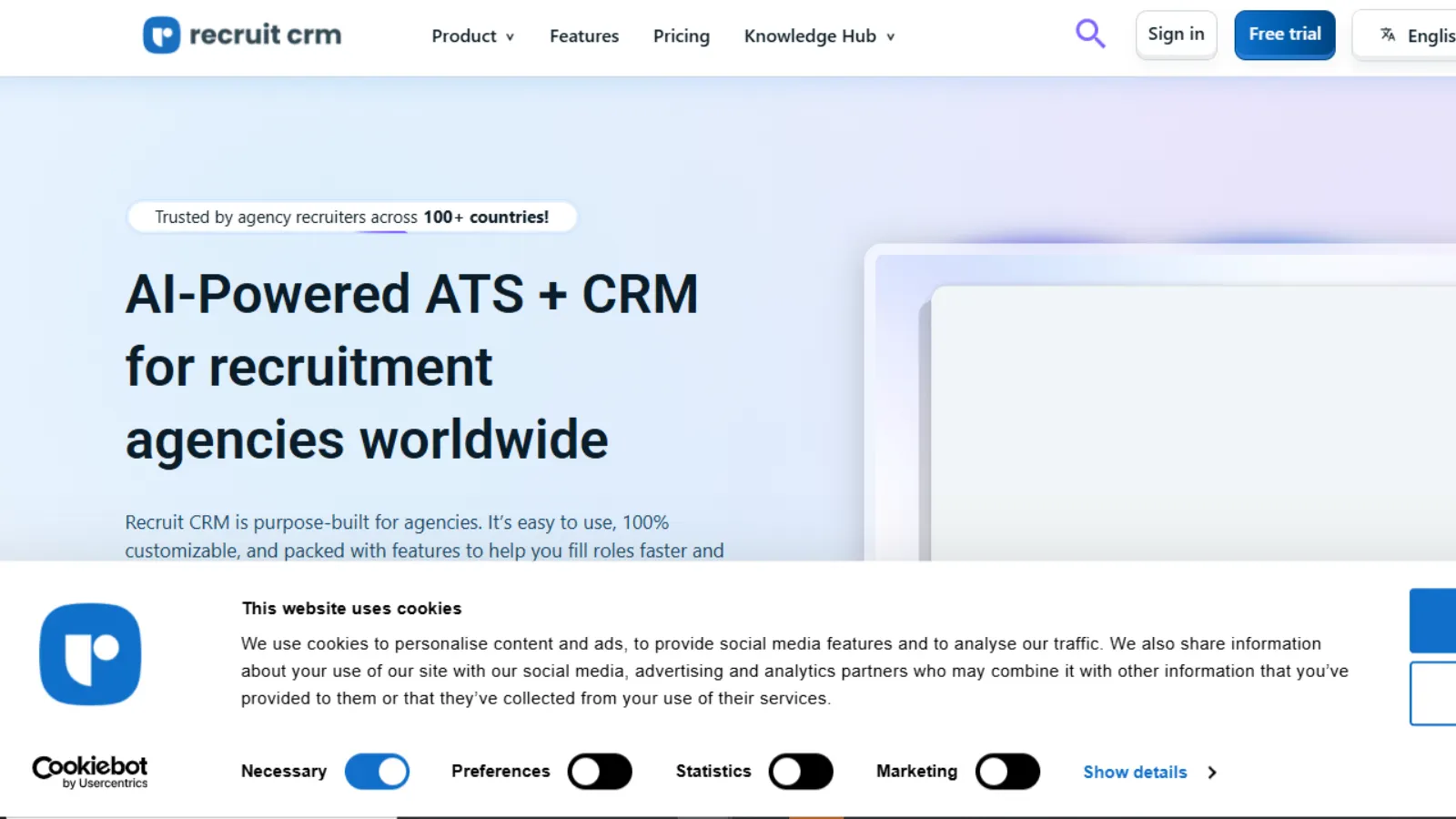
Recruit CRM is an AI-powered applicant tracking system (ATS) and CRM platform built specifically for recruiters and staffing agencies. It combines candidate management, client relationship tracking, resume parsing, and workflow automation in a single cloud-based system.
The platform is primarily used by staffing agencies and in-house recruitment teams to manage end-to-end hiring pipelines, from sourcing and screening to placement and client reporting.
Key AI Features
- AI Candidate Matching: Automatically surfaces top-fit candidates based on job requirements, experience, and skills.
- Built-in Resume Parser: Bulk-uploads and extracts structured candidate profiles instantly with no manual formatting required.
- Automated Workflows: Smart triggers move candidates through pipeline stages, send follow-up alerts, and handle repetitive actions without manual input.
- Chrome Extension for Sourcing: Enables recruiters to pull candidate profiles directly from LinkedIn into the CRM with one click.
Recruit CRM works best for staffing agencies managing multiple clients and job pipelines, as well as freelance and in-house recruiters who need a single tool that handles both candidate and client management.
Its combination of ATS and CRM functionality in one platform means agencies can manage candidate pipelines and client relationships simultaneously, without switching between separate tools.
6. Vulse
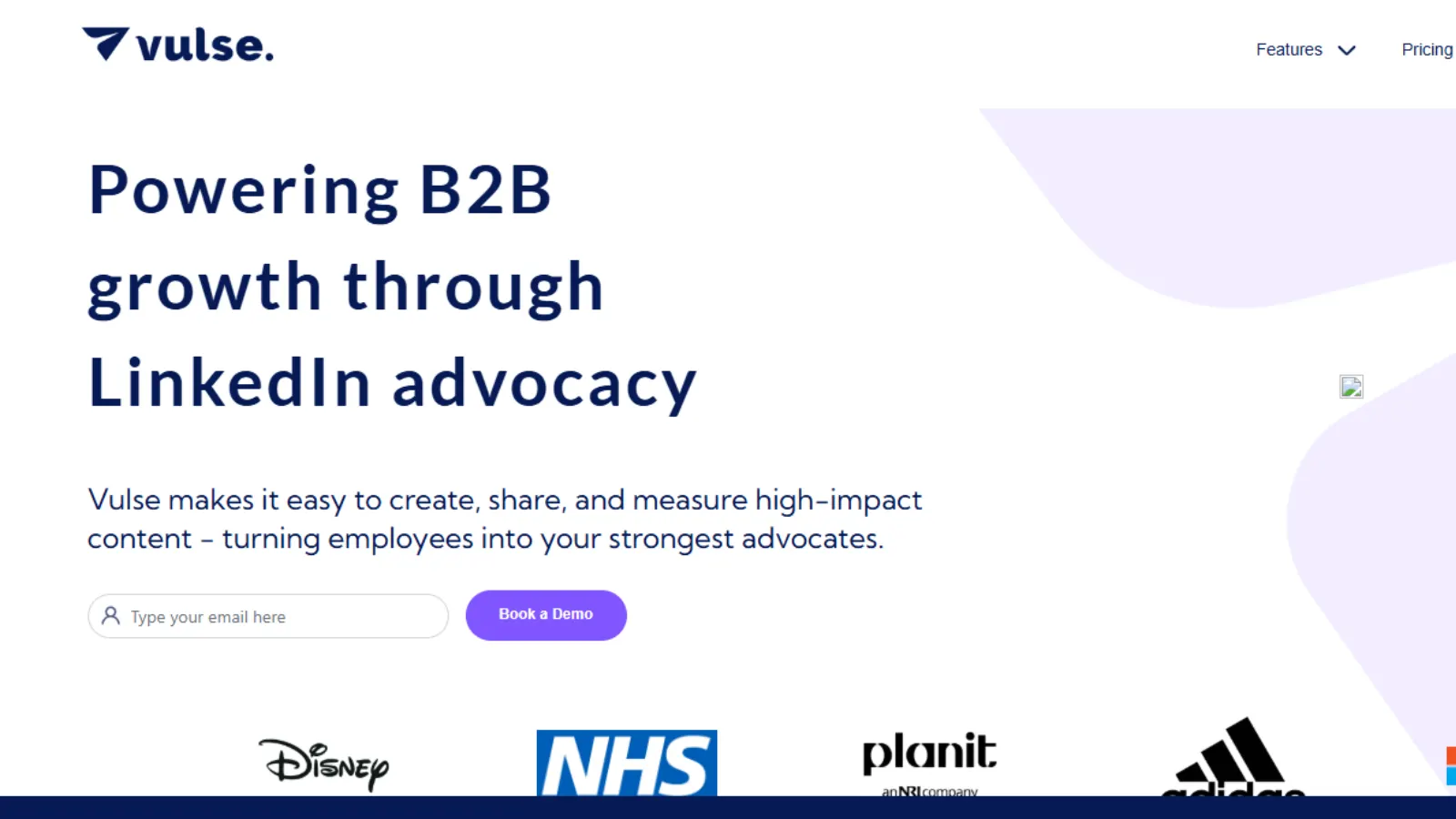
Vulse is an AI-powered employee advocacy platform built for LinkedIn. It helps organizations turn their employees into active brand champions by enabling personalized content sharing, performance tracking, and gamified participation programs, all connected to the live LinkedIn API.
Vulse is used by HR and employer branding teams to amplify company culture, attract talent organically through employee voices, and run structured advocacy programs that encourage team members to share company content on LinkedIn.
Key AI Features
- AI-Powered Voice Modeling: Adapts content to each employee’s personal communication style while maintaining overall brand tone consistency.
- Smart Content Scheduling: Distributes ready-to-share posts across teams with role-based controls and flexible scheduling options.
- Live LinkedIn Integration: Tracks post performance, reach, and engagement in real time using native LinkedIn API data.
- Gamified Advocacy Engine: Motivates participation through built-in support for custom reward programs and recognition systems.
Vulse is best for HR and marketing teams at mid-to-large organizations that want to build employer brand presence on LinkedIn, attract talent organically, or drive thought leadership through employee content.
Its artificial intelligence voice modeling feature ensures that content shared by employees feels authentic to each individual rather than generic and corporate, which significantly improves engagement and reach on LinkedIn.
7. Artha
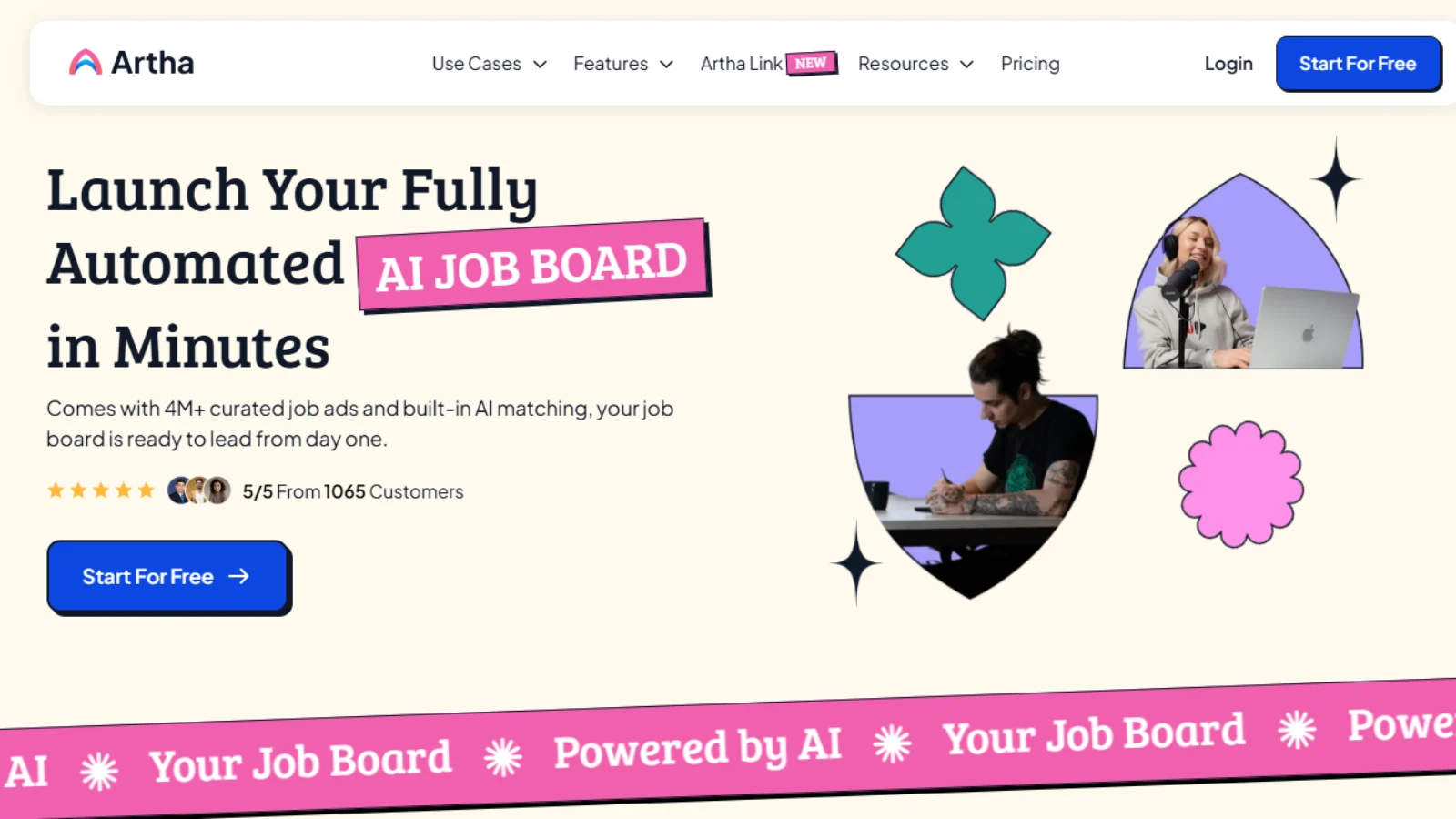
Artha is an AI-powered job board built specifically for tech professionals seeking remote-first and future-focused roles. It focuses on Web3, AI, and tech-forward companies, using intelligent matching to connect candidates with relevant opportunities without requiring complex manual searches.
Artha is used by tech-focused employers to reach highly targeted candidate audiences, and by job seekers in the AI, Web3, and remote technology space to discover curated roles that align with their skills and career goals.
Key Artificial Intelligence For HR Features
- Smart Job Matching: Artificial intelligence suggests open roles based on candidate skills, experience level, and niche focus area without requiring manual filter adjustments.
- Curated Role Discovery: Focuses exclusively on Web3, AI, and remote-first startup roles, removing irrelevant listings from candidate search results.
- Company Snapshots: Each listing includes company background, culture tags, and role context so candidates have meaningful information before applying.
- Real-Time Role Updates: Daily refresh ensures listings remain current, with secure email alerts for new matching opportunities.
Artha is best suited for developers, designers, and growth marketers actively looking to move into remote-first, AI, or Web3 roles, as well as startups and tech companies targeting this specific talent pool.
Unlike general job boards, Artha’s deliberate focus on future-tech roles means both candidates and employers benefit from a highly relevant, lower-noise environment, making matches faster and more meaningful.
How AI HR Tools Improve Workflow?
A quality AI HR tool removes the friction that slows hiring teams and HR professionals down. Recruiters screen candidates faster. Onboarding runs on autopilot. Employee queries get answered instantly. Decisions are backed by real data, not guesswork.
Instead of spending hours sorting resumes or manually scheduling interviews, HR teams let the best AI HR tools handle the heavy lifting. They then focus on what machines cannot do: building relationships, resolving conflict, and shaping company culture.
This partnership between human judgment and intelligent automation defines modern HR success. SaaSTrac makes it easier to find the right tools driving this shift, with reviewed and categorized AI HR solutions all in one place.
Why Do Businesses Choose the Best AI HR Tools?
Organizations need faster hiring cycles, lower administrative costs, and consistent people management at scale. The best AI for HR delivers all three. It helps smaller HR teams operate like larger ones while giving experienced professionals more time for strategic work.
With access to powerful AI HR platforms, from recruitment automation to workforce analytics, companies gain a genuine edge in attracting, managing, and retaining talent. SaaSTrac cuts through the noise by listing only vetted, reviewed tools across 500+ software categories, so HR leaders spend less time researching and more time acting.
Whether you are looking for an AI recruiter, an HR chatbot, or a people analytics platform, SaaSTrac gives you a reliable starting point with honest reviews and direct access to the solutions that matter.
How To Select The Right AI HR Tool For Your Needs?
Every HR team has different priorities. Some need to automate recruitment screening. Others want employee engagement tracking, HR chatbots, or predictive workforce analytics. Evaluate tools based on what your team actually needs day to day:
- HR functions you want to automate (recruiting, onboarding, engagement, analytics)
- Integration with your existing ATS or HRMS
- Team size and hiring volume
- Data privacy and compliance requirements
- Budget and scalability
Choosing the best AI HR tool depends on where your team loses the most time and where better data would make the biggest difference. SaaSTrac simplifies this entire process; its clear categories, side-by-side comparisons, and 700+ detailed reviews mean you can evaluate options confidently without jumping between dozens of websites.
Smarter HR starts with the right tools. SaaSTrac helps you find them.
Conclusion
Artificial intelligence is already reshaping how organizations manage recruitment, workforce analytics, and employee engagement.
By automating repetitive tasks and analyzing workforce data, AI allows HR teams to operate more efficiently and make better decisions.
The most successful organizations use Artificial Intelligence as a support system rather than a replacement for human judgment. When combined with strong leadership and thoughtful HR practices, Artificial Intelligence can help teams build more effective and responsive workplaces.
FAQ
What is AI in HR?
AI HR refers to the use of artificial intelligence technologies to support human resource activities such as recruitment, employee engagement, workforce analytics, and administrative automation.
How is AI used in recruitment?
Artificial intelligence helps recruiters screen resumes, match candidates to job requirements, schedule interviews, and manage candidate communication.
What are the benefits of AI HR?
Artificial intelligence helps HR teams automate administrative tasks, improve hiring efficiency, analyze workforce data, and monitor employee engagement.
Is AI replacing HR jobs?
Artificial intelligence is changing how HR teams work rather than replacing them. Automation handles routine tasks, while HR professionals focus on strategy, culture, and employee relations.
What are AI HR tools?
HR tools are software platforms that use artificial intelligence to automate HR tasks, analyze workforce data, and support recruitment and employee management.