

Sales is no longer just about human intuition and phone calls. Today, AI sales agents are stepping in to streamline processes, generate leads, and even close deals. These smart systems, often powered by machine learning and natural language processing, can handle repetitive tasks, provide real-time insights, and support sales teams in ways that were previously impossible.
The idea of an AI sales agent might feel futuristic or even intimidating but the truth is simpler: these tools are designed to augment human salespeople, not replace them. By handling time-consuming tasks like lead qualification, outreach, and follow-ups, AI agents free up human teams to focus on relationship-building and strategic decisions.
In this blog, we’ll explore the practical benefits of AI sales agents, highlight real-world use cases, and point out some of the most effective tools on the market. By the end, you’ll see how sales AI agents are transforming the sales landscape and why adopting them early can give your team a competitive edge.
What Are AI Sales Agents?

An AI sales agent is a digital system designed to interact with potential customers, qualify leads, and assist sales teams. These agents use technologies like:
- Natural language processing (NLP) to understand customer queries
- Predictive analytics to identify high-potential leads
- Machine learning algorithms to optimize sales approaches over time
Unlike traditional sales automation tools, AI agents are intelligent and adaptive. They can analyze patterns in customer behavior, predict buying intent, and even personalize outreach in real time. Some advanced systems, sometimes referred to as agentic AI in sales, can make decisions autonomously like scheduling calls or sending tailored emails while staying aligned with overall sales strategies.
In short, AI sales agents act as virtual teammates, enhancing efficiency, improving lead conversion rates, and supporting sales teams with actionable insights.
Key Benefits of AI Sales Agents
Introducing sales AI agents into your workflow comes with multiple advantages:
- Lead Generation & Qualification – AI can quickly identify high-quality leads from large datasets, saving human agents hours of research.
- 24/7 Availability – Unlike humans, AI agents can engage prospects around the clock, ensuring no opportunity is missed.
- Personalized Outreach – AI can craft messages tailored to individual customer profiles based on previous interactions or behaviors.
- Data-Driven Insights – By analyzing customer data, AI agents highlight trends, forecast conversions, and recommend next steps.
- Reduced Workload – Repetitive tasks like follow-up emails or appointment scheduling are automated, letting human agents focus on strategy.
Organizations that deploy AI sales agents often report higher conversion rates, improved efficiency, and better customer satisfaction all while reducing manual workload.
Real-World Use Cases
AI sales agents are not just theoretical they’re actively improving sales processes across industries. Here are some common scenarios:
1. Lead Qualification
AI systems can scan incoming leads from multiple sources website forms, social media, or email inquiries and prioritize them based on predicted purchase intent. This ensures human sales reps spend time only on the most promising prospects.
2. Automated Outreach
Agents can send personalized messages via email, chat, or social media. They adjust tone and content based on customer responses, increasing engagement without adding manual effort.
3. Customer Support & Nurturing
Some AI agents act as the first point of contact for inquiries, providing instant answers, scheduling demos, or routing queries to the right human agent. This improves response time and customer experience.
4. Predictive Sales Analytics
AI agents analyze past deals, customer behaviors, and market trends to forecast which leads are most likely to convert helping sales teams focus resources efficiently.
These use cases demonstrate how AI sales agents move beyond automation to become intelligent partners in sales.
Popular AI Sales Agent Tools
There are many tools available for businesses looking to leverage AI in sales. Some notable options include:
- Drift – Conversational AI that automates chat and lead qualification.
- Exceed.ai – AI-driven sales assistant that follows up with leads via email and chat.
- Saleswhale – Intelligent AI agents for nurturing leads and scheduling meetings.
- Conversica – AI assistant that engages prospects, qualifies leads, and provides detailed analytics.
Each of these platforms focuses on making sales teams more efficient while keeping transparent AI-human collaboration at the core. For a more extensive list of tools, visit AI Sales Lead Generation Tools.
How to Implement AI Sales Agents Successfully
For maximum impact, follow these steps:
- Define Your Goals – Decide if your priority is lead generation, qualification, outreach, or analytics.
- Choose the Right Tool – Select an AI agent platform that aligns with your sales strategy and team workflow.
- Integrate With Existing Systems – Ensure AI tools work alongside CRM, email, and communication platforms.
- Train & Monitor – Monitor AI outputs, fine-tune settings, and provide ongoing feedback to optimize performance.
- Maintain Human Oversight – While AI agents are powerful, human judgment remains critical for complex decisions and relationship-building.
By approaching implementation strategically, companies can leverage sales AI agents to enhance productivity without alienating their team or customers.
Challenges to Consider
While AI sales agents offer many benefits, there are potential pitfalls:
- Over-reliance on AI – Not all interactions should be automated; human touch is essential.
- Data Privacy & Compliance – Ensure AI follows regulations around customer data usage.
- Integration Complexity – Multiple tools may require careful configuration to avoid disruption.
- Bias in AI – AI may unintentionally favor certain types of leads; ongoing monitoring is necessary.
Being aware of these challenges helps organizations adopt AI sales agents effectively and ethically.
AI Sales Agents for Small vs Large Businesses
One of the biggest misconceptions about AI sales agents is that they are only for enterprise-level companies. In reality, they’re versatile enough to help businesses of all sizes.
- Small Businesses: AI agents can automate repetitive sales tasks, like follow-ups and lead qualification, giving smaller teams the bandwidth to focus on building relationships. A small team of 5–10 people can leverage AI to scale outreach without hiring additional staff.
- Large Enterprises: Large organizations deal with massive volumes of leads. AI agents help prioritize high-potential prospects, manage pipelines efficiently, and provide analytics across multiple teams and regions.
The key takeaway? Whether you’re a startup or a global corporation, sales AI agents can optimize workflows, reduce costs, and improve sales performance.
Measuring the ROI of AI Sales Agents
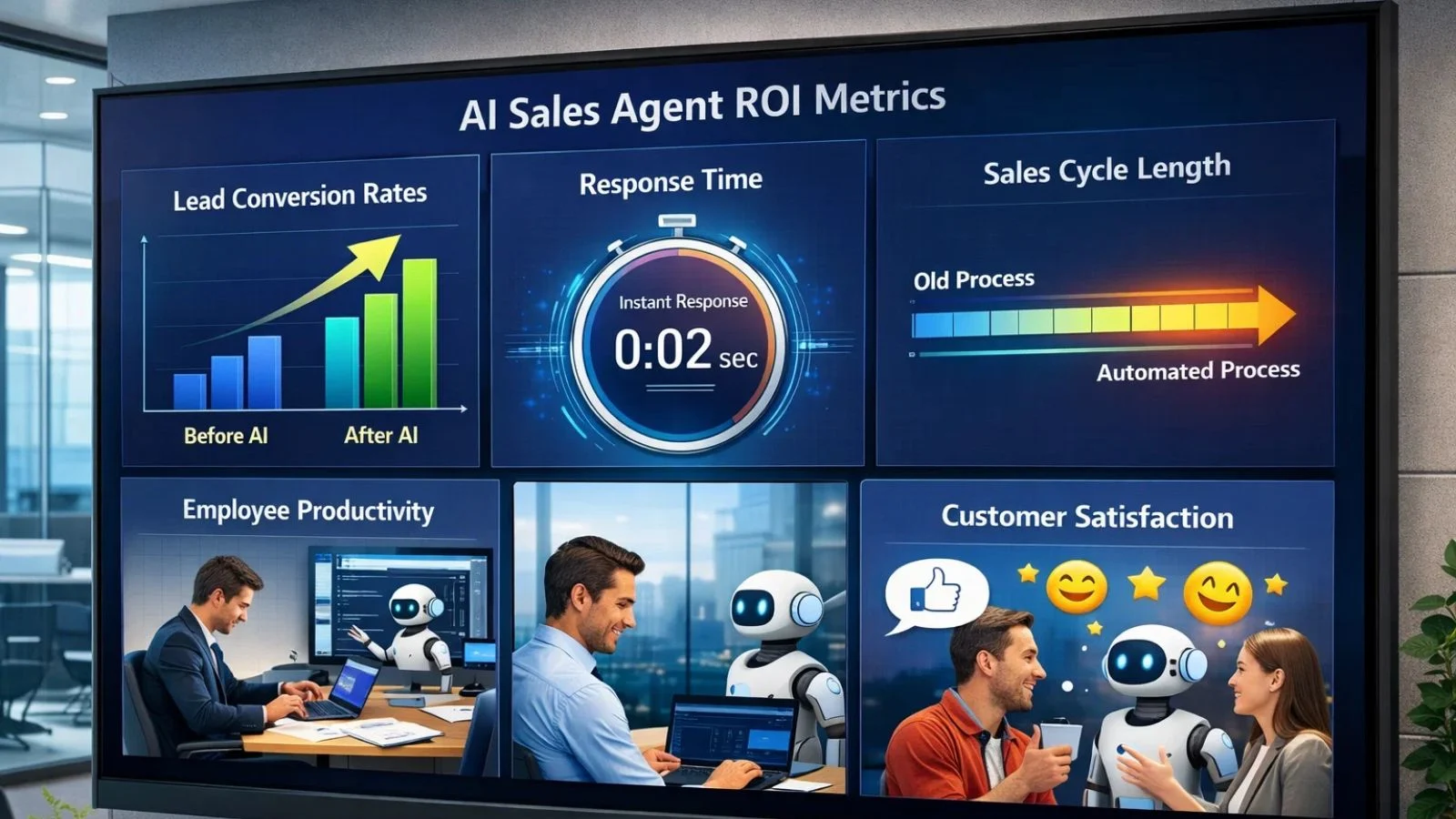
Investing in AI is always easier when you can measure its impact. Here’s how companies track the success of AI sales agents:
- Lead Conversion Rates – Compare how many leads convert before and after AI implementation.
- Response Time – AI agents often respond instantly, reducing the time from lead capture to engagement.
- Sales Cycle Length – Automation and intelligent follow-ups can shorten the overall sales cycle.
- Employee Productivity – Freeing up sales reps from repetitive tasks allows them to focus on high-value activities.
- Customer Satisfaction – Faster, personalized interactions from AI agents often improve the overall customer experience.
By tracking these metrics, businesses can quantify the ROI of agentic AI in sales and optimize their AI strategies accordingly.
Future Trends in AI Sales Agents
The capabilities of AI sales agents are evolving rapidly. Here’s what to expect in the coming years:
- Deeper Personalization: AI agents will increasingly analyze behavioral data to craft hyper-personalized messages.
- Voice-Activated Sales Agents: Conversational AI and voice interfaces will allow agents to handle calls as well as emails.
- Predictive Decision-Making: AI will suggest not just actions, but optimal sales strategies based on historical trends.
- Cross-Functional Integration: AI sales agents will work seamlessly with marketing, customer support, and analytics platforms for unified operations.
The bottom line: sales AI agents will continue to evolve from tools that assist humans to intelligent partners that actively shape sales strategies.
Conclusion
AI sales agents are no longer a futuristic concept they’re a practical solution transforming modern sales teams. From lead generation and qualification to personalized outreach and predictive analytics, these sales AI agents provide measurable benefits: increased efficiency, higher conversions, and better customer engagement.
By carefully selecting tools, integrating them into existing workflows, and maintaining a balance between automation and human insight, businesses can harness the full potential of AI sales agents without compromising relationships or trust.
The future of sales isn’t about humans vs AI it’s about humans and AI working together intelligently.
FAQ’s
1. How do AI sales agents improve sales performance?
By automating repetitive tasks, analyzing customer data, and personalizing interactions, sales AI agents reduce workload and increase lead conversion rates. They provide insights that help sales teams make smarter, faster decisions.
2. Can small businesses benefit from AI sales agents?
Absolutely. Even small teams can leverage AI agents for sales to automate lead follow-ups, qualify prospects, and maintain consistent outreach without hiring additional staff. This allows small businesses to scale efficiently.
3. What is agentic AI in sales?
Agentic AI in sales refers to AI systems that can make certain decisions autonomously, such as prioritizing leads, scheduling meetings, or sending personalized emails. These agents act as intelligent partners rather than just automated tools.