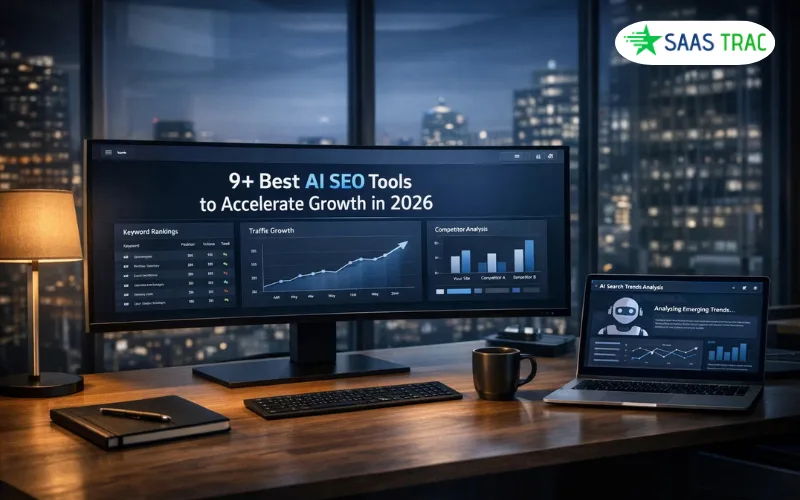
SEO in 2026 is no longer about stuffing keywords and building random backlinks.
It’s about visibility across ecosystems.
You’re not just ranking on Google anymore. You’re trying to appear in:
- AI Overviews
- Generative answers
- Conversational search
- Voice responses
- Multi-platform search experiences
And manual workflows simply can’t compete at this speed.
That’s why ai seo tools are no longer optional. They are the backbone of modern search strategy.
But here’s the uncomfortable truth:
Not every tool labeled “AI-powered” actually uses intelligent systems. Many simply automate basic math and repackage it with a chatbot interface.
So how do you separate hype from real value?
This guide breaks down the most practical, high-impact ai tools for seo in 2026, including autonomous agents, optimization platforms, AI visibility trackers, and scalable content engines.
Let’s dive in.
Why AI SEO Tools Matter More Than Ever
Traditional SEO involved:
- Manual keyword sorting
- Spreadsheet-based clustering
- Guesswork in content structure
- Reactive audits
Modern seo ai tools eliminate that grunt work.
Today’s leading platforms use:
- NLP-based SERP analysis
- Intent detection
- Entity modeling
- Predictive ranking signals
- Automated workflow triggers
Instead of reacting to ranking drops, you get alerts before they become a problem.
Instead of guessing search intent, you see clustered keyword ecosystems.
Instead of publishing blindly, you publish with structured guidance.
That’s the difference.
1. Semrush – The All-in-One AI SEO Powerhouse
Semrush has evolved far beyond keyword tracking.
In 2026, it functions as an AI-driven marketing intelligence system.
Key capabilities include:
- AI-based keyword clustering
- Competitive gap forecasting
- Automated technical audits with priority scoring
- Content optimization suggestions
- AI writing assistance
- SERP volatility tracking
Its AI Co-Pilot now proactively suggests actions when competitors overtake your rankings.
That makes it one of the most robust ai seo tools for agencies and scaling teams.
Best for: Businesses that want an all-in-one ecosystem
Watch out for: Learning curve and subscription cost
If you want a “single source of truth” platform, this is where most serious teams start.
2. Surfer SEO – Real-Time Content Optimization
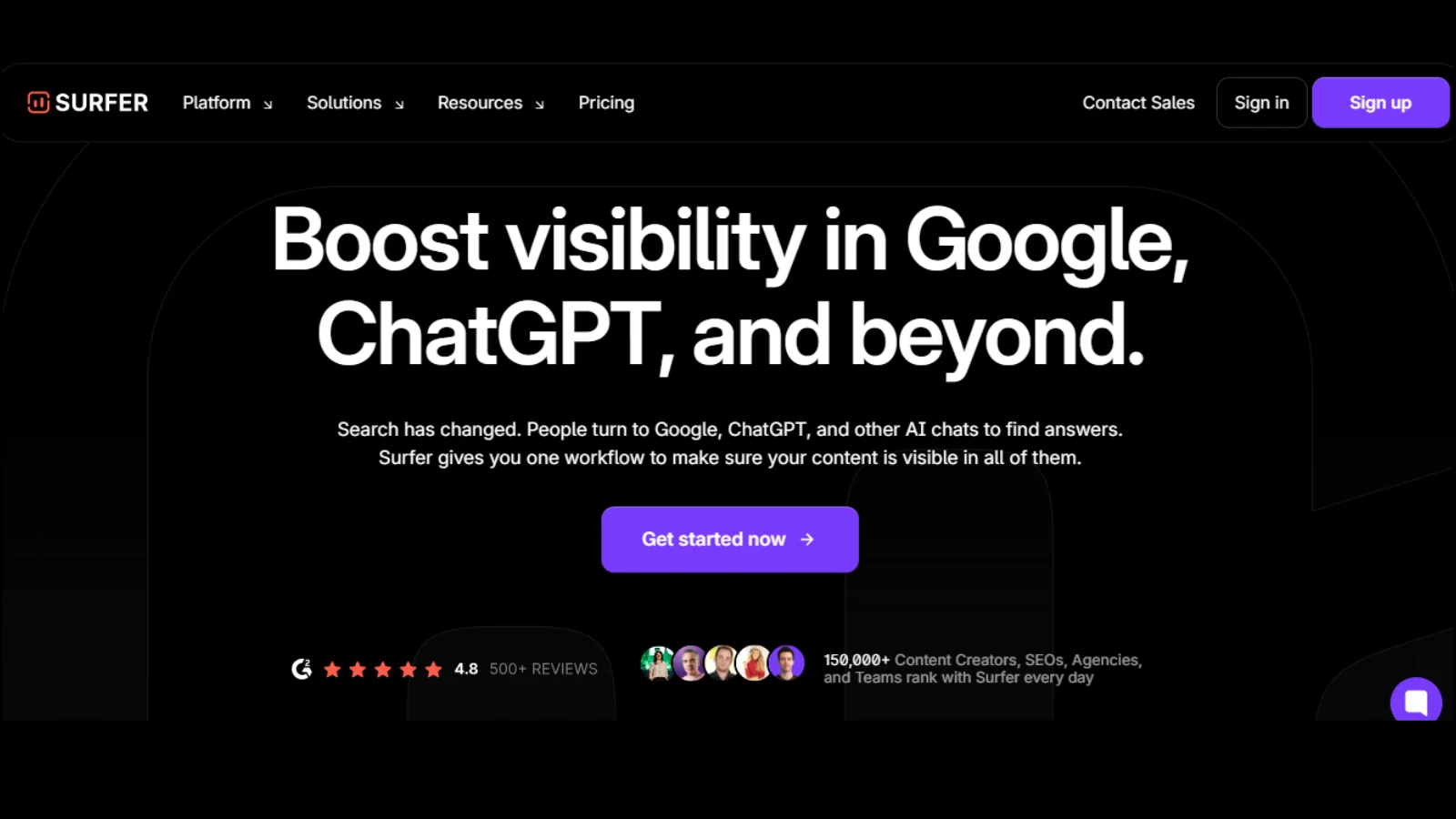
Surfer SEO remains one of the most reliable ai tools for seo when your priority is content that ranks.
It analyzes the top-ranking pages for a keyword and provides a live optimization score while you write.
Instead of asking:
“How often should I include this keyword?”
You see:
- Recommended NLP phrases
- Header structure models
- Content length benchmarks
- Entity coverage suggestions
This bridges the gap between “writing for humans” and “writing for algorithms.”
Best for: SEO writers and content teams
Reality check: Don’t blindly chase 100/100 scores, readability still wins.
3. Page On AI – Scaling On-Page Optimization
When you manage hundreds or thousands of pages, manual optimization is inefficient.
Page On AI functions almost like an ai mode seo tool for bulk implementation.
Instead of editing pages individually, it:
- Applies structured improvements
- Automates schema adjustments
- Refines metadata at scale
- Aligns pages with ranking intent
For large ecommerce sites or content-heavy blogs, this reduces engineering bottlenecks dramatically.
Best for: Scaling on-page improvements without heavy dev work.
4. Yozo AI – Autonomous SEO Agent
Yozo AI represents the shift toward autonomous optimization.
Rather than only analyzing data, it:
- Monitors SERPs continuously
- Identifies ranking drops
- Suggests corrective strategies
- Detects content gaps
This falls into the category of ai seo tools scale agile solutions — tools built for lean, modern teams that want intelligent automation without building internal AI systems.
Best for: Teams seeking AI-driven workflow support.
5. Scalenut – AI Content + SEO Research
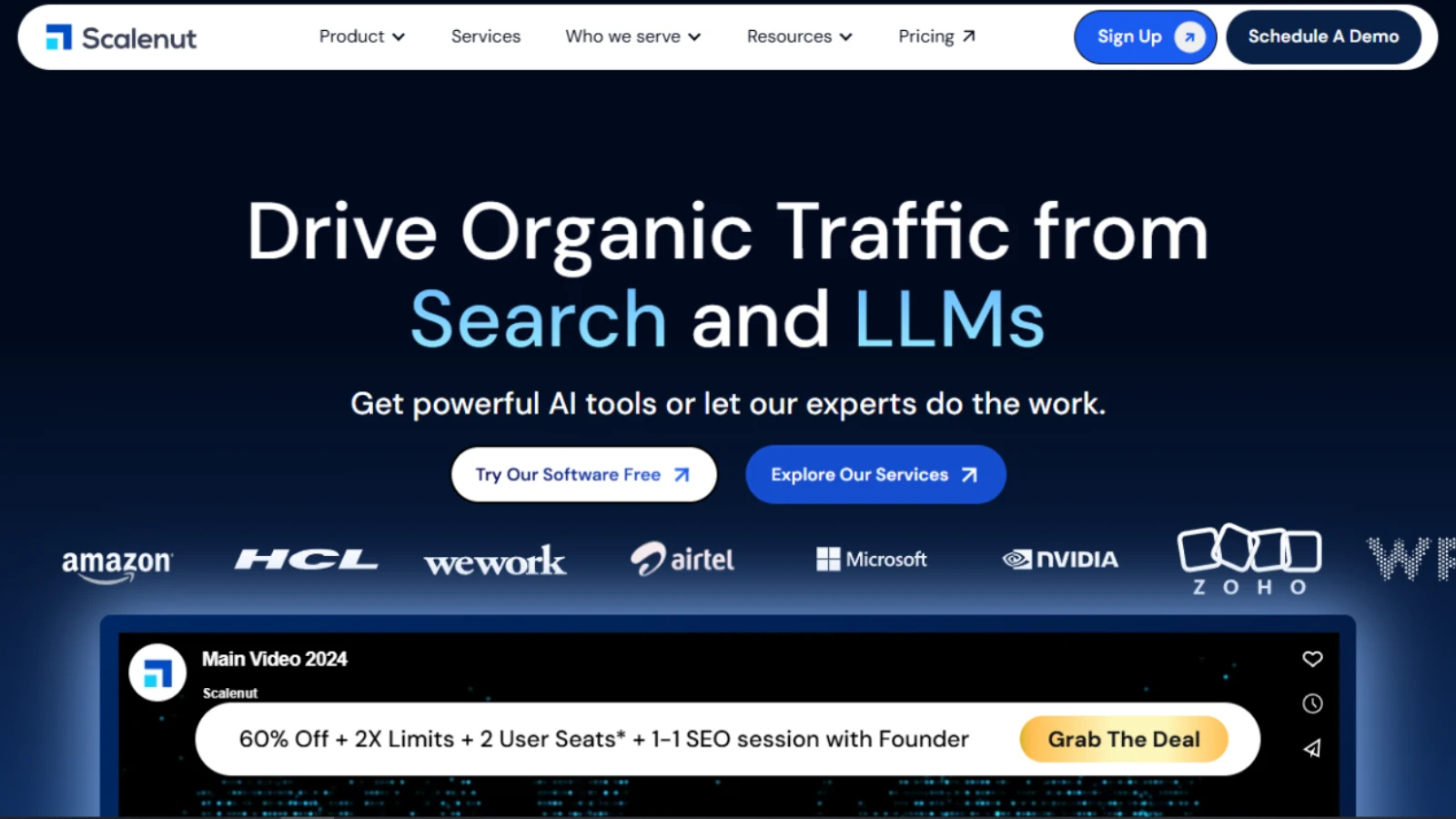
Scalenut combines writing, research, and optimization into one environment.
It provides:
- SERP-based briefs
- AI drafting
- Topic clusters
- NLP optimization
- Content scoring
For startups or content-heavy brands, it reduces reliance on multiple seo ai tools.
Best for: Small to mid-sized teams producing consistent content.
6. SEObot – Automated SEO Execution
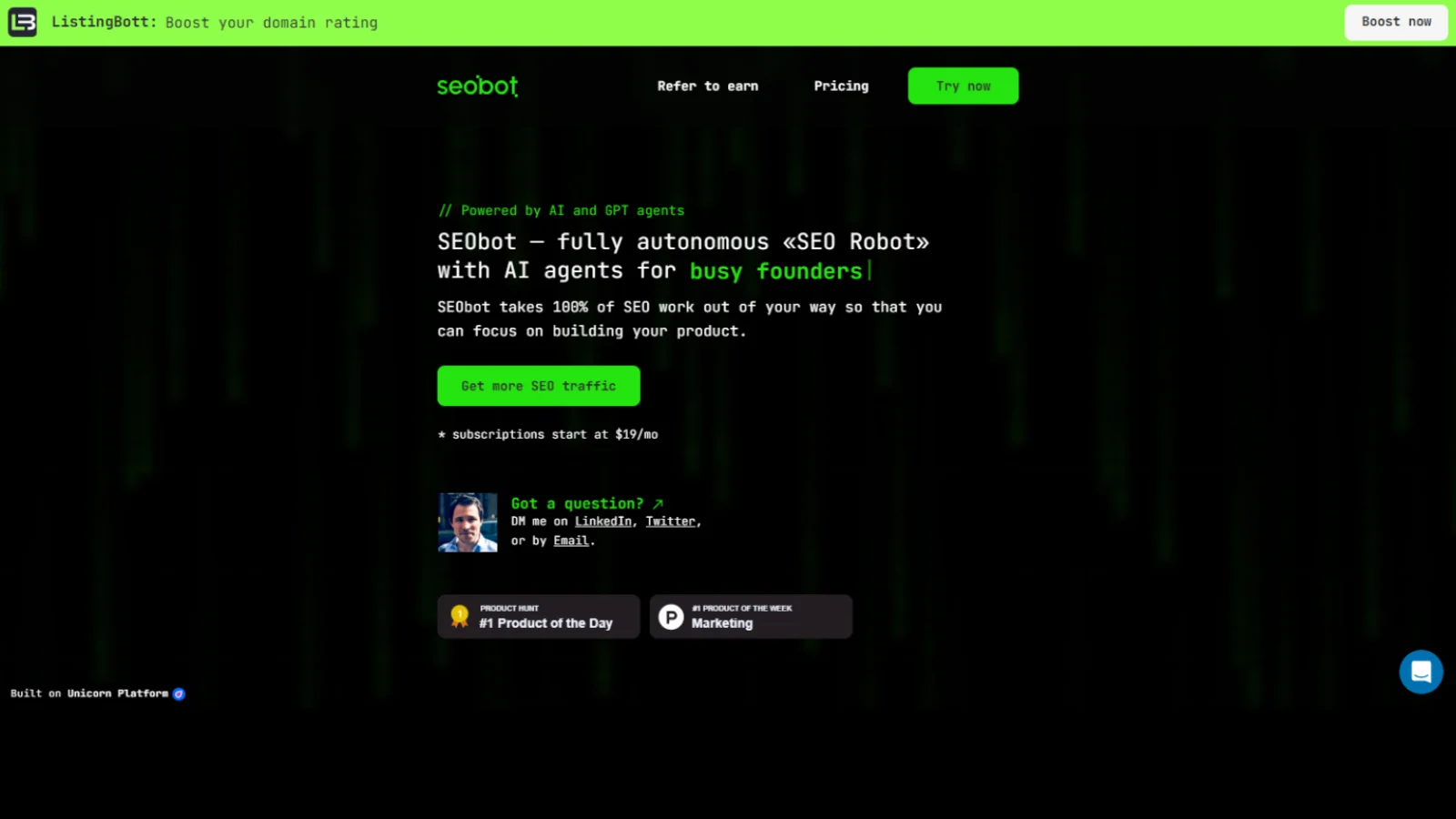
SEObot pushes automation further.
Instead of just assisting with planning, it helps:
- Generate content plans
- Create articles
- Optimize posts
- Monitor performance
This is powerful for solopreneurs or affiliate site builders trying to scale fast.
However, always review AI output before publishing.
AI accelerates production — but quality control remains human.
7. Otterly AI – AI Overview Monitoring
Ranking #1 isn’t enough anymore.
You also need to track AI mentions.
Otterly AI monitors:
- Brand visibility in AI overviews
- Citation frequency in generative responses
- AI-driven search mentions
This category of ai seo tools is rapidly becoming essential as generative search expands.
8. WordLift – Semantic & Schema Automation
WordLift focuses on structured data and entity relationships.
Its AI Agent enhances:
- Schema automation
- Knowledge graph creation
- Entity linking
- Semantic SEO alignment
If your strategy revolves around authority building, this strengthens your content’s machine readability.
9. Tavily – AI Research Infrastructure
Tavily is more technical but incredibly powerful.
It functions as an AI-native search engine API, allowing:
- Structured retrieval
- Research automation
- Data enrichment pipelines
Advanced SEO teams use this to build internal systems and custom research engines.
10. Ahrefs – Elite Backlink & Keyword Intelligence
Ahrefs remains a powerhouse for research.
While historically data-driven, it now integrates AI to:
- Predict traffic potential
- Analyze link intent
- Identify content decay
- Filter low-quality AI-generated pages
If backlinks and keyword discovery are core to your strategy, this remains one of the most dependable ai tools for seo.
How to Build a Practical AI SEO Stack
You don’t need 10 subscriptions.
Here’s a smarter approach:
Core Stack (Most Businesses)
- Research & Tracking → Semrush or Ahrefs
- Content Optimization → Surfer SEO
- AI Assistant → Scalenut or SEObot
- AI Visibility → Otterly AI
Budget Stack
- SEObot
- Scalenut
- One AI assistant
- Basic rank tracking
Enterprise Stack
- Semrush Business
- WordLift Agent
- Tavily integrations
- AI overview monitoring
The goal isn’t tool collection.
It’s strategic coverage.
Pros and Cons of AI SEO Tools
Benefits
- Save 10–20 hours weekly
- Automate clustering and audits
- Scale content production
- Identify gaps competitors miss
Limitations
- Over-optimization risks
- Generic AI output
- Subscription creep
- False confidence in content scores
AI multiplies expertise.
It does not replace it.
The Future of AI SEO in 2026
Three trends define where ai seo tools are heading:
- Predictive SEO instead of reactive SEO
- AI visibility metrics replacing simple rank tracking
- Tool consolidation into integrated AI ecosystems
Soon, the line between “SEO tools” and “AI tools” will disappear entirely.
Final Thoughts
The best seo ai tools don’t promise magic.
They remove friction.
They automate repetition.
They surface insights faster.
But growth still depends on:
- Strategy
- Brand voice
- Content quality
- Smart implementation
In 2026, success won’t belong to the teams stacking the most tools.
They’ll be the teams that use ai seo tools scale agile solutions intelligently — combining automation with human creativity.
Start small. Build your stack deliberately. Master the fundamentals.
Then scale.
Because AI doesn’t replace SEO.
It amplifies it.
FAQs: –
1. What are AI SEO tools and how are they different from traditional SEO software?
AI SEO tools use machine learning and natural language processing to analyze search results, detect intent, cluster keywords, and generate content recommendations automatically.
Traditional SEO software shows you data.
AI-powered tools interpret that data and tell you what to do next.
In 2026, that difference is massive.
2. Which AI SEO tool is best for beginners?
If you’re just starting out:
- For all-in-one functionality → Semrush
- For content optimization → Surfer SEO
- For AI writing + SEO combo → Scalenut
Beginners should avoid stacking too many seo ai tools at once. Begin with a single core platform, then scale strategically.
3. Do AI SEO tools actually improve rankings?
Yes, but only when used strategically.
AI tools help by:
- Identifying content gaps
- Improving on-page optimization
- Automating technical audits
- Detecting competitor weaknesses
However, AI doesn’t replace strong content, authority, and backlinks.
Think of ai tools for seo as performance multipliers — not magic buttons.
4. Can AI replace SEO professionals?
No.
AI handles automation, clustering, and pattern recognition at scale.
But it cannot:
- Create original thought leadership
- Build real relationships for backlinks
- Develop long-term business strategy
The future belongs to AI-augmented SEOs, professionals who use ai seo tools scale agile solutions to outperform manual competitors.
5. What is the best AI SEO tool for content optimization?
Two clear leaders dominate this space:
- Surfer SEO
- WordLift (for semantic depth)
If your primary struggle is ranking blog content, a content-focused ai mode seo tool is your first investment.
6. Are AI SEO tools expensive?
They range widely:
- Budget stacks can start under $100/month
- Professional stacks range between $250–$500/month
- Enterprise setups exceed that
The key isn’t cost, it’s ROI.
If a tool saves 10+ hours per week or improves rankings, it usually pays for itself.
7. How many AI SEO tools do I really need?
Most businesses only need 3 core categories:
- Research & tracking
- Content optimization
- AI assistant / automation
Anything beyond that should solve a specific bottleneck.
Avoid “tool hoarding.” Smart stacking beats tool stacking.