
Repetitive work is the silent productivity killer in modern teams. From lead routing to customer follow-ups, businesses lose hours every week on tasks that should run on autopilot. Traditional automation tools helped for a while, but they break the moment workflows become complex or unpredictable.
That’s why AI agents are moving fast into the spotlight. These systems don’t just follow rules. They analyze data, make smart decisions, and adjust in real time. For employers, marketers, and business owners, this shift means one thing: smarter operations with less manual effort.
But here’s the real challenge. Choosing the best AI agent for your specific workflow in 2026 is not as simple as picking the most popular tool. Features, scalability, integrations, and real-world performance all matter. The wrong choice can slow teams down instead of speeding them up.
If you’re wondering what the best AI agent is to help build a workflow, you’re in the right place. This SaaStrac AI Agents Directory guide breaks down exactly what to look for, how to evaluate platforms, and how to match the best AI agent to your business goals without the guesswork.
In a hurry? Listen to the blog instead!
How to Choose the Best AI Agent for Your Workflow in 2026
AI is no longer a future trend. It is your competition’s present strategy.
In 2026, businesses that run lean, move fast, and automate smart are pulling ahead. But here is the hard truth: most people picking AI tools are guessing. They pick what is trending, not what fits. They buy the demo, not the outcome. And they end up with a stack that looks impressive but produces almost nothing.
This guide fixes that. Whether you are a founder, marketer, or operator, what follows is a no-fluff, teach-first breakdown of how to find the best AI agent for your exact workflow, and why that decision matters more than any single tool you will ever buy.
Stop Guessing! What Makes an AI Agent Actually Worth It?
Most automation stacks fail quietly. Not with a crash, but with a slow bleed of missed follow-ups, broken logic, and wasted hours fixing what should just work.
The new reality of AI-powered workflows in 2026 is simple: agents need to do more than automate. They need to reason, adapt, and integrate across your entire stack. So before you shortlist anything, ask yourself these four questions:
- Does this agent connect to my existing tools without major dev work?
- Can it handle multi-step tasks, not just single commands?
- Does it learn or adapt based on real outcomes?
- Is there a clear path to scaling it without costs exploding?
If the answer to any of those is unclear, keep shopping. The best AI agent for your workflow is not the flashiest one. It is the one that does what you need, reliably, at scale.
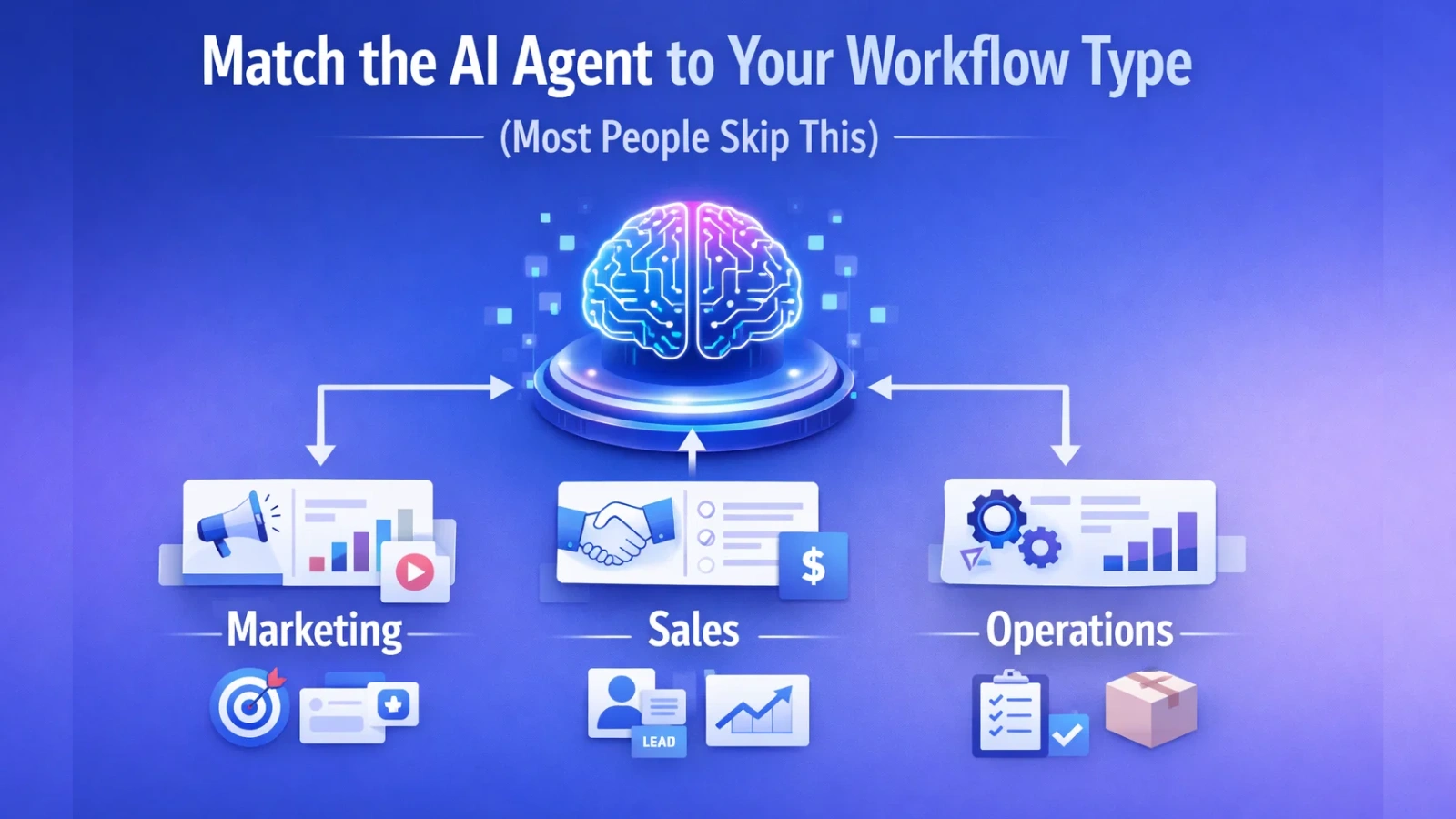
Match the AI Agent to Your Workflow Type (Most People Skip This)
This is the step most people skip. They read a list of “top AI tools” and pick based on brand recognition. Big mistake.
Different workflows need different architectures. Here is what to know:
Marketing workflows need agents that handle content creation, SEO, and campaign automation with minimal hand-holding. Speed and creative output matter here.
Sales workflows need agents built around data accuracy, outreach sequencing, and CRM sync. Compliance and deliverability are non-negotiable.
Ops and backend automation needs a true best AI agent framework with orchestration capability. You are building pipelines, not prompts. Think API-first, logic-heavy, and scalable.
When low-code is enough: You are not an engineer, your workflows are linear, and you just need reliable execution. Low-code agent platforms handle this well.
When you need full-stack platforms: You have complex conditional logic, multi-model orchestration needs, and you want control over how agents behave under load.
Signs you are over-engineering: You have five tools doing the job of one. Signs you are under-powering: Your “automation” still needs a human to check it every day.
The Priority AI Workflow Stack: Top 7 Tools to Know
Before we dive in, note that this is not a ranked list of every tool in the market. This is a curated priority stack, built around real workflow outcomes.
Category 1: Traffic and Content Intelligence
No traffic means no pipeline. No pipeline means no growth. This is your foundation.
- Scalenut: Drives SEO content strategy and organic traffic. Best for teams that want to rank and scale without a massive content team behind them.
- Frase: Speeds up content briefs, SERP alignment, and optimization. Great for content teams doing high-volume production.
What to evaluate: SERP data freshness, content workflow depth, team collaboration features, and realistic ROI timelines for organic growth.
Category 2: Creative Production Engine
Speed wins attention. In crowded markets, the team that ships the fastest creative wins.
- InVideo: Turns ideas into polished, high-converting marketing videos quickly. Strong template intelligence with solid brand controls.
What to evaluate: Export quality, short vs. long-form flexibility, AI assistance in templates, and how fast you can iterate.
Category 3: Lead Generation and Sales Acceleration
Pipeline velocity decides revenue. Full stop.
- Apollo AI: Powers prospecting, lead enrichment, and outreach at scale. Strong data accuracy and CRM integration make it a staple for sales teams.
What to evaluate: Data freshness, outreach automation depth, CRM sync quality, deliverability safeguards, and compliance controls.
Category 4: Nurture and Lifecycle Automation
Most revenue comes after the first touch. Your nurture layer is where that revenue lives.
- GetResponse: Handles email marketing, lifecycle automation, and multi-channel nurturing in one platform.
What to evaluate: Workflow builder flexibility, segmentation intelligence, multi-channel reach, and conversion tracking.
Category 5: Automation Backbone
This is where real orchestration happens. This is what separates a tool stack from a true agent system.
- Flowise AI: Builds custom AI agent workflows with full API flexibility. It is one of the few tools that can serve as a true best AI agent builder for non-engineers who still want deep control.
What to evaluate: Agent orchestration depth, API and model flexibility, deployment options, and performance under load. If you are asking “what’s the best ai agent to help build a workflow from scratch,” Flowise is a serious answer worth testing.
Category 6: Analytics and Reality Check
If you cannot measure it, you cannot scale it.
- Amplitude: Tracks user behavior, funnel performance, and product analytics with precision.
What to evaluate: Event tracking depth, cohort and funnel analysis, dashboard usability, and how fast insights reach decision makers.
Discover and List AI Agents on Saastrac: The AI Agents Directory Built for Real Workflows
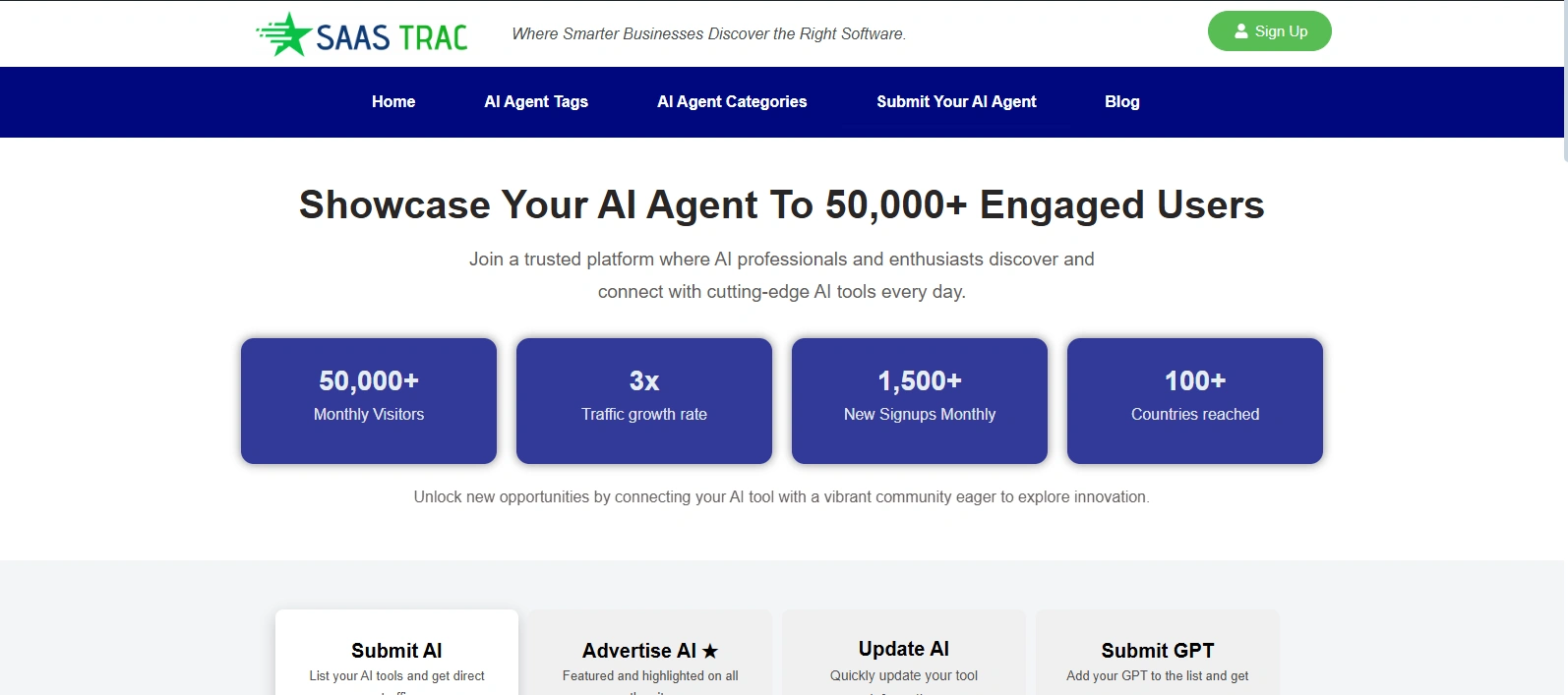
Here is something the “best of” lists never tell you: finding a truly vetted, use-case-specific AI agent is still hard. Most directories are cluttered with outdated tools and vague descriptions. That is the gap Saastrac was built to fill.
Saastrac’s AI Agents Directory is where serious operators, marketers, and founders go to find AI tools that actually solve problems. It is not just another tool aggregation site. It is a curated, searchable ai agents directory with smart categorization by use case, industry, and capability.
If you are looking for the right tool:
- Browse by workflow category, not just keyword
- Find tools with real use-case documentation
- Compare platforms like a best AI agent platform evaluation should: on outcomes, not just features
If you have built something powerful:
Do not let it sit undiscovered. Listing your agent on Saastrac gives you:
- High-intent visibility with 10,000 to 100,000 monthly users actively searching for AI solutions
- Smart categorization based on features, use case, and industry
- SEO-boosted pages that surface your tool across search engines, not just on-site
- Lead generation focus that drives real traffic to your demos and signup pages
- Brand credibility within a curated community of trusted AI tools
Whether you are launching your first AI agent or scaling an established platform, Saastrac helps the right users find you faster.
Submit your AI agent to the Saastrac directory today and reach users who are ready to try, buy, and share. This is the best AI agent framework for discovery, built for the builders who make it.
How to Build Your AI Agent Stack?
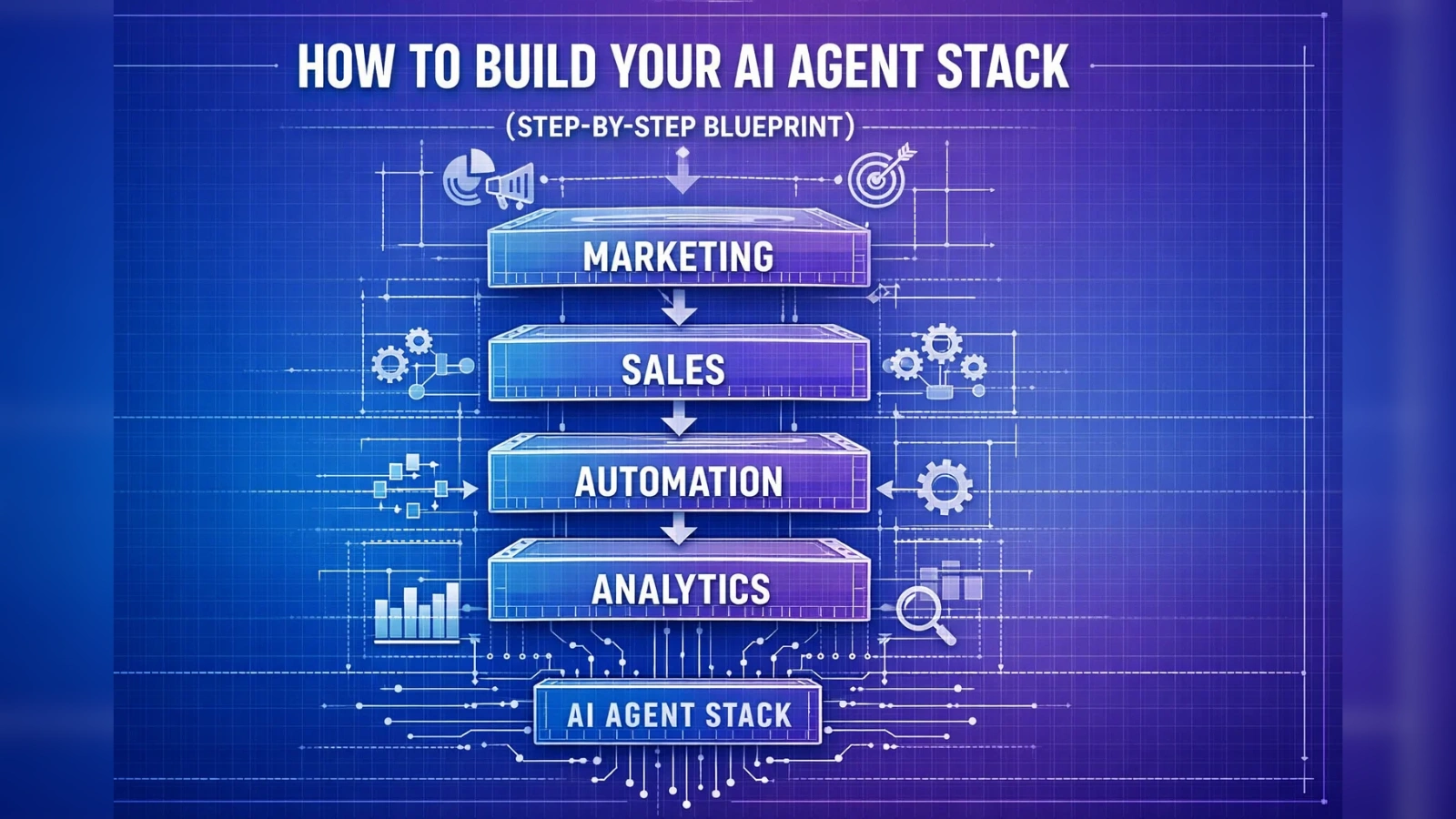
Building a stack is not about collecting tools. It is about creating a system where each layer feeds the next.
Use the 15-minute stack planning method:
- Write down your top three workflow bottlenecks right now
- Identify which part of the funnel each bottleneck lives in (traffic, conversion, retention, or ops)
- Pick one tool per bottleneck, not five
- Map out how they connect before you buy anything
Recommended stack by business size:
- Solo operator or freelancer: Focus on content, outreach, and one automation backbone. Three tools maximum.
- Small team or startup: Add analytics and a nurture layer. Five to six tools with clean integrations.
- Scaling business: Full seven-tool stack with dedicated ops tooling, a true best AI agent platform, and an analytics layer that drives weekly decisions.
Common integration mistakes to avoid: buying tools with overlapping functions, skipping API documentation review, and ignoring how data flows between platforms.
Red Flags That Mean an AI Agent Is Not Worth It
Not every tool that trends is worth your time or money.
Watch for these warning signs before committing:
- The demo looks great but production breaks: If support cannot show you real customer case studies with numbers, walk away.
- Hidden scaling costs: Many platforms price low to acquire, then charge aggressively as your usage grows. Model the cost at 3x your current volume before signing.
- Vendor lock-in: If your data, workflows, or model logic cannot be exported, you are renting, not owning.
- No compliance path: For any tool touching customer data or outreach, ask directly about GDPR, CAN-SPAM, and SOC 2 status.
The best ai agent is not just the most capable one. It is the one you can trust to perform when the demo is over and real work begins.
Your Final Checklist to Pick the Best AI Agent
You have done the research. Now make the decision with structure.
Quick scoring framework, score each tool on these five dimensions (1 to 5):
- Does it solve a specific bottleneck in your workflow?
- Can it integrate with your existing stack without custom dev?
- Is the pricing transparent and scalable?
- Is there clear documentation, support, and a real user community?
- Can you test it in a limited pilot before full commitment?
Priority vs. nice-to-have: Prioritize any tool that addresses a revenue-impacting workflow first. Delay tools that are purely efficiency plays until your core stack is stable.
Pilot testing plan:
- Run each new tool on a single workflow for 30 days
- Measure one key metric before and after
- Only expand use if the metric moves by at least 20%
Next steps: Start with one category. Pick your biggest bottleneck. Find the best AI agent that fits it, test it in isolation, and expand from there. That is how the best teams in 2026 are building, not with big bets, but with smart, compounding decisions.