
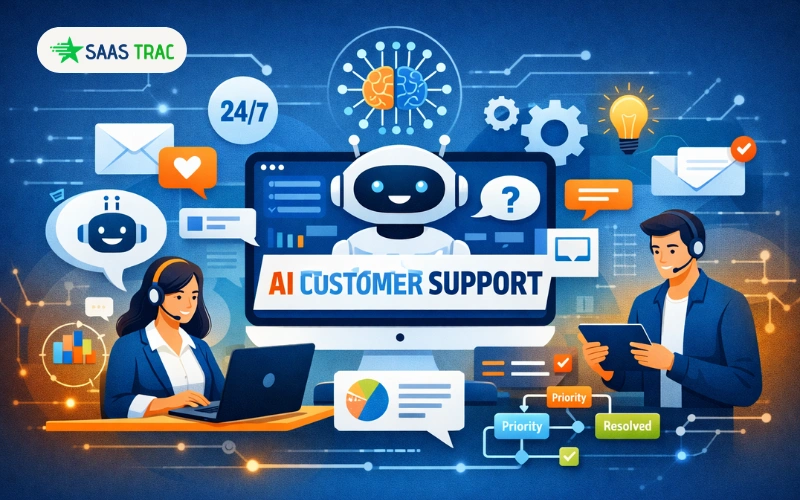
AI customer support is becoming essential as customer expectations rise every year. Response times must be faster, answers must be accurate, and support must be available at all hours.
For SaaS companies, that pressure increases as customer bases grow rapidly. Support teams must scale without increasing costs at the same pace.
This is where AI customer support becomes a strategic advantage. It allows SaaS businesses to automate repetitive work while preserving personalized experiences.
Modern teams are no longer debating automation versus human service. Instead, they are building hybrid workflows powered by intelligent systems.
In this guide, we explore leading tools, benefits, and decision factors for adopting AI customer support in SaaS environments.
Why SaaS Companies Are Investing in AI-Powered Support
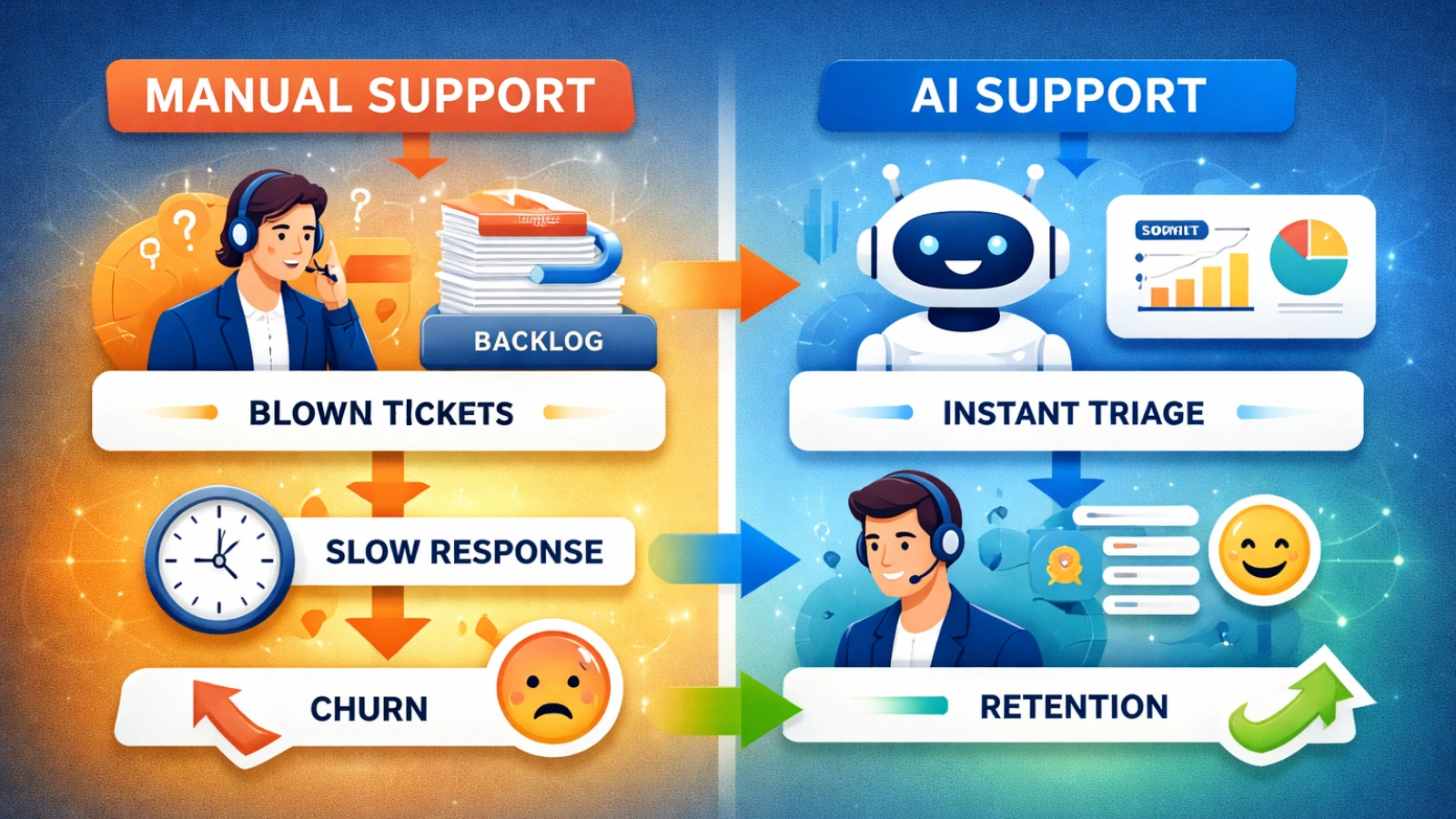
SaaS businesses depend on retention and lifetime value. Poor service experiences directly increase churn.
That is why AI customer support is becoming central to modern operations. It enables faster responses without sacrificing accuracy.
Unlike rule-based automation, customer support AI systems interpret context and analyze intent. They can prioritize urgent cases automatically.
This reduces ticket backlogs and improves resolution speed. Agents spend less time on repetitive tasks.
At scale, AI customer support allows growing SaaS companies to maintain quality while handling larger volumes.
What Makes a Great AI Customer Support Tool?
Not every platform delivers measurable value. Many tools promise automation, but only a few actually improve performance in meaningful ways. The best systems share certain characteristics that directly impact efficiency, customer satisfaction, and long-term scalability.
Strong Natural Language Processing
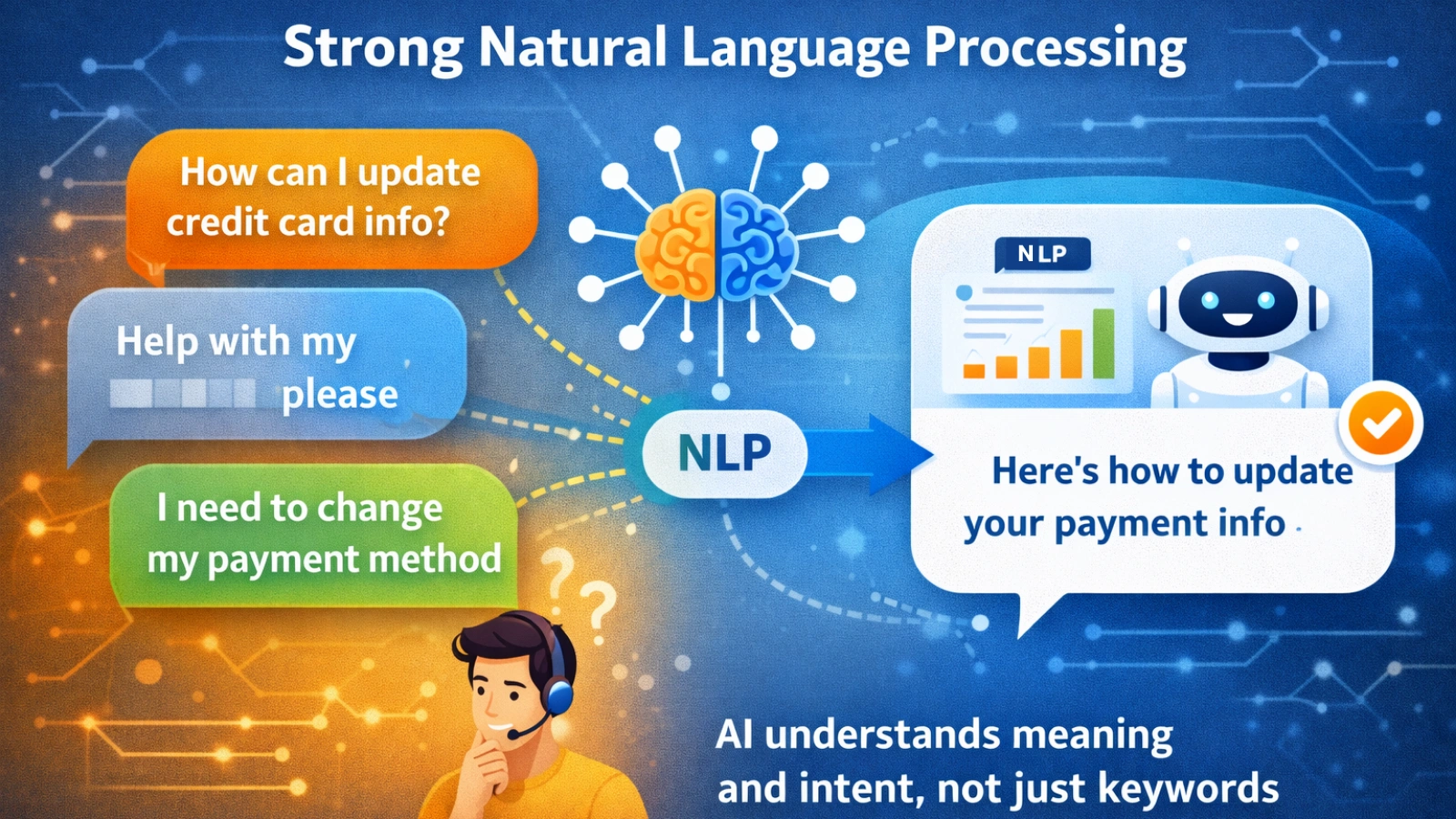
High-quality systems understand user intent, not just keywords. This improves the accuracy of AI in customer support workflows.
Customers rarely phrase questions the same way. They use different tones, formats, and levels of detail. A strong NLP engine recognizes what the customer is trying to achieve, even when the wording is unclear.
This leads to responses that feel relevant and contextual instead of robotic. When customers feel understood, trust increases, and frustration decreases.
Seamless Integration
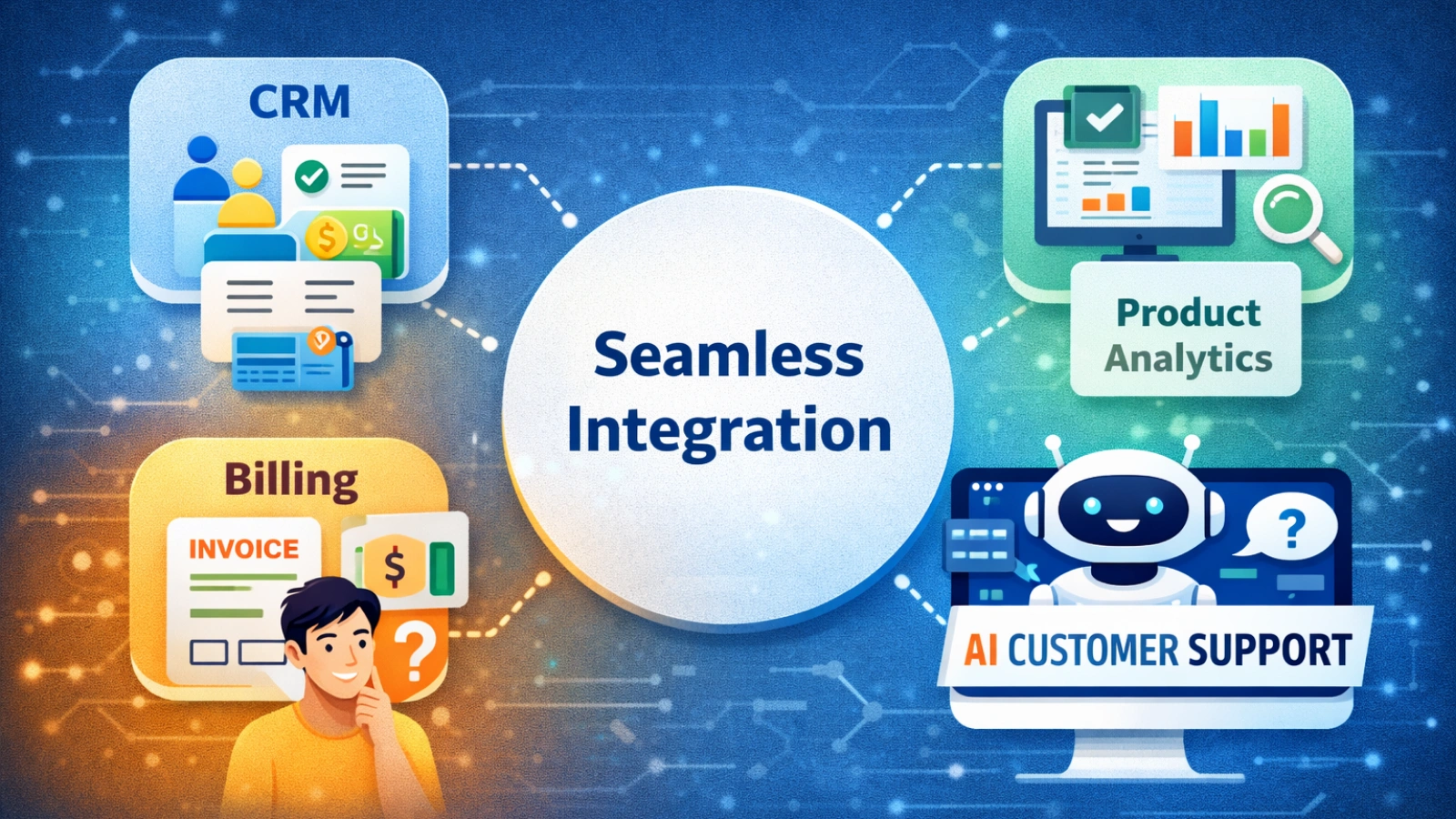
SaaS companies rely on CRMs, billing systems, and product analytics tools. Effective AI customer support integrates directly with those systems.
If the AI cannot access account data or subscription details, it cannot provide meaningful answers. Support agents also lose time switching between platforms.
Good integration ensures the system pulls real-time information automatically. That results in faster resolutions and fewer back-and-forth messages.
Disconnected automation often creates more confusion than clarity.
Intelligent Ticket Management
Advanced customer support AI platforms classify tickets and assign priority automatically.
They can detect urgency through sentiment analysis and historical patterns. For example, a message expressing frustration or mentioning downtime can be escalated immediately.
Smart routing also sends tickets to the right department from the start. That prevents delays caused by internal transfers.
Over time, intelligent ticket management improves team productivity and reduces average resolution time.
Omnichannel Support
Users contact support through chat, email, in-app messaging, and social channels. AI tools must preserve context across all platforms.
Customers expect consistency. They do not want to repeat their issue when switching channels.
A strong system keeps conversation history unified. That continuity makes interactions smoother and more professional.
Consistency across channels strengthens customer trust and brand perception.
Continuous Learning
The best AI for customer support improves over time. It learns from resolved tickets and human corrections.
When agents adjust or refine AI-generated responses, the system captures those changes. This feedback loop gradually improves accuracy.
Continuous learning also helps adapt to new product updates or feature changes. As SaaS platforms evolve, support automation must evolve with them.
Without ongoing improvement, even the best systems eventually become outdated.
Types of AI Tools for Customer Support
AI solutions vary depending on their role inside the support ecosystem.
AI Chatbots
Chatbots handle repetitive inquiries instantly. They act as the first interaction layer.
They can resolve common questions related to billing, password resets, and onboarding.
When implemented well, chatbots reduce ticket volume significantly.
AI Helpdesk Automation
These tools automate tagging, routing, and categorization. Customer support ai in this category improves team efficiency.
Managers gain better visibility into trends and bottlenecks.
AI Agent Assist Tools
Agent assist platforms support human representatives in real time.
They suggest replies, summarize long threads, and recommend knowledge base articles.
This enhances AI customer support without removing human oversight.
The Best AI Customer Support Platforms for SaaS
Selecting the right platform depends on company size, budget, and integration requirements. Below are five strong options for SaaS teams.
HelpScout
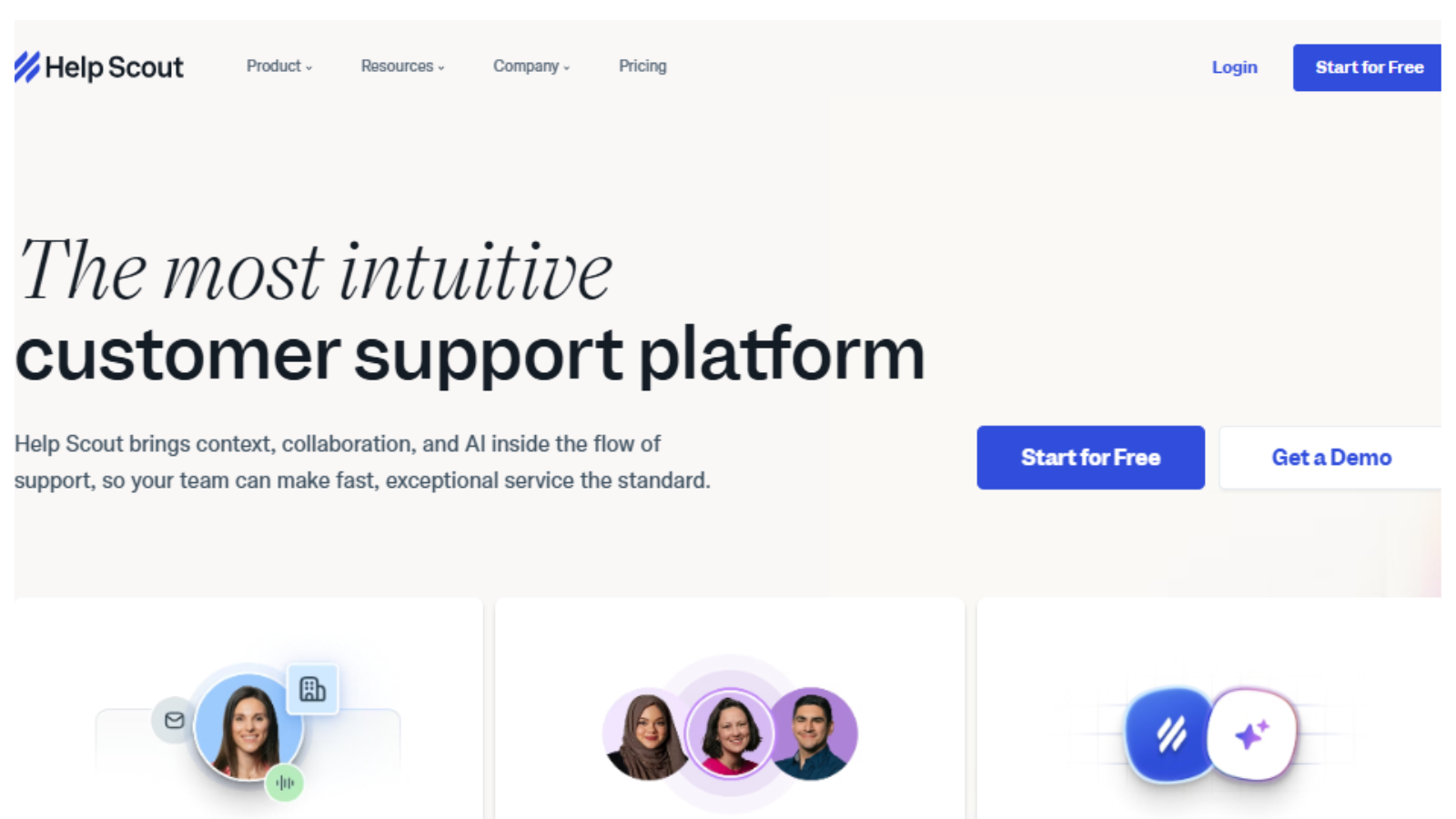
HelpScout blends traditional helpdesk functionality with intelligent automation.
It uses customer support AI to generate response drafts based on prior interactions. Agents review and refine suggestions before sending them.
The system also automates tagging and sentiment analysis. This improves prioritization during peak volumes.
HelpScout connects directly to knowledge bases and CRM systems. That ensures responses are informed by accurate account data.
Its reporting dashboards help teams monitor trends, response times, and resolution quality.
For mid-sized SaaS companies, HelpScout offers balanced AI in customer support with strong collaboration tools.
Customer.io
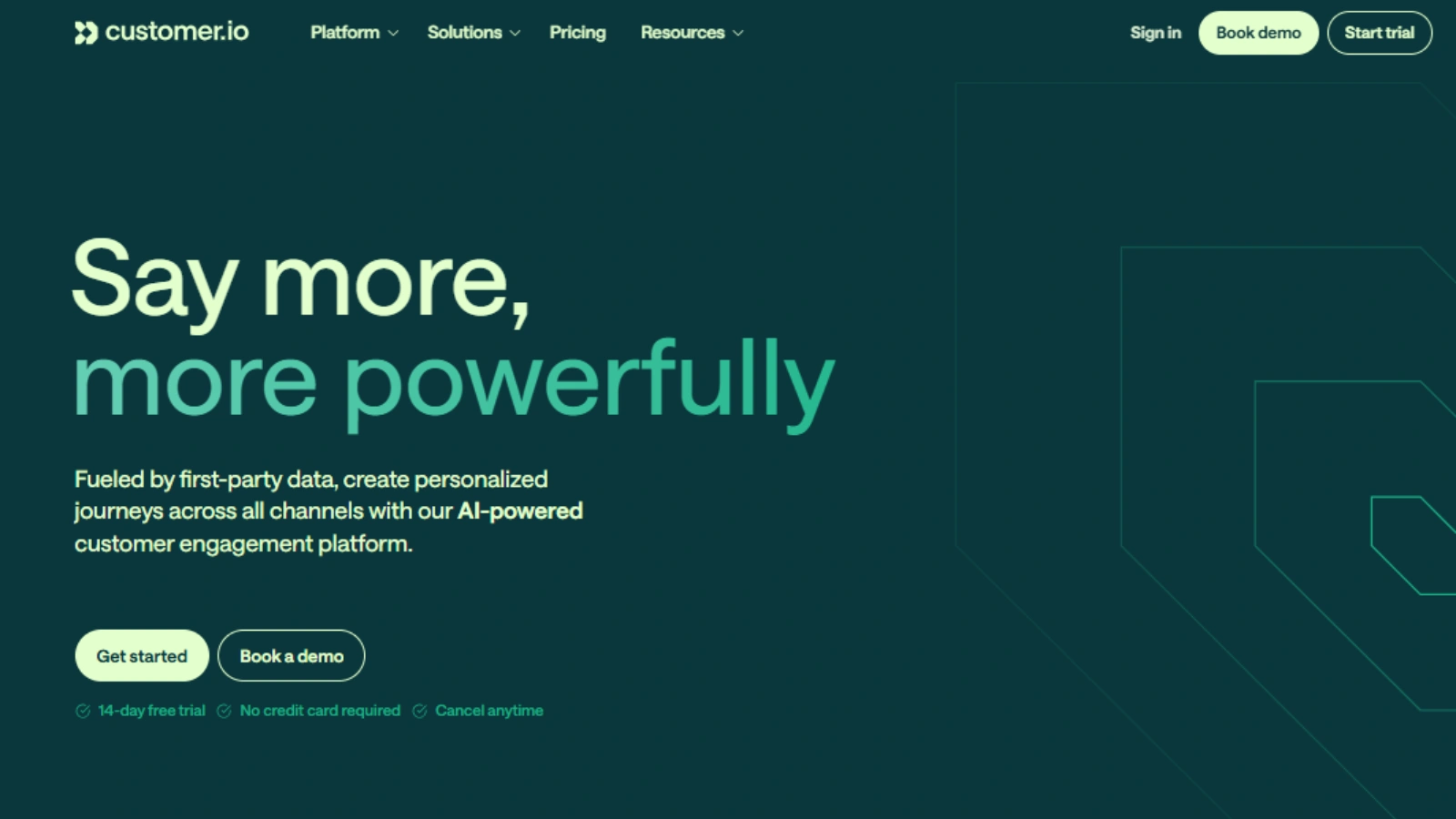
Customer.io approaches automation from a behavioral perspective.
Instead of reacting only to tickets, it triggers outreach based on user activity.
If a user repeatedly encounters product friction, the platform can initiate proactive support.
This reduces frustration before formal tickets are created.
Customer.io combines messaging automation with predictive workflows. That makes it a powerful AI for customer support solutions focused on retention.
Its integration with analytics tools strengthens personalization. SaaS teams can respond based on real product usage data.
For companies focused on lifecycle engagement, Customer.io adds strategic value beyond reactive service.
Duckie.ai
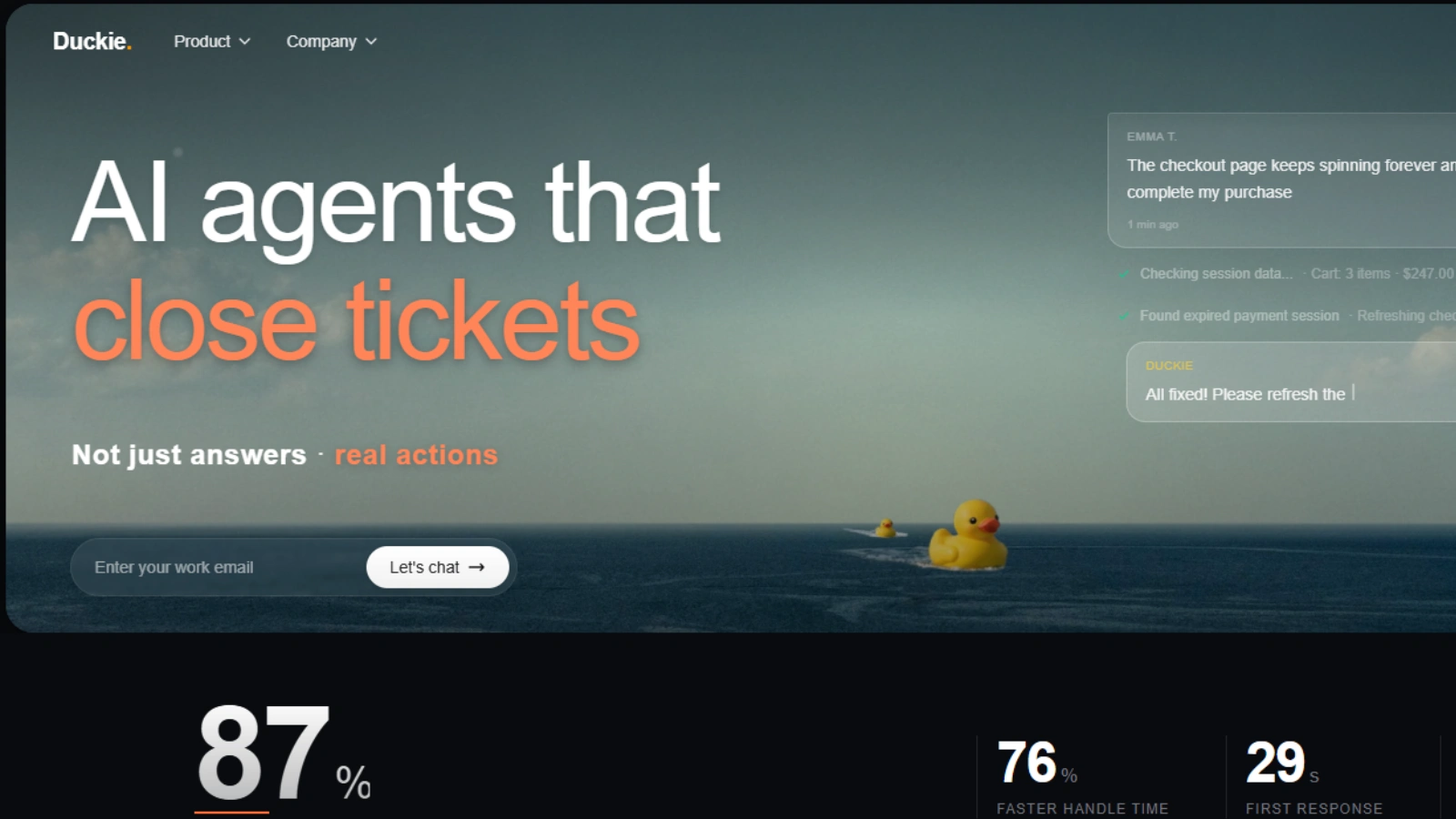
Duckie.ai integrates intelligent automation directly into your existing support stack.
It goes beyond simple chat responses by handling real support tasks automatically.
Duckie.ai understands customer intent and connects with your internal systems to take action, whether that means processing refunds, updating subscriptions, sending invoices, or resolving account issues.
It can close repetitive tickets without human involvement while keeping full transparency and control for support teams. This reduces average handling time and frees agents to focus on complex, high value conversations.
Its reporting and monitoring tools allow teams to track automation performance and continuously improve resolution accuracy.
For growing SaaS companies, Duckie.ai delivers scalable AI customer support that resolves tickets, lowers support costs, and maintains consistent customer experience across channels.
Freshdesk Freddy AI
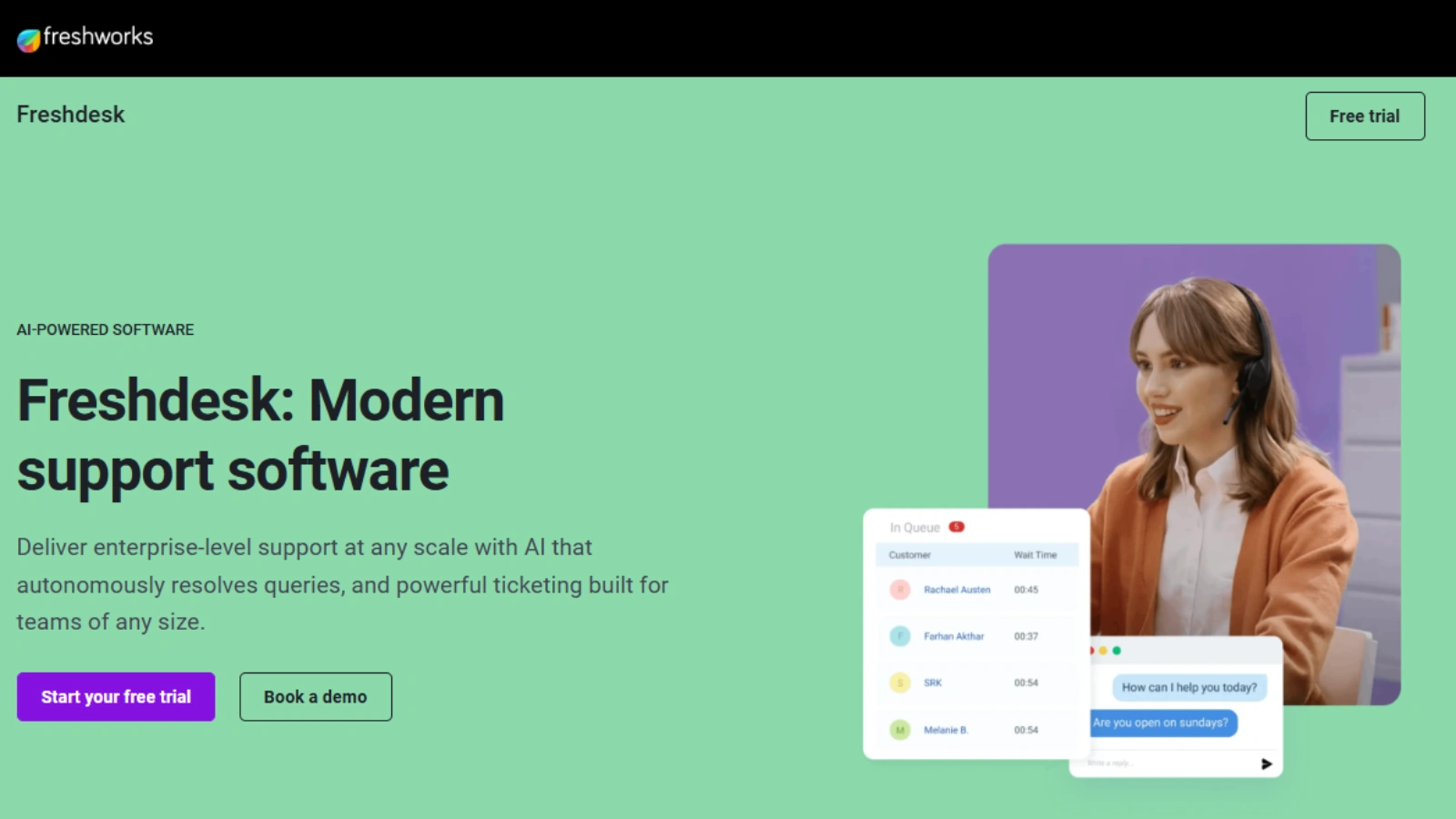
Freddy AI enhances Freshdesk with intelligent categorization and response suggestions.
It automates repetitive tasks and assigns priority levels to tickets.
Freddy also powers conversational chatbots for self-service interactions.
Managers can analyze automation impact through built-in performance dashboards.
Freshdesk is ideal for teams seeking structured automation without excessive technical complexity.
Distance.so
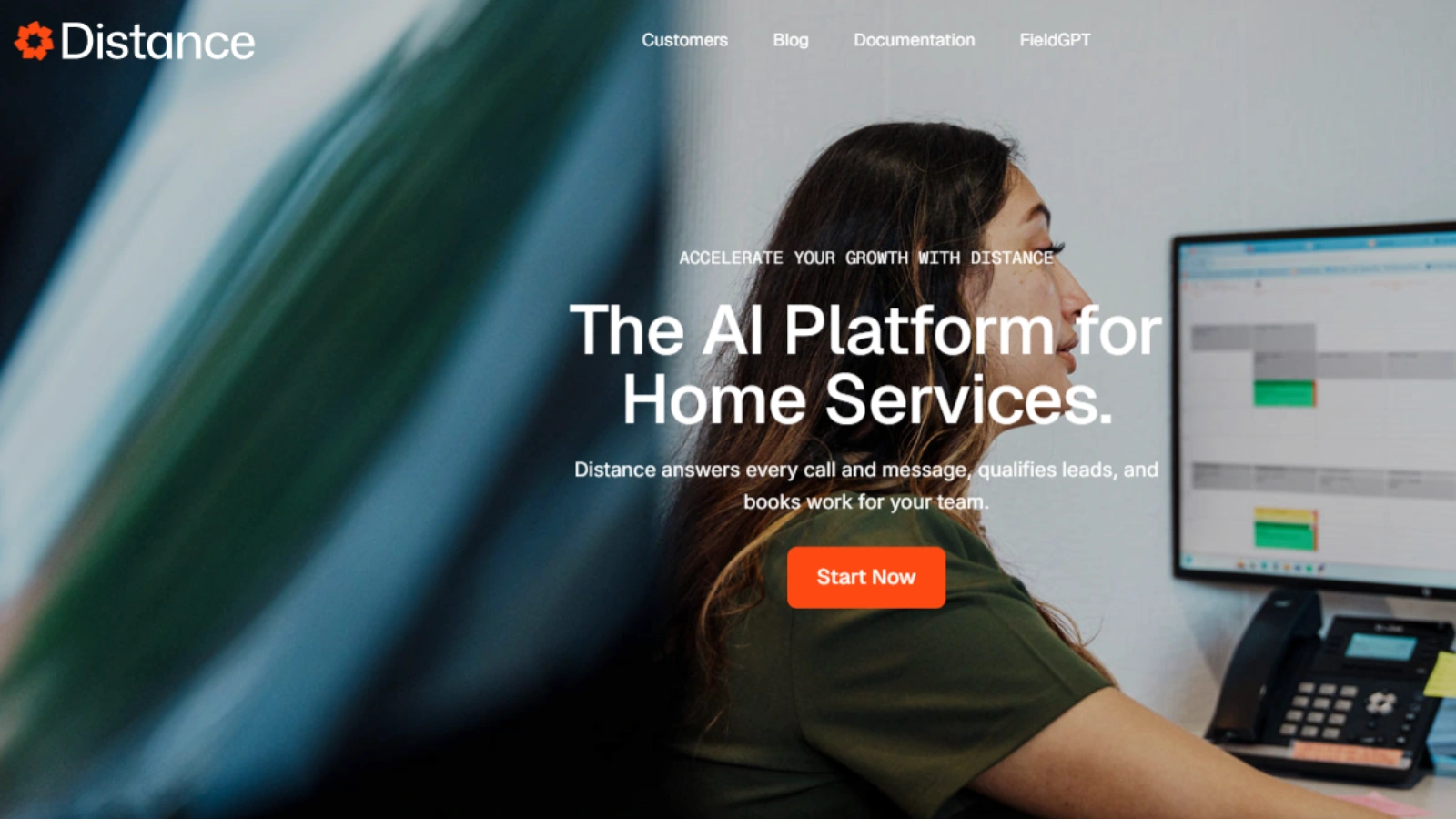
Distance integrates AI automation directly into service business communication workflows.
It supports automated call answering, lead qualification, and intelligent message handling.
Distance AI answers inbound calls and texts, qualifies prospects, and books appointments without requiring human intervention. It captures conversations, summarizes interactions, and routes information to the right systems or team members.
This reduces missed opportunities while lowering administrative workload. Service teams can focus on delivering work instead of managing repetitive inquiries.
Its reporting tools help businesses track call volume, lead conversion, and automation performance in real time.
For growing home service and field service companies, Distance provides scalable AI customer communication backed by continuous availability and structured workflow automation.
How to Choose the Right Tool
Choosing the right platform requires careful evaluation.
- First, assess your ticket volume and growth trajectory.
- Second, review integration capabilities with your existing systems.
- Third, evaluate reporting and analytics depth.
- Fourth, consider how much customization your workflows require.
- Finally, test usability with your support team before committing long term.
The right decision ensures your AI customer support investment delivers measurable improvements.
Benefits of AI-Driven Support for SaaS Companies
Faster Response Times
Automation allows instant replies to common inquiries. This reduces waiting time and improves user satisfaction.
Improved Efficiency
Customer support AI reduces repetitive manual work. Agents can focus on complex technical or account-specific issues.
Scalable Operations
As customer bases grow, automation absorbs additional volume. This prevents support costs from increasing at the same rate as user growth.
Data-Driven Insights
AI in customer support analyzes conversation trends. Teams can identify recurring product issues and improve documentation.
Global Availability
Automated systems operate continuously. SaaS users receive assistance regardless of time zone.
Potential Challenges to Consider
While automation offers many benefits, challenges still exist. Over-automation can frustrate customers who need human assistance.
Poor data quality limits the effectiveness of AI customer support.
Integration complexity may require technical resources during setup. Monitoring outputs regularly ensures responses remain accurate and aligned with brand tone.
A balanced approach between automation and empathy leads to the best outcomes.
Final Thoughts
SaaS companies are always trying to find the right balance between speed, personalization, and cost control. That balance gets harder as you grow. AI customer support can help, but only when it’s implemented thoughtfully and not treated as a quick fix.
No single platform fits every business. A smaller SaaS team might prioritize ease of use, while a larger organization may focus more on integrations and scalability. Your growth stage and internal processes should guide the decision.
As competition continues to increase, intelligent support systems are becoming part of the core infrastructure for SaaS companies. The teams that approach automation strategically tend to scale more smoothly over time.
If you’re still exploring options, platforms like SaaS Trac can make that research easier. SaaS Trac organizes and showcases software tools across categories, including customer support solutions. Instead of relying only on vendor marketing pages, you can review tools side by side and get a clearer sense of what fits your needs.
At the end of the day, great support is never just about technology. It’s about using the right tools to help your team deliver faster, clearer, and more consistent service.
FAQs
1. How long does it take to fully implement AI-based support tools?
Implementation timelines vary. Smaller teams may deploy within weeks, while larger enterprises may require several months.
2. Can automation adapt to highly technical SaaS products?
Yes, but it requires domain-specific training and continuous feedback from support teams.
3. How should companies train teams alongside AI adoption?
Provide workflow training and define clear escalation paths between automation and human agents.
4. What data security standards should vendors meet?
Look for compliance with GDPR, SOC 2, and other relevant security certifications.
5. Can automation improve upselling opportunities within support conversations?
Yes, intelligent systems can surface relevant upgrade suggestions based on customer usage patterns.