


If you spend time in schools today, you will notice something interesting about AI in education. Technology is everywhere, but it rarely feels dramatic. There are no robots walking between desks. No machines replacing teachers at the front of the room. Instead, there are dashboards, learning platforms, and small digital adjustments happening quietly in the background.
That quiet shift is where AI in education really lives.
It is not about replacing people. It is about solving everyday classroom problems, students moving at different speeds, teachers overwhelmed with grading, and administrators trying to spot struggling learners before it is too late. Artificial intelligence has become a practical tool, not a science fiction concept.
The real value shows up in small, consistent improvements.
What AI Actually Means in a School Setting
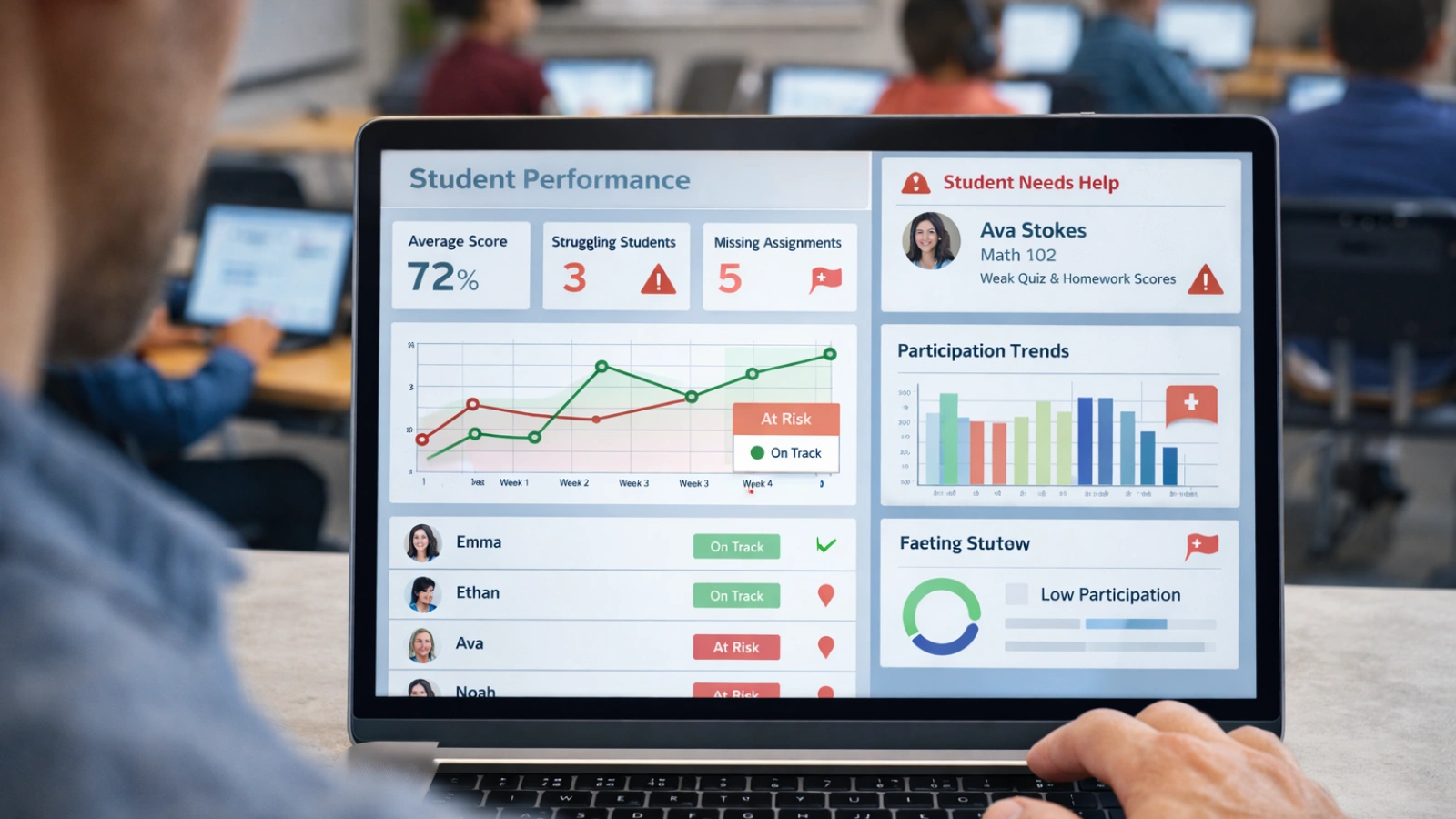
When someone asks how AI is used in education, the answer is usually much simpler than expected.
In most cases, it works inside software that teachers are already using. A learning platform might track quiz scores and notice that several students are missing the same type of question. It might suggest a review lesson. Another system might analyze participation patterns and flag a student who has gradually disengaged.
This broader ecosystem, often called AI education, is really about pattern recognition. The system looks at data humans would struggle to process quickly and turns it into usable insights.
The teacher is still the decision-maker. The technology simply organizes information in a way that makes those decisions clearer.
1. Personalized Learning That Feels Less Frustrating

Every teacher knows the challenge of pacing. Move too quickly, and some students fall behind. Move too slowly and others lose interest.
One of the most practical applications of AI in education is adaptive learning. Instead of assigning identical tasks to everyone, the system adjusts based on performance.
If a student struggles with fractions, they receive additional practice and step-by-step explanations. If another student shows strong understanding, the platform introduces more advanced material. These adjustments happen quietly, often without drawing attention.
For students, this reduces embarrassment. They are not singled out for needing extra help. For teachers, it makes differentiation more manageable in large classrooms.
It is not perfect, but it helps smooth out the extremes.
2. Extra Help Without Raising a Hand
Some students hesitate to ask questions in front of others. Intelligent tutoring systems give them space to work through confusion privately.
When a learner answers incorrectly, the system may offer a hint instead of immediately revealing the answer. If mistakes continue, it might break the problem into smaller parts.
This kind of support feels less intimidating. Students can try again without worrying about judgment. Over time, that builds independence.
Teachers still play the central role. They step in when confusion goes deeper than a practice problem. But having digital support available at any hour makes learning feel more accessible.
3. Grading That Does Not Take Over Evenings
Ask educators what consumes their time, and grading is often near the top of the list.
Intelligent systems now assist with routine assessments. Multiple-choice tests can be graded instantly. Some platforms also analyze structured short responses and identify recurring patterns in answers.
Teachers still review important written work carefully. However, automation handles repetitive evaluation tasks. That shift alone can make a noticeable difference in workload.
Faster grading also benefits students. When feedback arrives quickly, they can adjust before moving on to new material.
Among the many benefits of AI in education, time savings may be the most immediately felt.
4. Identifying Struggles Before They Escalate
Academic problems usually develop gradually. A student might miss a few assignments. Participation declines. Grades slowly slip.
Predictive systems analyze these patterns and highlight potential risks. Instead of waiting for failure, advisors receive early signals.
This is especially important in AI in higher education, where class sizes are large and individual monitoring is harder. Early outreach, sometimes just a short email or meeting, can help a student regain direction.
Data does not replace conversation. It simply tells staff where to start looking.
5. Making Learning More Accessible
Accessibility tools powered by artificial intelligence often go unnoticed, yet they have a significant impact.
Speech-to-text systems generate transcripts of lectures. Text-to-speech tools read digital materials aloud. Translation features help multilingual students follow along more easily.
These features support learners with disabilities, but they also benefit many others. A student reviewing material late at night may prefer listening instead of reading. Another might rely on captions in a noisy environment.
Small adjustments like these widen participation without making anyone feel different.
6. Supporting Teachers Behind the Scenes
Lesson planning requires both creativity and structure. Intelligent tools can help generate practice questions, outline key topics, or suggest discussion prompts.
The teacher remains fully in control. They edit, refine, and personalize everything. However, having a starting framework saves time.
For example, a history teacher might use a digital assistant to draft quiz questions, then modify them to reflect classroom debates. The final product remains personal and context-specific.
This kind of collaboration reduces pressure without removing professional expertise.
7. Smoother Administrative Operations
Education systems are complex. Beyond teaching, schools manage enrollment data, schedules, attendance records, and budgeting.
AI-driven systems analyze historical patterns to forecast enrollment numbers or optimize class schedules. Attendance irregularities can trigger alerts for follow-up.
Students may never see these systems directly, but they feel the stability they create. Well-organized operations support a better overall learning environment.
Leading AI Tools Shaping Modern Classrooms
The growth of AI education software has not happened overnight. Most schools adopt tools slowly, usually starting with one clear need- grading efficiency, personalized instruction, or better analytics. Over time, these systems become part of the daily rhythm of teaching.
Below are some of the most widely used and respected tools currently influencing learning environments. Each serves a different purpose, which is why institutions rarely rely on just one solution.
ChatPDF AI
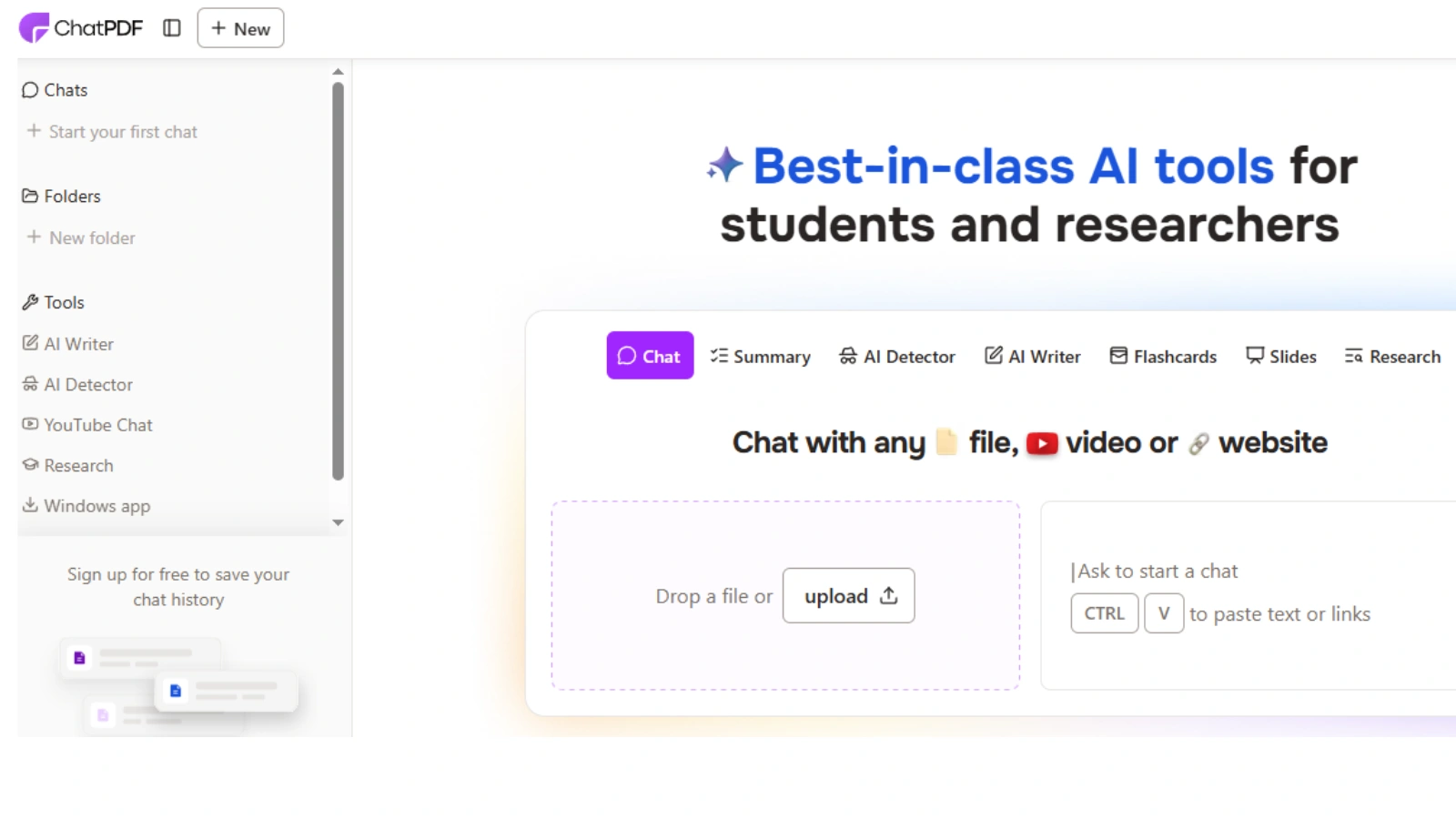
ChatPDF AI is best known for making document comprehension more accessible, particularly with lengthy or complex files. Instead of reading through every page manually from start to finish, the platform lets users ask direct questions and receive targeted answers. It can locate specific information, summarize sections, and explain dense content on demand.
This approach does more than save time. It changes how people interact with information. When a 200-page research paper or legal contract can be queried like a conversation, the barrier to understanding drops significantly. Users can also ask follow-up questions, making the experience feel less like searching and more like consulting.
For students, researchers, and professionals handling large volumes of documentation, this efficiency is not minor. It can transform how people approach reading, analysis, and research altogether.
Quizlet
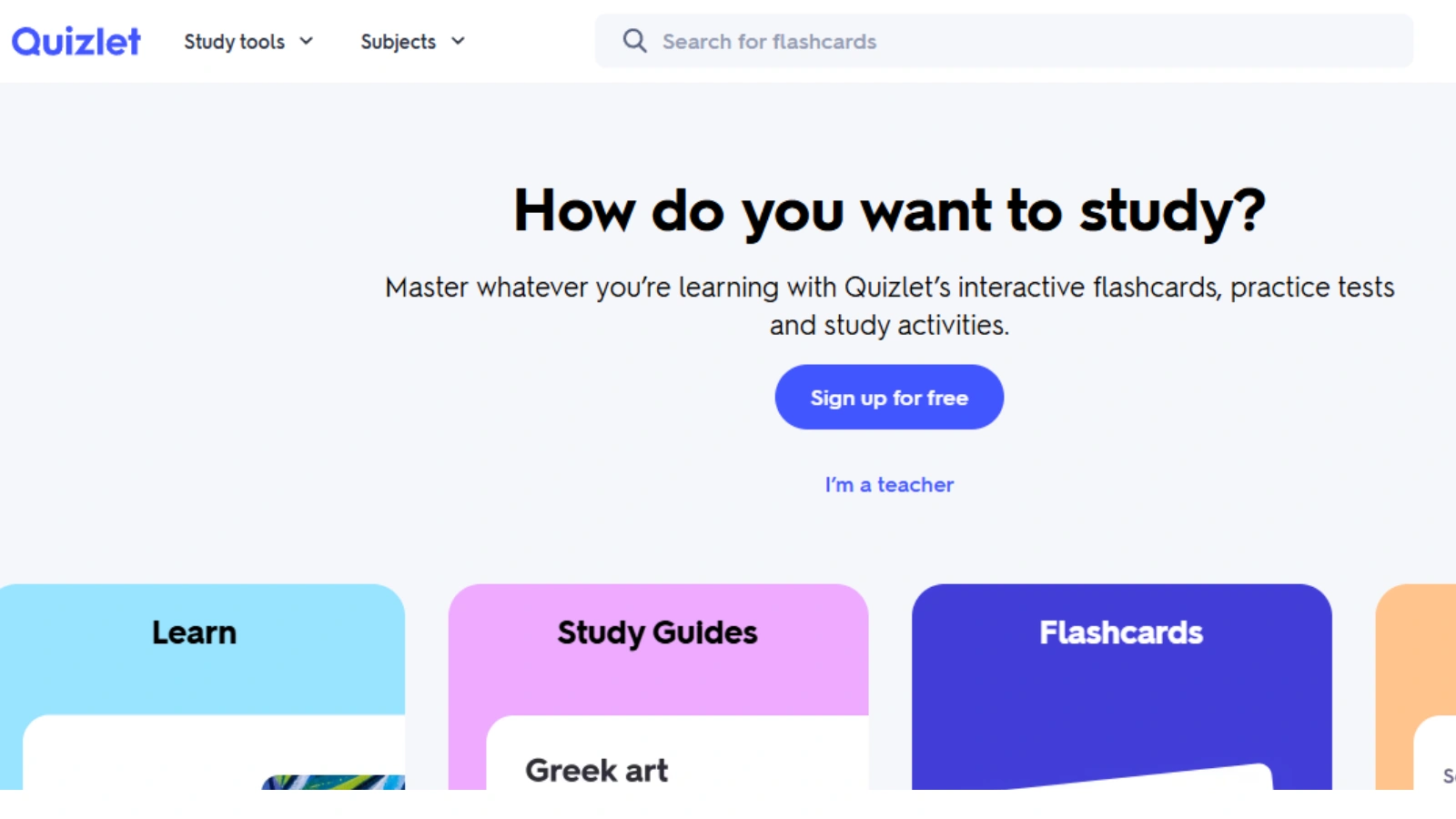
Quizlet is best known for making studying more interactive, particularly for students managing large amounts of material. Instead of passively re-reading notes from start to finish, the platform turns content into digital flashcards that can be reviewed, tested, and repeated. Learners can create their own sets or browse millions already built by others.
This approach does more than aid memorization. It adapts to how individuals learn. When study material is broken into bite-sized cards and paired with games, quizzes, and audio, retention improves in ways that traditional review rarely achieves. Students can also track their progress over time, making weak areas easier to identify and target.
For learners preparing for exams, language tests, or professional certifications, this efficiency is not minor. It can transform how studying feels, turning what was once a chore into something far more manageable.
Google NotebookLM
Google NotebookLM is best known for making research more focused, particularly for those working across multiple sources at once. Instead of switching between tabs, documents, and scattered notes, the platform grounds its responses entirely in the materials a user uploads. It reads, connects, and reasons across sources without pulling in outside information.
This approach does more than organize content. It acts as a thinking partner. When research papers, meeting notes, and reports are loaded together, the tool can surface connections, generate summaries, and answer questions that would otherwise require hours of cross-referencing. Users can also ask it to think out loud, making complex ideas easier to untangle.
For researchers, writers, and professionals juggling dense or high-volume material, this efficiency is not minor. It can transform how ideas take shape, turning a pile of sources into something that actually starts to make sense.
AI Interview Coach

AI Interview Coach is best known for making interview preparation more practical, particularly for candidates who struggle to simulate the real experience on their own. Instead of rehearsing answers in front of a mirror or relying on generic advice, the platform puts users through live mock interviews and delivers immediate, specific feedback. It listens, evaluates, and responds like an actual interviewer would.
This approach does more than build confidence. It builds readiness. When responses are analyzed for clarity, structure, and relevance in real time, improvement happens faster than traditional preparation methods allow. Users can also revisit weak answers, refine their delivery, and practice as many times as needed without scheduling conflicts or social pressure.
For job seekers entering competitive roles, career changers, or anyone returning to the market after a gap, this efficiency is not minor. It can transform how prepared a candidate feels walking into the room, turning anxiety into something much closer to composure.
CollegeVine
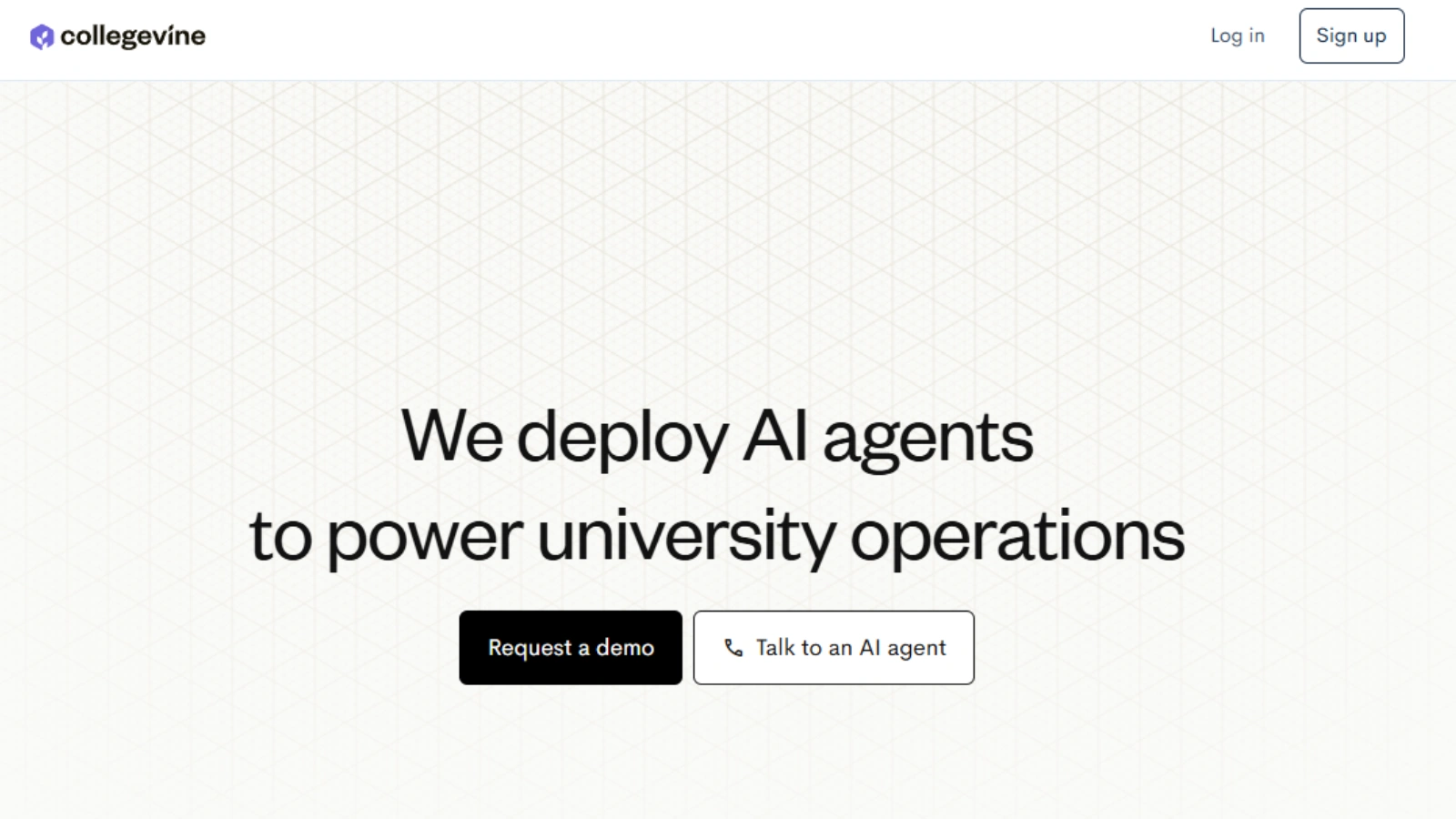
CollegeVine is best known for making the college application process more navigable, particularly for students who lack access to expensive private counselors. Instead of guessing which schools are realistic targets or drafting essays without direction, the platform provides data-driven chance predictions, school comparisons, and structured guidance at every stage. It brings clarity to a process that can otherwise feel overwhelming and opaque.
This approach does more than simplify logistics. It levels the playing field. When students from any background can access the same quality of guidance that was once reserved for those who could afford it, the gap between informed and uninformed applicants begins to close. Users can also get essay feedback, explore financial aid estimates, and connect with current college students for honest perspectives.
For high schoolers navigating deadlines, requirements, and the pressure of one of the most consequential decisions of their lives, this support is not minor. It can transform how confident a student feels throughout the process, turning what once felt like a lottery into something far more within their control.
ChatGPT and Generative AI Assistants
Generative AI tools, such as ChatGPT-style systems, have also entered classrooms. While their use requires careful guidelines, they support brainstorming, summarizing complex readings, drafting practice questions, and explaining difficult concepts in simpler language.
When used responsibly, these assistants can act as study partners rather than shortcuts. Many institutions are developing policies to ensure ethical use while still allowing students to benefit from structured guidance.
Choosing the Right Tool Matters
No single platform solves every educational challenge. Choosing the right tool requires thoughtful evaluation. Institutions must consider data privacy, integration with existing systems, teacher training requirements, and long-term costs.
A platform may have impressive features, but if it cannot connect smoothly with a school’s learning management system, it can create friction rather than value. Sustainability matters as much as innovation.
Schools that approach adoption carefully tend to see stronger outcomes over time.
Real-World Impact Beyond the Headlines

Discussions about intelligent technology in schools often sound abstract. In practice, the impact is usually felt in small but meaningful ways.
Students receive feedback sooner. Teachers spend fewer late evenings grading. Advisors identify academic risks earlier. Accessibility tools quietly support learners who might otherwise struggle.
These improvements may not make headlines, but they shape daily experiences. Over time, they add up.
Still, technology alone does not create progress. Clear goals, staff training, and ethical oversight are essential. Schools that treat AI as a supportive partner rather than a quick fix tend to build stronger, more sustainable systems.
The most effective institutions understand that intelligent tools are exactly that- tools. Their value depends on how thoughtfully they are used.
Moving Forward Thoughtfully
The future of education will likely include more intelligent tools, but change tends to happen gradually.
In universities, AI in higher education may expand further into research support and academic advising. In earlier grades, adaptive tutoring and accessibility features will likely deepen.
What will not change is the central role of teachers. Technology can identify patterns and suggest actions. It cannot replace empathy, encouragement, or meaningful conversation.
At its best, AI in education works quietly. It organizes information, highlights trends, and reduces repetitive tasks. It gives educators more time to focus on what matters most: guiding students through moments of confusion, discovery, and growth.
The classrooms of tomorrow may look more digital, but the heart of learning will remain human.
Frequently Asked Questions
1. How is ai used in education day to day?
It supports adaptive learning platforms, grading tools, tutoring systems, predictive analytics, and accessibility features that complement traditional instruction.
2. Is ai in higher education used differently than in schools?
Yes. Universities often focus more on predictive retention systems, adaptive large-scale courseware, and research assistance tools.
3. What are the key benefits of AI in education?
Personalized learning, faster feedback, early intervention, improved accessibility, and operational efficiency are among the most common advantages.
4. How should institutions choose ai education software?
They should evaluate privacy safeguards, integration needs, long-term costs, and measurable academic impact before adopting any platform.
5. Does AI replace teachers?
No. It supports routine tasks and data analysis, but human mentorship, judgment, and emotional intelligence remain essential to meaningful learning.