

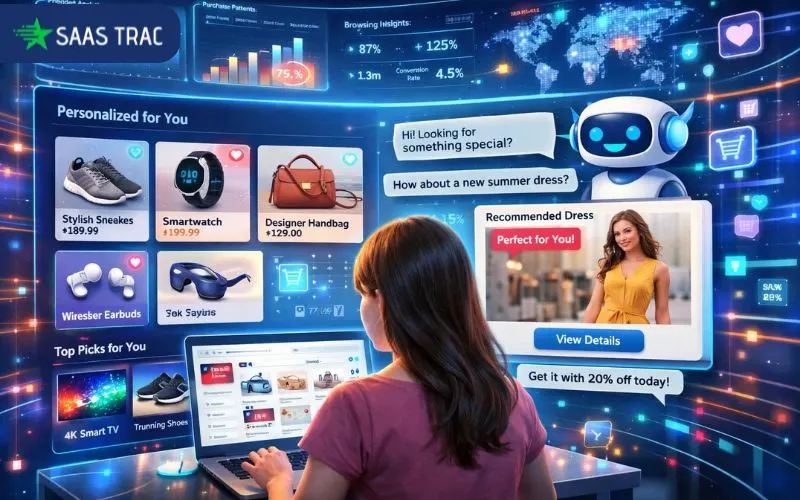
Online shopping has changed rapidly over the past few years, but nothing has accelerated that shift quite like AI ecommerce. What once required large teams, manual analysis, and guesswork can now be handled instantly with intelligent systems that learn, adapt, and improve over time.
Today, ecommerce businesses are no longer just selling products; they are delivering personalized experiences. From product recommendations that feel surprisingly accurate to chatbots that respond like real humans, AI is quietly working behind the scenes to influence almost every customer interaction.
The real advantage of AI e-commerce is not just automation; it’s smarter decision-making. Businesses can now understand customer behavior in real time, predict buying patterns, and optimize every stage of the sales funnel without relying on outdated methods.
If you’ve ever wondered how to use AI in ecommerce effectively, the answer lies in combining data with intelligent tools that can turn insights into action. Whether it’s improving customer engagement or increasing conversions, AI is helping brands scale faster and compete smarter
What Is AI Ecommerce?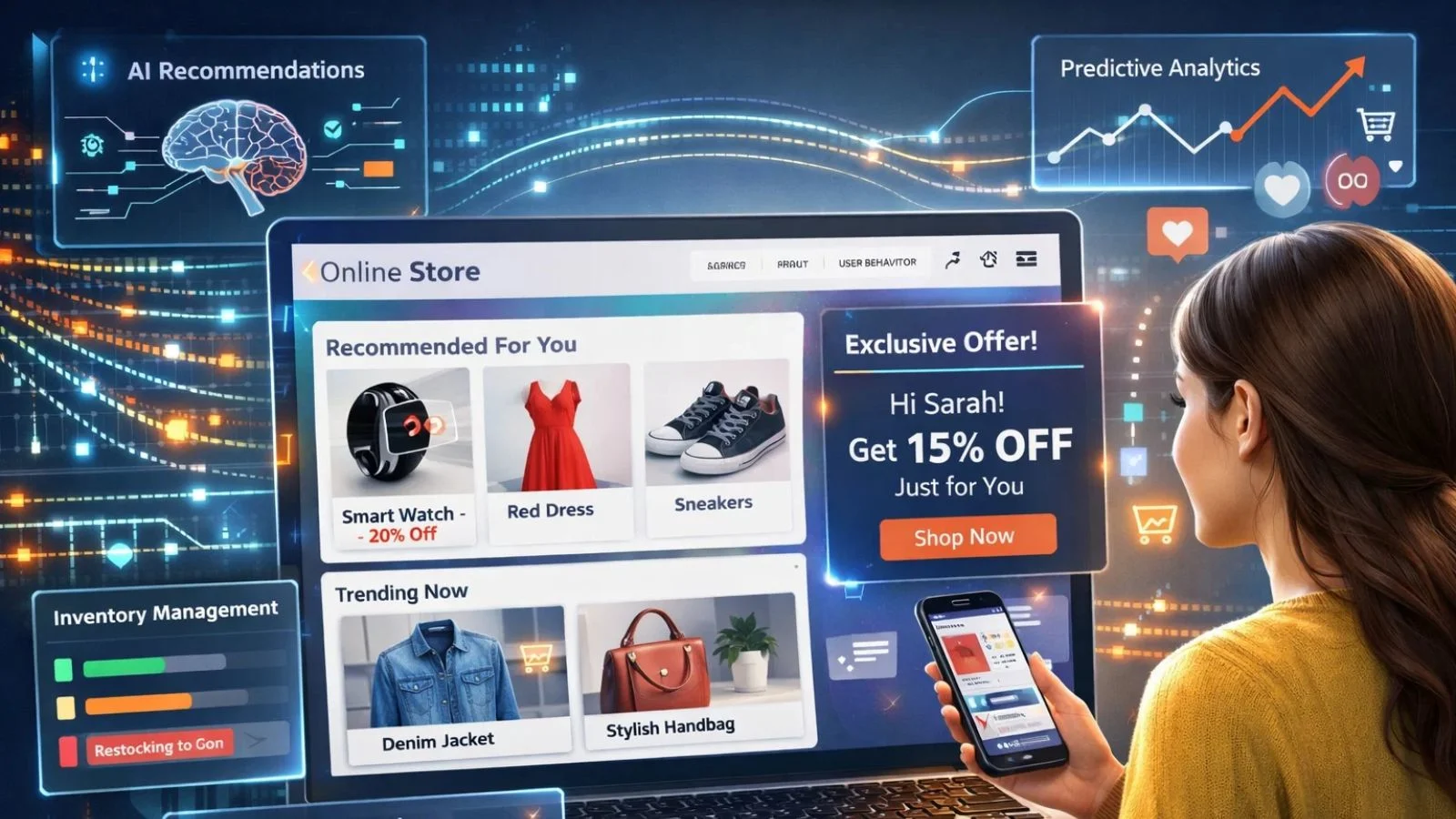
Before diving into strategies and tools, it’s important to clearly understand what AI ecommerce actually means and why it’s becoming essential for modern online businesses.
At its core, AI e-commerce refers to the use of artificial intelligence technologies like machine learning, natural language processing, and predictive analytics to improve how online stores operate and sell. Instead of relying purely on manual decisions or basic automation, AI systems analyze large amounts of data to make smarter, faster, and more accurate decisions.
For example, when an online store suggests products based on your browsing history or sends a perfectly timed discount email, that’s AI in action. These systems continuously learn from user behavior, which means they get better over time without constant human intervention.
Understanding how to use AI in ecommerce starts with recognizing its role across the entire customer journey. From the moment a visitor lands on your website to the final purchase and even post-purchase engagement, AI can optimize every step. It helps businesses predict what customers want, when they want it, and how they prefer to shop.
Another key aspect of AI for ecommerce is efficiency. Tasks like inventory management, customer support, pricing adjustments, and marketing campaigns can all be automated while maintaining a high level of accuracy.
In simple terms, AI ecommerce is about working smarter, not harder. It allows businesses to replace guesswork with data-driven strategies and deliver experiences that feel personal, seamless, and highly engaging.
How AI Ecommerce Is Transforming Online Sales
The impact of AI ecommerce on online sales is not just noticeable, it’s game-changing. Businesses that once struggled with low conversions, high cart abandonment, and generic customer experiences are now seeing measurable improvements by integrating AI into their operations.
One of the biggest transformations comes from personalization. AI analyzes user behavior what customers browse, click, and purchase to deliver highly relevant product recommendations. Instead of showing the same products to everyone, stores can now create unique shopping experiences for each visitor. This directly increases engagement and boosts conversion rates.
Another major shift is in customer support. AI-powered chatbots and virtual assistants can handle queries instantly, 24/7. This not only improves response time but also reduces the chances of losing potential customers due to delayed support. For many brands, this is a key part of how to boost ecommerce sales with generative AI, as faster responses often lead to quicker purchasing decisions.
AI is also transforming pricing strategies. Dynamic pricing tools analyze market demand, competitor pricing, and customer behavior to adjust prices in real time. This ensures that businesses remain competitive while maximizing profits, something that would be extremely difficult to manage manually.
Then there’s predictive analytics, which helps businesses forecast trends and customer demand. Instead of reacting to changes, companies can stay ahead by stocking the right products at the right time and running targeted campaigns that actually convert.
Even marketing has evolved. AI can segment audiences, automate campaigns, and optimize ads based on performance data. This means businesses spend less on ineffective strategies and focus more on what works.
In essence, AI ecommerce is transforming online sales by making every decision smarter from product discovery to final checkout, leading to better customer experiences and higher revenue.
Key Benefits of AI Ecommerce
The biggest advantage of AI ecommerce is how it improves both efficiency and results at the same time.
First, it enhances the customer experience through personalization. AI shows users products they’re actually interested in, which increases engagement and reduces bounce rates. This is one of the strongest use cases of AI for ecommerce today.
Second, it helps boost conversion rates. With smart recommendations, faster support, and optimized user journeys, customers are more likely to complete their purchases.
Another key benefit is automation. Tasks like customer support, email campaigns, and inventory tracking can run with minimal manual effort, saving both time and cost.
AI also enables data-driven decisions. Instead of guessing, businesses can rely on real-time insights to understand what works. This makes it easier to figure out how to use AI in ecommerce effectively.
Lastly, scalability becomes much easier. As your store grows, AI systems can handle more customers and data without slowing down operations.
Top AI Tools for Ecommerce
To successfully implement AI ecommerce, choosing the right tools is crucial. The right platforms can help you automate tasks, improve customer experience, and drive more sales without adding complexity.
Here are some powerful AI tools for ecommerce you can consider:
1. Shopify Magic
Built into Shopify, this AI tool helps generate product descriptions, email content, and even marketing copy. It’s ideal for store owners who want quick, high-quality content without hiring large teams.
2. Klaviyo
Klaviyo uses AI to personalize email and SMS marketing campaigns. It analyzes customer behavior and sends targeted messages that improve engagement and conversions.
3. Tidio
Tidio offers AI-powered chatbots that can handle customer queries in real time. It’s a great way to provide instant support and reduce cart abandonment.
4. Jasper
Jasper is widely used for creating product descriptions, ads, and blog content. It helps ecommerce brands scale content production quickly and efficiently.
5. Dynamic Yield
Dynamic Yield focuses on personalization and product recommendations. It helps deliver tailored shopping experiences, which is a key part of how to boost ecommerce sales with generative AI.
These tools show how AI ecommerce can be applied across different areas, from marketing and content to customer support and personalization. The key is to start with tools that solve your biggest challenges and scale from there.
How to Use AI in Ecommerce (Practical Strategies)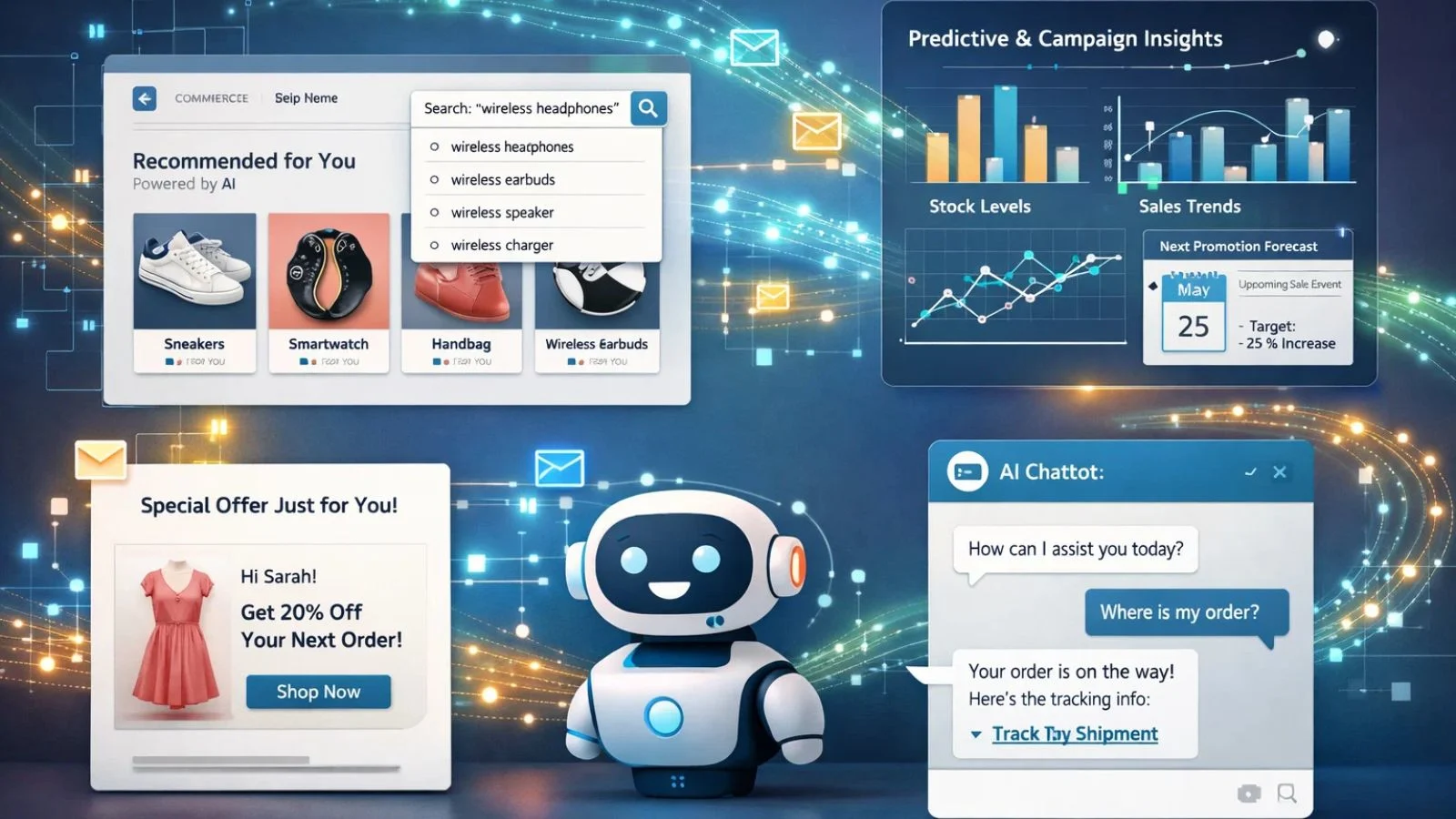
To make AI ecommerce work, focus on a few high-impact areas.
Start with product recommendations. AI can show customers relevant products based on their behavior, increasing the chances of purchase.
Next, upgrade your search. AI-powered search understands intent better and helps users find products faster.
Use AI for personalized marketing. Instead of generic emails, send targeted offers based on customer actions. This is a key part of how to boost ecommerce sales with generative ai.
Add chatbots for instant support. They answer queries quickly and help guide users toward buying decisions.
Finally, use predictive analytics to plan inventory and campaigns based on real data.
Challenges of AI Ecommerce
While AI ecommerce offers huge advantages, it also comes with a few challenges that businesses need to be aware of.
One common issue is data dependency. AI systems rely heavily on data, and without enough quality data, results may not be accurate.
Another challenge is implementation complexity. For beginners, understanding how to use ai in ecommerce and integrating the right tools can feel overwhelming.
There’s also the concern of cost. Some advanced AI tools require investment, which may not be ideal for small businesses starting out.
Lastly, privacy and security are important. Since AI uses customer data, businesses must ensure proper data protection and compliance.
Despite these challenges, the benefits of AI ecommerce often outweigh the drawbacks when implemented correctly.
Conclusion
AI ecommerce is no longer a future trend; it’s already reshaping how online businesses operate and grow. From personalized shopping experiences to smarter marketing and faster customer support, AI is helping brands connect with customers in more meaningful ways.
The real advantage lies in using AI to make better decisions. Whether you’re exploring how to use AI in ecommerce for the first time or looking to scale your existing store, even small implementations can lead to noticeable improvements in sales and efficiency.
As competition in online retail continues to grow, adopting AI for ecommerce is becoming less of an option and more of a necessity. Businesses that embrace it early are the ones most likely to stay ahead and build long-term success.
FAQ’s
1. How to use AI in ecommerce?
You can start by using AI for product recommendations, chatbots, personalized marketing, and predictive analytics to improve customer experience and boost sales.
2. What are the best AI tools for ecommerce?
Some popular AI tools for ecommerce include platforms like Shopify Magic, Klaviyo, Tidio, Jasper, and Dynamic Yield.
3. How does AI increase ecommerce sales?
AI increases sales by improving personalization, optimizing marketing campaigns, and providing instant customer support, key elements in how to boost ecommerce sales with generative AI.