

AI sales tools sound impressive on paper. Smarter outreach. Predictive insights. Automated follow-ups. Faster pipelines.
Every platform claims it can help sales teams work less and close more. Dashboards light up with analytics. Emails practically write themselves. Forecasts become “data driven.” On the surface, it all feels like progress.
But behind the buzzwords, sales leaders are trying to solve a much simpler problem: how do we close more qualified deals without overwhelming the team?
That’s where the confusion starts.
Some tools genuinely sharpen decision-making. They help reps prioritize the right accounts, spot deal risks early, and personalize communication at scale. Others simply automate activity, sending more emails, scheduling more follow-ups without improving outcomes.
And more activity doesn’t always mean more revenue.
The difference between helpful automation and meaningful intelligence in AI sales tools is subtle, but it matters. A well-chosen system can reduce friction, increase visibility, and give reps back hours each week. A poorly chosen one adds complexity, noise, and another login screen no one uses.
So instead of chasing features, it’s worth asking better questions.
- What problem are you trying to fix?
- Where is your pipeline leaking?
- What decisions are currently based on guesswork?
In this guide, we’ll look beyond marketing claims and examine what today’s platforms actually do, when they work best, and where they fall short so you can decide which tools truly deserve a place in your sales stack.
Why AI in Sales Has Become a Practical Advantage

Sales has always been about timing, relevance, and consistency.
The problem? Humans aren’t great at managing all three at scale.
Reps forget to follow up.
Hot leads get buried.
Forecasts rely too much on gut instinct.
This is where ai sales tools step in – not to replace salespeople, but to remove the friction that slows them down.
At their best, these systems:
- Identify which leads are most likely to convert
- Suggest when to follow up
- Draft personalized outreach faster
- Surface deal risks early
- Automate repetitive admin work
The result isn’t just efficiency. It’s clarity.
But there’s an important nuance here. AI only works well when your process is already structured. If your CRM data is messy or your pipeline stages are inconsistent, even the most advanced tool won’t save you.
AI in AI sales tools amplifies what’s already there – good or bad.
What Actually Makes an AI Sales Tool “Good”?

A lot of platforms market automation as intelligence. They’re not the same thing.
Here’s how to tell the difference.
1. It Improves Judgment, Not Just Speed
Automation sends emails faster.
Intelligence tells you which emails matter.
Strong ai sales tools help you prioritize. They point you toward accounts showing buying intent. They surface patterns you’d never catch manually.
If it just saves time but doesn’t improve decisions, it’s helpful but not transformative.
2. It Fits Into Your Workflow
If reps have to log into five new dashboards, adoption drops.
The best tools live inside the CRM or sync seamlessly. They reduce friction instead of creating more of it.
3. It Produces Clear Next Steps
Data is useless without direction.
The strongest platforms don’t just show activity. They recommend action:
- “This account’s engagement has spiked.”
- “This deal is at risk due to lack of stakeholder diversity.”
- “This contact is likely to respond within 24 hours.”
That’s where AI becomes practical.
The Main Types of AI Sales Tools
Understanding the categories helps you avoid buying the wrong solution.
AI Sales Assistants
These tools help draft emails, suggest responses, and automate follow-ups. Modern ai sales assistant software often uses natural language processing to tailor messaging based on prospect behavior.
They’re especially helpful for outbound teams handling high-volume outreach.
Predictive Lead Scoring
These systems analyze historical wins and losses to predict which leads are worth attention.
They’re powerful in organizations with strong data history. Without data, predictions are weak.
Sales Automation Platforms
In AI sales tools, the best AI sales automation software blends workflow automation with intelligent sequencing and engagement tracking.
These tools scale outreach while still optimizing timing and personalization.
Conversation Intelligence
These platforms analyze sales calls and demos to provide coaching insights and risk detection.
They’re valuable when deals depend heavily on live conversations.
Each category solves a different problem. Knowing yours makes the choice clearer.
5 AI Sales Tools Consistently Leading the Market
Below are five platforms frequently mentioned among the best sales ai software according to reviews and adoption trends.
Let’s look at what they actually do and where they shine.
1. Salesforce Einstein
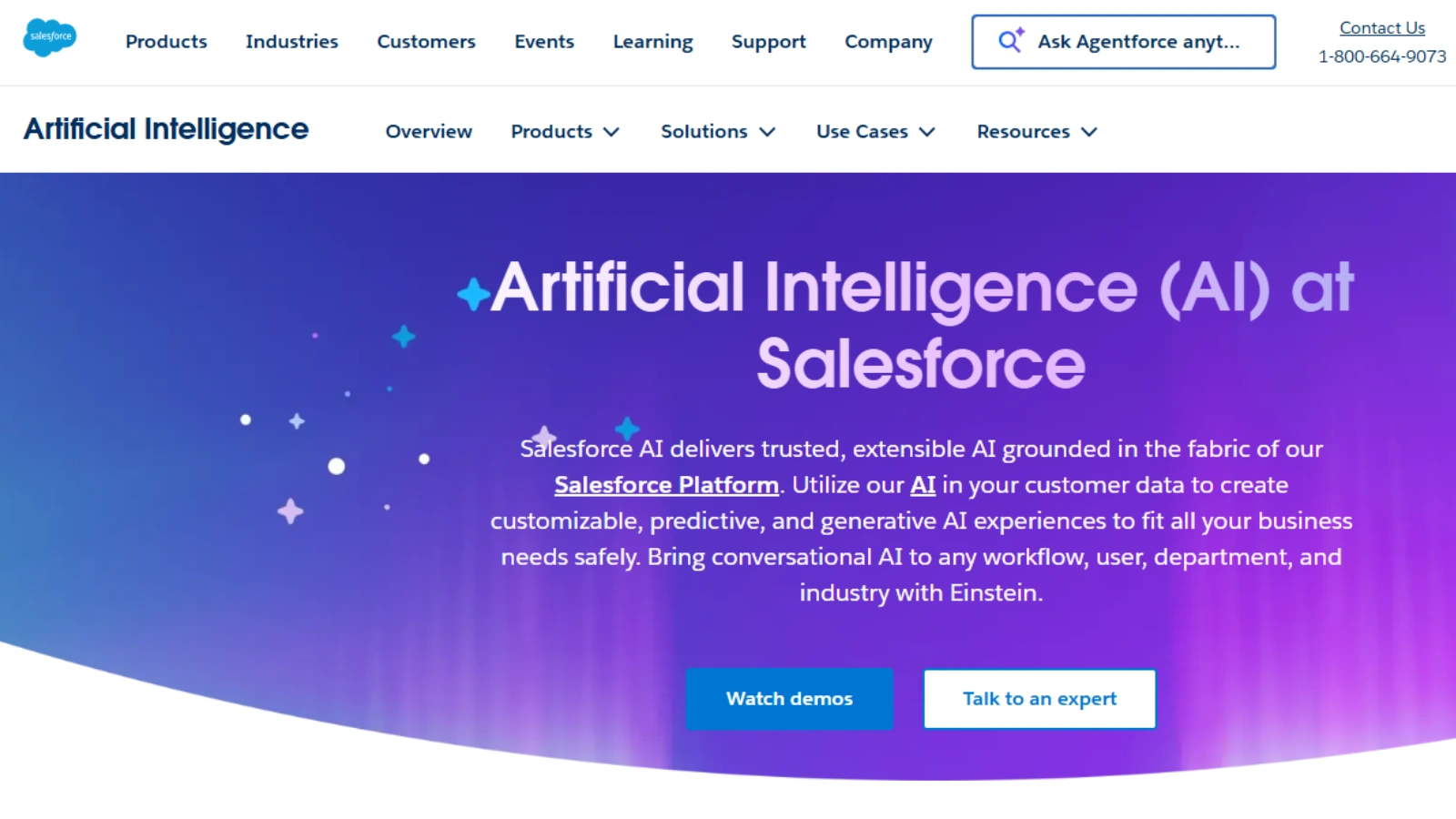
If your company already runs on Salesforce Einstein feels like a natural extension.
It offers:
- Predictive lead scoring
- Opportunity insights
- Activity capture automation
- Forecasting analysis
It’s powerful, especially for enterprises with large data sets.
The trade-off? Complexity. Smaller teams sometimes find it overwhelming and expensive.
Best fit: Larger organizations needing advanced forecasting and predictive modeling.
2. HubSpot Sales Hub (AI Features)
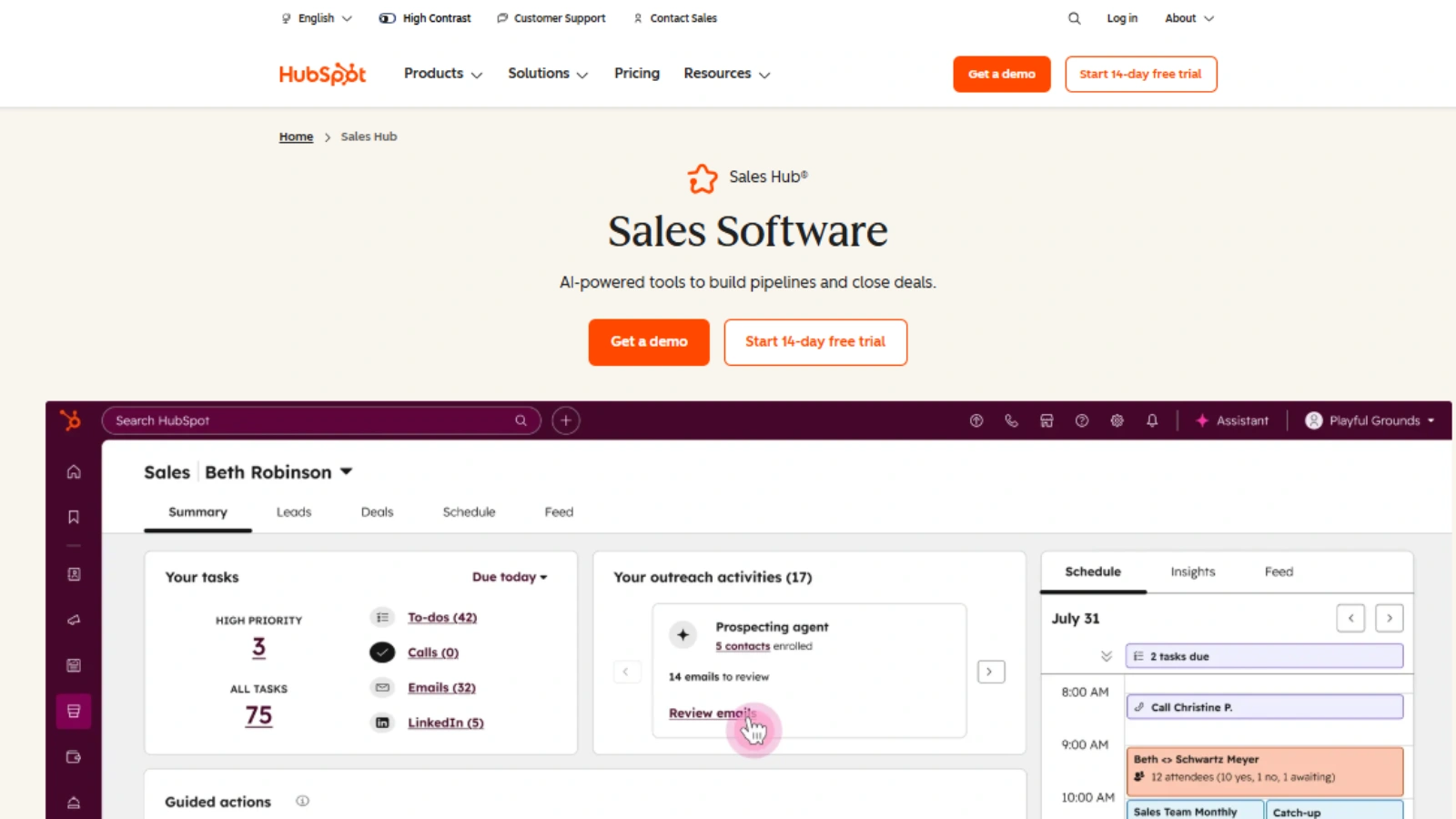
HubSpot has layered AI into its CRM in a way that feels approachable.
It provides:
- Email personalization suggestions
- Follow-up automation
- Pipeline forecasting
- Reporting enhancements
It’s less technical than some enterprise systems, which makes adoption easier.
Best fit: Growing teams that want intelligence without heavy implementation.
3. Spiky.AI
Spiky.AI doesn’t just record meetings. It analyzes them to uncover what actually drives successful conversations.
Its strengths include:
Call and meeting transcription
Emotional and sentiment analysis
Conversation intelligence insights
Personalized coaching feedback
If your sales process relies on understanding buyer reactions and improving communication, this becomes extremely useful.
Best fit: Teams focused on improving sales conversations, coaching reps, and understanding customer sentiment during calls.
4. Apollo.io
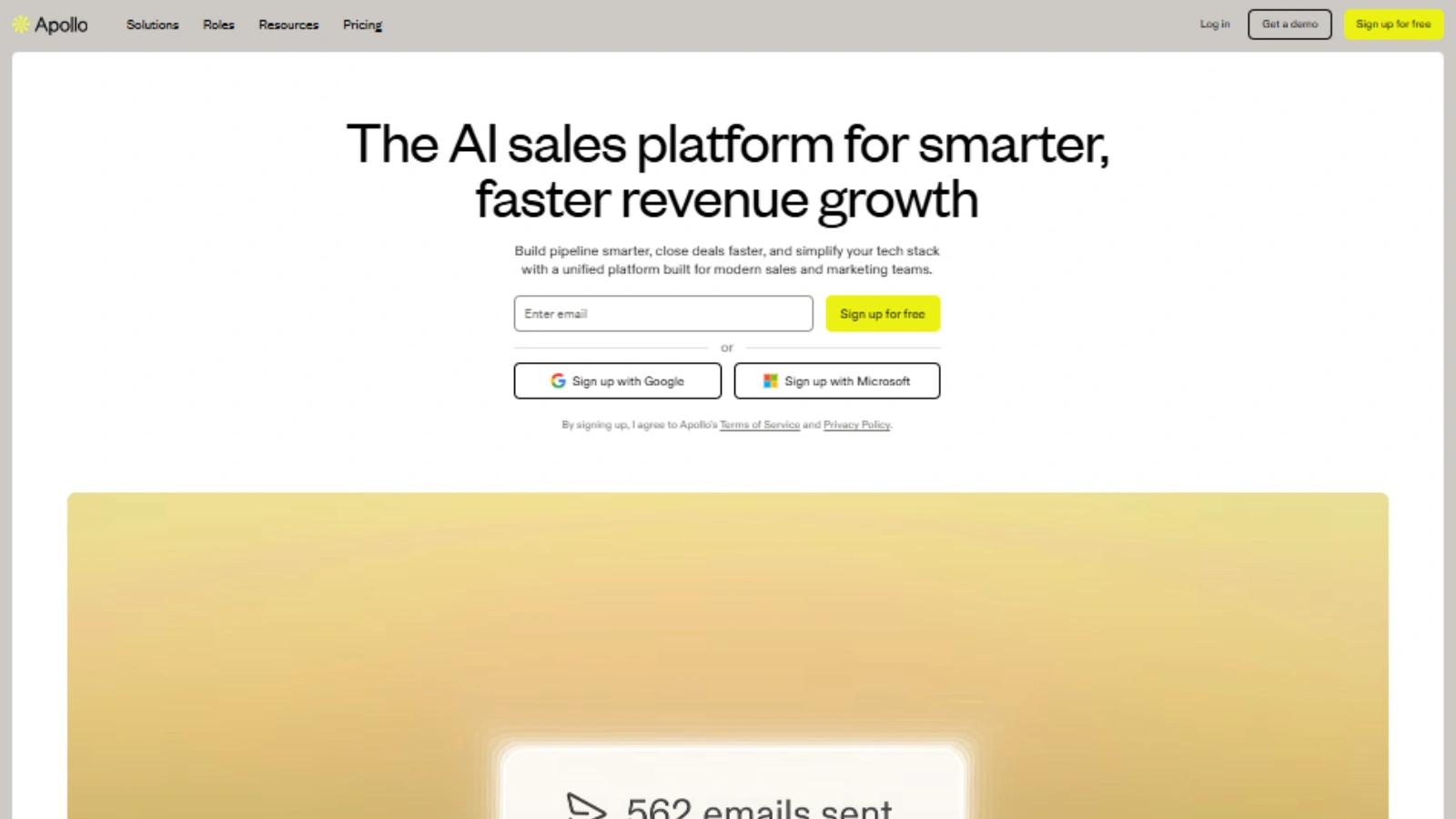
Apollo in AI sales tools is a tool that combines prospecting with automation and messaging assistance.
It offers:
- Large contact database access
- AI-assisted email writing
- Sequence automation
- Engagement analytics
It frequently appears in discussions about the best ai sales assistant software for outbound teams.
Best fit: B2B companies focused heavily on cold outreach and prospecting at scale.
5. Distance
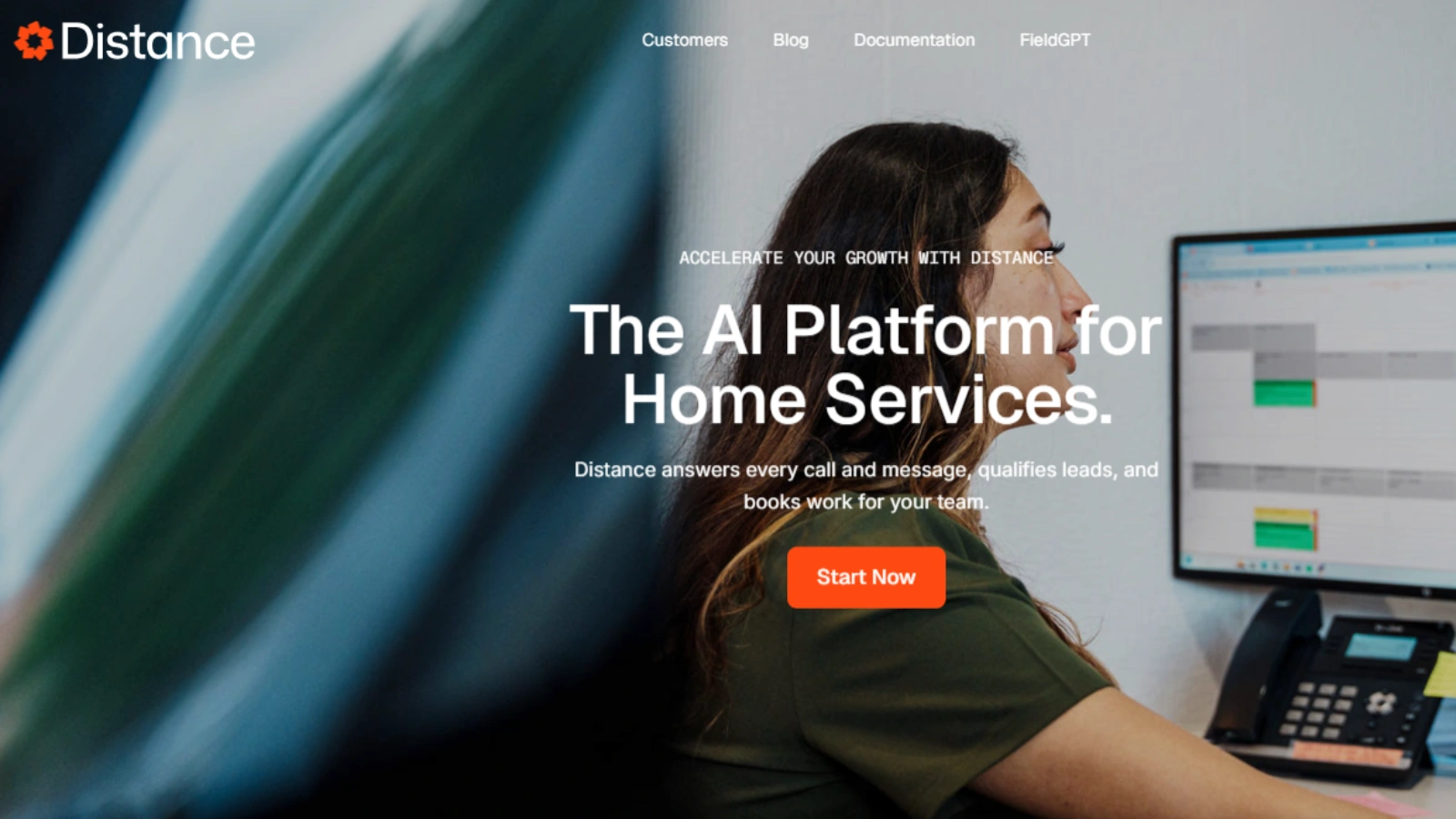
Distance focuses on helping teams manage and analyze sales conversations more effectively.
Its strengths include:
Call transcription
Conversation summaries
Key moment detection
Performance insights for sales calls
If your sales team handles multiple meetings and needs quick clarity on what happened in each conversation, this can be very helpful.
Best fit: Teams that want simple conversation tracking, quick summaries, and better visibility into sales calls without manually reviewing every meeting.
Where SaaS Trac Fits Into the Picture
When evaluating ai sales tools, one of the hardest parts isn’t features, it’s comparison.
That’s where SaaS Trac comes in.
SaaS Trac isn’t a sales platform. It’s a SaaS comparison and research resource designed to help buyers make informed decisions.
For sales leaders evaluating tools, it offers:
- Structured feature comparisons
- Aggregated review insights
- Clear breakdowns by company size and use case
- Pricing visibility where available
- Side-by-side evaluation tools
Instead of relying solely on marketing pages, you can see how products stack up in a more neutral format.
It’s especially useful when narrowing your shortlist before booking demos.
How to Choose the Right Tool (Without Overthinking It)
It’s easy to get distracted by feature lists.
Instead, start with your bottleneck.
Are reps struggling with prospecting volume?
Is follow-up inconsistent?
Are forecasts unreliable?
Once you define the core problem, the category becomes clearer.
Next, audit your CRM data. AI systems rely heavily on clean, consistent information. If data quality is poor, predictions suffer.
Finally, consider adoption risk. The most advanced solution is useless if reps don’t use it.
Simple and integrated often beats complex and powerful.
When AI Sales Tools Deliver the Most Impact
These platforms perform best when:
- You have high lead volume
- You have historical data to analyze
- Your sales process is structured
- You need scalable personalization
They struggle when:
- Deals are entirely relationship-driven and bespoke
- Data is limited or inconsistent
- Processes are undefined
AI thrives in environments with patterns. Without patterns, it has little to learn from.
Common Misconceptions
“AI Will Replace Salespeople”
It won’t. Trust, negotiation, and relationship-building remain human strengths.
AI handles the repetitive groundwork so reps can focus on high-value conversations.
“More Automation Equals Better Results”
Too much automation can hurt authenticity. The best outcomes blend automation with thoughtful personalization.
“All AI Tools Are Basically the Same”
They’re not. Some focus on analytics. Others on automation. Some on coaching.
Clarity about what you need prevents wasted investment.
Using Reviews the Smart Way
Looking at the best sales ai software according to reviews can be helpful but context matters.
Enterprise users may praise features that small teams don’t need.
Startups may value simplicity over depth.
Use reviews as signals, not final proof.
Implementation: Where Most Teams Get It Wrong

Buying software is easy. Changing behavior is hard.
Successful teams:
- Start with a pilot group
- Measure performance before and after
- Train reps on how to use insights
- Review results monthly
AI improves over time, but only with consistent usage.
What’s Next for AI in Sales?
We’re moving toward real-time intelligence.
Emerging capabilities include:
- Live call guidance
- AI-generated account research briefs
- Predictive churn alerts
- Automated prospecting agents
The tools are getting smarter. But the fundamentals remain unchanged:
Clear messaging. Clean data. Strong process.
AI simply sharpens the edge.
Final Thoughts
The market for AI sales tools is crowded and often confusing.
But the decision doesn’t have to be.
Focus on the problem you’re solving.
Choose a tool that fits your workflow.
Prioritize adoption over complexity.
When implemented thoughtfully, AI doesn’t just make sales faster.
It makes it smarter.
FAQs
1. What are the best AI sales tools for smaller teams?
Tools like HubSpot and Apollo are often strong starting points because they combine usability with intelligent automation.
2. Is AI sales assistant software in AI sales tools worth it for outbound sales?
Yes, especially when reps manage high outreach volume. It saves time and improves consistency while maintaining personalization.
3. How does the best ai sales automation software improve performance?
It increases efficiency, improves lead prioritization, and reduces missed follow-ups, all of which contribute to higher conversion rates.
4. How long does it take to see results?
Lightweight tools can show impact within weeks. More complex enterprise systems may take months due to training and integration.
5. Should I rely solely on review rankings?
No. Reviews provide direction, but fit depends on your process, team size, and budget.