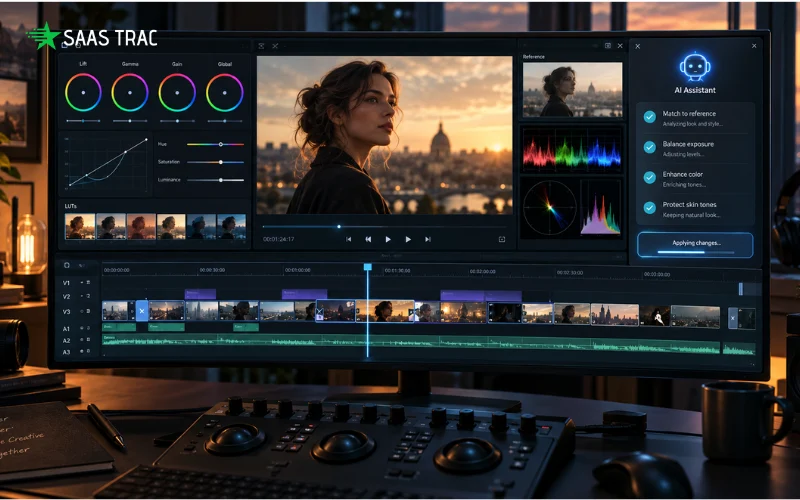

Video production has traditionally involved several separate stages. Teams may need to plan a concept, write a script, record footage, edit clips, add sound, create transitions and prepare different versions for different platforms. Even a relatively simple project can require considerable time when each stage is handled manually.
Artificial intelligence is changing how some of these tasks are approached. Instead of treating video production as a process that always requires the same sequence of manual steps, businesses and independent creators can now experiment with software that assists with parts of the workflow.
An AI Video Generator is one example of this shift, with Higgsfield helping teams explore creative video concepts and develop multiple production directions. These tools can help transform ideas, written instructions, images or other inputs into video-based results. The technology does not eliminate the need for planning or human judgment, but it can give teams another way to approach production, particularly when they need to test ideas quickly or create several variations.
For businesses that regularly work with video, the bigger question is not whether artificial intelligence can replace every part of production. It is how AI can fit into existing workflows without reducing quality, accuracy or creative control.
Moving From a Blank Timeline to a Working Idea:
One of the challenges in video production is getting started. A team may have a general concept but struggle to decide how that idea should look once it becomes a sequence of scenes.
An AI Video Generator can provide a way to explore an initial concept before a larger production begins. A team can describe an idea, experiment with different directions and use the results as references for further planning.
This does not mean the first generated result should become the finished video. Instead, it can function as an early visual experiment. Teams can identify which elements work, which ones need improvement and which parts of the original concept need to be reconsidered.
That can make early stage planning more concrete. Rather than discussing an idea only through text, team members can have something visual to examine and discuss.
Reducing Friction in Early Production Stages:
Traditional production often requires resources before a team can properly test an idea. Depending on the project, that may involve locations, equipment, actors, designers, or editors.
AI tools can change the economics of experimentation.
An AI Video Generator can allow teams to explore a concept before committing significant resources to a full production. A marketing department, for example, might want to test several approaches to a product video before deciding which direction deserves further development.
This can be particularly useful when a project is still uncertain.
Instead of spending heavily on one concept and discovering later that it does not work, teams can explore several possibilities first. The strongest idea can then move into a more conventional production process if necessary.
Creating More Room for Iteration:

Creating a good video is seldom a one-off affair. Scripts are revised, scenes are cut out, the message is tweaked, and various versions are tested for a final decision.
An AI Video Generator can help with this iterative process by allowing you to easily come up with new ideas and directions.
For example, a group may have a version that highlights product attributes and another that highlights a customer problem. The team doesn’t have to argue over the differences in print, but can test out both approaches and see which works best for conveying the message of the design.
When multiple stakeholders are in play, iteration is particularly useful. A visual draft can provide people with something to respond to, and can help to make discussions more focused.
Handling Repetitive Video Requirements:
Not every video project requires completely original production from beginning to end.
Businesses may regularly create similar videos for product updates, internal announcements, training materials or recurring campaigns. The subject may change, but the general production structure can remain similar.
An AI Video Generator can potentially assist with parts of these recurring workflows.
The benefit is not simply speed. Reducing repetitive work can give teams more time to focus on areas that require human attention, such as messaging, accuracy, brand decisions and final editing.
However, automation should not be introduced without reviewing the workflow first. Some repetitive tasks may be easy to automate, while others may involve decisions that require context and human judgment.
Supporting Different Versions of the Same Project:
Modern businesses often need multiple versions of a video.
A company may need one version for a website, another for a presentation, a shorter version for a social platform and a different cut for an internal audience. Creating each version manually can increase the workload.
An AI Video Generator can be part of a workflow for exploring these variations.
The team can start with a central concept and then consider how its structure, length or presentation might change for different audiences.
This can also encourage teams to think more carefully about audience requirements. Instead of simply cutting the same video repeatedly, they can ask what information each audience actually needs.
The technology becomes useful when it supports better decisions rather than simply producing more files.
Improving Collaboration Between Teams:
Video projects frequently involve people with different responsibilities. Marketing teams may focus on messaging, designers may consider presentation, editors may handle technical details and managers may be concerned with deadlines and budgets.
These groups do not always visualize an idea in the same way.
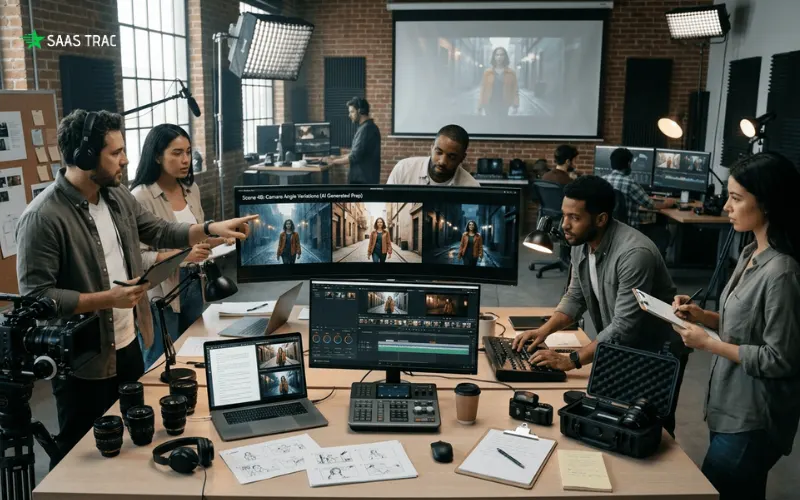
An AI assisted draft can provide a shared reference point. A team can look at an early result and discuss whether it reflects the intended direction.
Higgsfield is one example of a platform that can be explored when teams want to experiment with AI assisted video workflows.
The value of this kind of tool can extend beyond production itself. A visual reference can help different departments communicate more clearly before significant resources are committed.
Making Prototyping More Accessible:
Prototyping has traditionally been associated with product development and software, but the same principle can apply to video.
A prototype does not need to be perfect. Its purpose is to test an idea.
An AI Video Generator can make video prototyping more accessible by allowing teams to explore concepts without immediately building a polished production.
A company planning an educational video, for example, could test different explanations before deciding how the final project should be produced. A product team could experiment with different ways of demonstrating a feature.
The prototype can reveal problems early, when changes are usually easier and less expensive.
Giving Small Teams More Production Flexibility:
Large organizations may have dedicated video teams, but smaller companies often have to work with limited resources.
A small marketing department may need to handle planning, writing, design, editing, and distribution at the same time. This does not necessarily mean every project requires professional production from start to finish.
An AI Video Generator can provide another option for smaller teams that need to explore video without building a large production setup.
This does not make professional production unnecessary. High-stakes campaigns, complex shoots, and brand-sensitive projects may still require experienced specialists.
However, AI can give smaller teams more flexibility when the goal is experimentation, internal communication, or an early-stage concept.
Where Human Editing Still Matters?
The growing availability of AI tools does not remove the importance of human editing.
An AI Video Generator may produce a useful starting point, but a person still needs to evaluate whether the result communicates the intended message. Timing, tone, factual accuracy, brand consistency, and audience expectations all require judgment.
Human editing can also improve the emotional structure of a project.
A technically impressive sequence may still feel confusing if the story does not develop naturally. Similarly, a generated scene may look appealing but fail to support the actual purpose of the video.
AI can assist production, but people remain responsible for deciding what deserves to stay.
Managing Accuracy and Brand Consistency:
Businesses need to be particularly careful when AI-generated material is used for customer-facing projects.
Brand communication often depends on consistent terminology, visual identity and factual information. A generated result that looks good but contains an incorrect detail can create unnecessary problems.
This is why AI assisted workflows should include a review stage.
Higgsfield can be considered part of an experimental workflow, but generated material should still be reviewed before publication.
Teams should check visual details, wording, claims, and other elements that could affect the audience’s understanding of the business.
The faster a tool can produce an output, the more important a sensible review process becomes.
Choosing the Right Place for Automation:
Not every part of video production needs to be automated.
Some tasks are highly repetitive and predictable. Others depend heavily on creative judgment, brand knowledge or communication skills.
A useful starting point is to map the existing workflow and identify where teams spend the most unnecessary time.
An AI Video Generator may be useful at the concept, experimentation, or variation stage, while other tasks may still be better handled through conventional editing software.
This approach avoids the common mistake of adopting technology simply because it is available.
The goal should be to improve the workflow, not to replace every existing tool.
Balancing Speed With Quality:
Faster production can be valuable, but speed alone is not a meaningful measure of success.
A company could produce ten videos quickly and still fail to communicate its message effectively. Another company might produce fewer videos but achieve better results because each project is carefully planned and reviewed.
An AI Video Generator can contribute to efficiency, but teams should evaluate the quality of what it helps produce.
Useful questions include: Does it reduce unnecessary work? Does it make experimentation easier? Does it help teams communicate ideas? Does it maintain an acceptable level of quality?
These questions provide a better basis for evaluating AI software than simply measuring how quickly it generates an output.
Exploring AI Assisted Workflows With Modern Tools:
Higgsfield can be useful for teams exploring different approaches to AI assisted video production. Its Higgsfield AI creative suites can give users additional ways to experiment with video concepts and workflows.
For businesses, the most important thing to consider is how the capabilities will be integrated into the current production processes.
A tool is impressive when used in isolation, but is not very useful when it leads to more work for other people. Teams must think about the complete process, which includes creating, planning edits, reviewing, storage, and distribution.
This broad perspective could help companies determine whether an AI platform is able to solve the problem.
What Businesses Should Consider Before Adopting AI Video Software:
In the beginning, before the introduction of an AI technology for making videos, companies must define what they want it to achieve.
If the primary issue is the slow development of concepts, then the team should assess how the tool facilitates experiments. If the same video sequences consume excessive time, the main focus should be on the efficiency of workflow.
An AI Video Generator is therefore a product that should be evaluated against a particular business requirement instead of an overall promise of technological innovation.
Teams must also think about the quality of output, usability, editing flexibility of their software, privacy requirements, cost, and how well the software can integrate with the existing tools.
A brief trial can be helpful before introducing the technology into the larger workflow.
Building a Workflow That Combines People and AI:

The most practical approach may not be choosing between traditional production and artificial intelligence.
Instead, businesses can combine both. An AI Video Generator can assist with brainstorming, prototyping, or early visual exploration, while people handle research, creative direction, editing, and final approval.
This creates a workflow in which technology handles certain tasks without removing human responsibility.
The balance will vary from one business to another. A small company may use AI more heavily for experimentation, while a larger production team may use it primarily during pre-production.
There is no single model that works for every organization.
The Future of Video Production Workflows:
AI-automated video production is in the process of developing, so the workflows will likely evolve as the technology becomes more efficient.
Companies may be more likely to view AI applications as a part of a larger software system rather than standalone programs. The focus might shift from merely creating individual videos to managing full workflows that include planning, creating, editing, distribution, and production.
Higgsfield provides an illustration of how companies and creatives can take advantage of these capabilities that are emerging.
The companies that reap the most benefits are not always those that automate the best. They could be those that know how AI can be of real value and where human experience is essential.
Summing It Up:
Modern video production is becoming more flexible as artificial intelligence introduces new ways to plan, prototype and develop video projects.
An AI Video Generator can help teams explore ideas, create variations and reduce some repetitive work. For small businesses, it may provide additional flexibility, while larger organizations can use AI as another layer within an existing production workflow.
Higgsfield is one option for teams interested in exploring AI assisted video creation, but choosing a tool should always begin with the problem a business is trying to solve.
The most effective workflows are unlikely to be completely automated. Instead, they will combine the speed and experimentation offered by AI with human judgment, editing, and creative direction.
As the technology develops, businesses should focus less on how much they can automate and more on how intelligently they can use automation.
FAQs:
1. What is an AI Video Generator?
An AI Video Generator is software that uses artificial intelligence to create or assist with video production based on inputs such as text, images, instructions, or other media. The exact capabilities vary between platforms.
2. Can AI video tools replace professional video editors?
An AI Video Generator can assist with certain production tasks, but it does not necessarily replace professional editors. Human expertise remains important for storytelling, brand consistency, detailed editing and quality control.
3. How can businesses use AI for video production?
Businesses can use an AI Video Generator for activities such as concept exploration, prototyping, creating variations, and supporting recurring video workflows. The most suitable application depends on the company’s needs and existing production process.
4. What should businesses check before choosing an AI video tool?
Businesses should consider output quality, ease of use, editing options, workflow compatibility, privacy, pricing and the amount of human review required. Testing the software with a small project can help determine whether it provides genuine value.